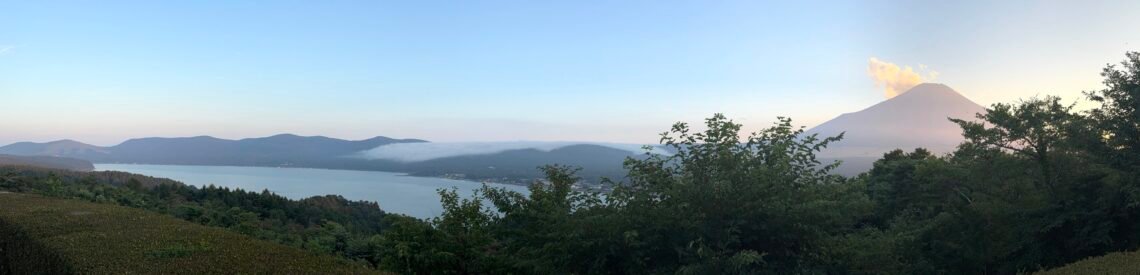
So, this was my big hike for the year and has technically been in the planning for multiple years. It was my 12th visit to Japan and the first since 2016. Then, I had hiked parts of the Northern Japan Alps and climbed Mt Fuji for the 2nd time (first time was in 2014).
This time I focused on the Southern Japan Alps and put together a route along the ridgelines between some summits along the way. As a bonus, Japan has a long history of hiking and walking between towns, forests, and mountains. So, a large number of mountain huts have been established along the various trails. After finally pulling the string and buying airplane tickets, I had to make reservations at various huts using my best guesses as to millage between huts. I ended up with a 9 day itinerary:
Day 1
Start from: Hirogawara-sansou
Stay at Katanokoya Hut near Kita-dake summit
Day 2
Kita-dake
Kita-dake-sansō HUT
Naka-shiramine
Ai-no-dake
Mibu-dake
Mikuni-daira Junction
STAY AT Kuma-no-daira-goya Hut
Day 3
Mt Abe-Arakura-dake
Mt Shinjanuke
Kita-arakawa-dake
Shiomi-dake (East and West peaks)
STAY AT Shiomi-goya Hut
Day 4
Mt Hotani
Mt Sanpuku
Mt Eboshi-dake
Mae-Kogōchi-dake
Kogachi-daki Hunan-goya HUT
Kogōchi-dake
Mt Itaya-dake
EMERGENCY HUT: Takayamaura Sinan-goya (WATER NEARBY)
Mt Arakawa-Mae-dake
Mt Arakawa-Naka-dake
EMERGENCY HUT: Arakawa-Nakadake hinan-goya
STAY AT Arakawa-goya Hut
Day 5
Daijojidaria Plateu
Koalkaishi-dake
Akaishi-dake
Akashi-dake hinan-goya Hut
Hyakkendaira Plateau
STAY AT Hyakkenborayama-no-ie Hut
Day 6
Mt Osawa (steep climb)
Mt Nakamori-Maruyama
Mt Ko-Usagi-Dake
Usagi-dake
EMERGENCY HUT: Usagi-dake hinan-goya
Hijiri-dake
Ko-Hijiri-dake
Azamibasta Junction
STAY AT Hijiri-daira-goya Hut
Day 7
Minami-dake
Kamikochi-dake
Takeuchi Mon Jagged Rocks
STAY AT Chausu-goya Hut
Day 8
Chausu-dake
SIDE HIKE: Nitta-dake
Iro-dake
Miyoshi-daria Plateau
SIDE HIKE: Izaru-ga-dake
Climb Tekari-dake (if time & weather permits)
STAY AT Tekari-dake-goya Hut
DAY 9
Climb Tekari-dake (if didn’t climb day before)
DAY 9 OPTIONS:
EXIT VIA TRAIL DOWN FROM Tekari-dake 9.11 miles, 1970 ascent, 6709 descent
SEVERAL SUMMITS ALONG THE WAY
9.11 MILES TO MT IKEGHUCHI TRAIL HEAD (1,970’ ASCENT 6,709’ DESCENT)
2.22 MILES TO OJIMA TRAIL HEAD ALONG HIGHWAY 152 (245’ ASCENT 2123 DECENT)
-OR-
EXIT VIA TRAIL DOWN FROM IRO-DAKE 5.95mMiles, 1235 ascent, 6547 descent
Mount Iro Trailhead 35.37789, 138.07744 • Elevation: 2,930 ft
Taxi Stand at Mt Iro Trailhead?
Mountain hut to east along road from Trailhead: Hijiriko Koya 聖光小屋 (1.13 miles)
First Civilization West of Mt Ito Trailhead: Miyashita 民宿みやした AND OTHER FOOD/ HUT OPTIONS (8.25 miles)
I also planned to climb Mt Fuji as a bonus, plus assorted sightseeing.
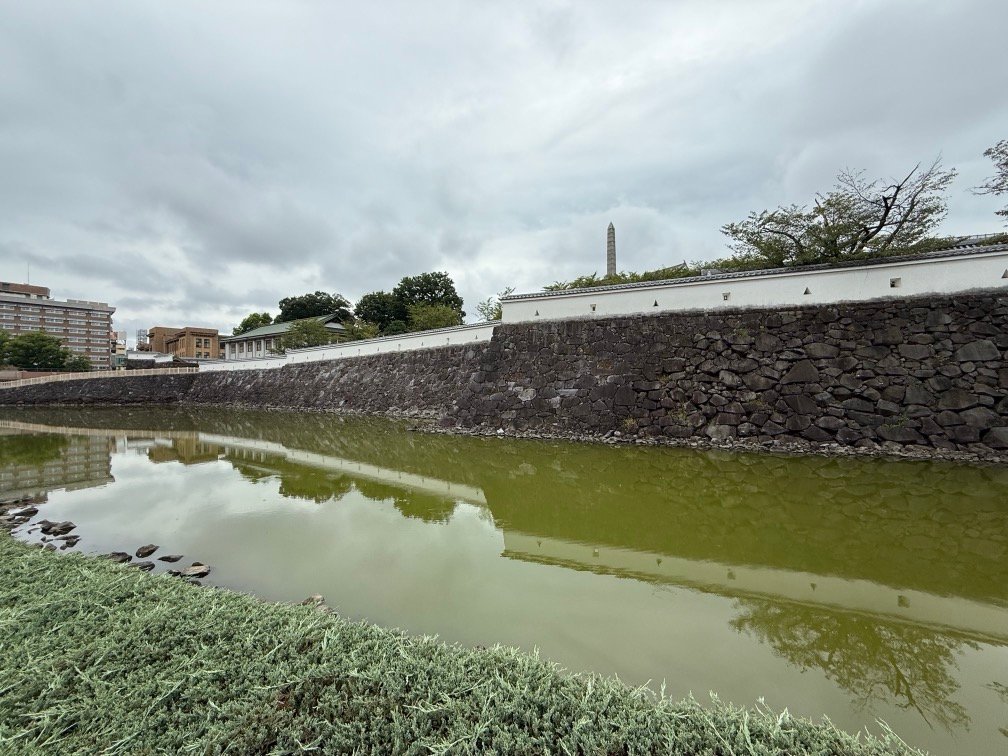
Upon arrival in Japan, I left a bag in Tokyo and took my backpack with me to Kofu, which was the gateway to the Southern Japan Alps. There, I did my best to recover from the long flight and adjust to the time change. I did a little sightseeing in Kofu as well. They had ruins of a castle and some shrines to see.
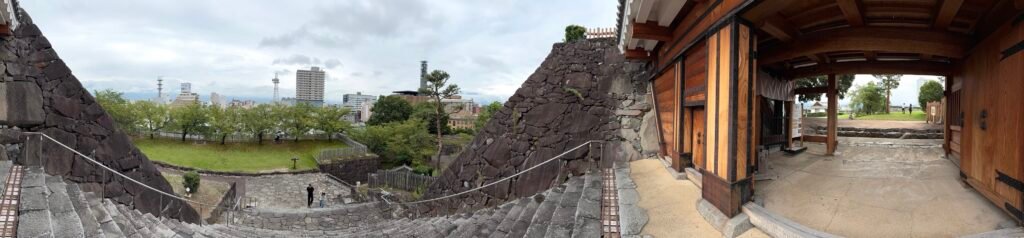
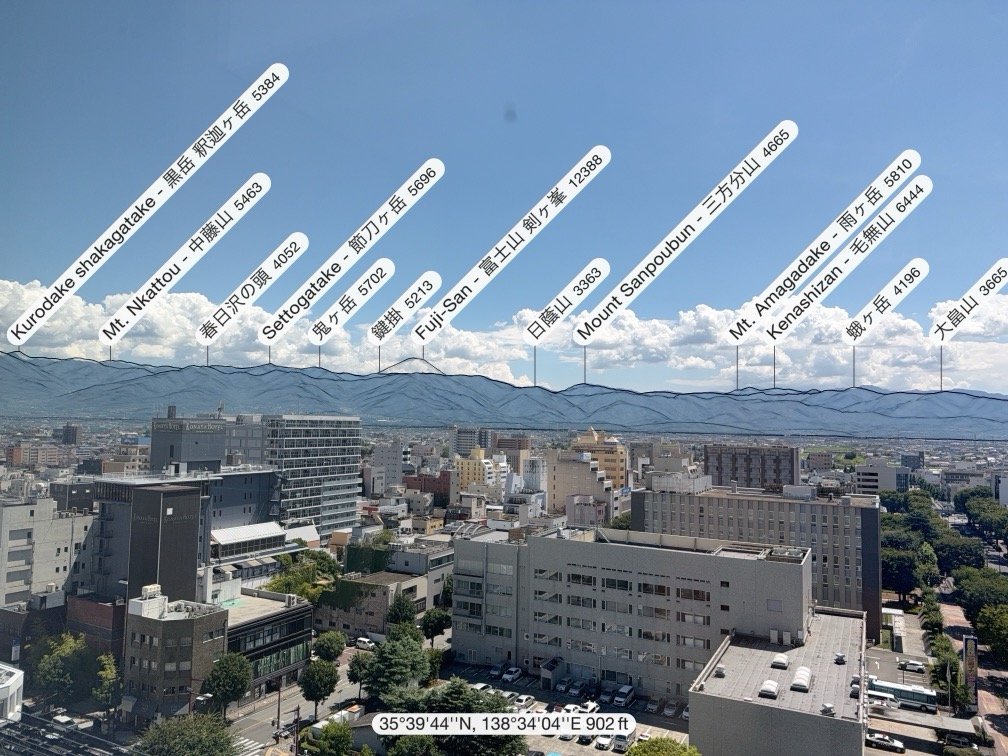
Also, a great view of the primary goal for this trip: The Southern Japan Alps
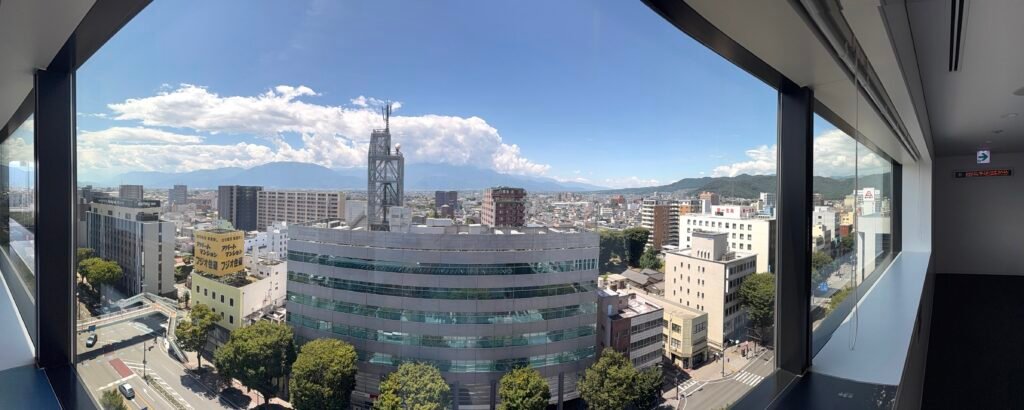
And a view of Mt Fuji… but not during my time in Kofu (Peekfinder says it was there, but I never had the opportunity to confirm it’s existence):
Then I took a bus to Hirogawara and stayed overnight at the Hirogawara-sansou Hut, where I had a horrible day and night. Not sure if I caught a bug from somewhere along the way, if it was something I ate, or if it was just getting over the timelag, but I was not feeling too good and didn’t get a lot of sleep.
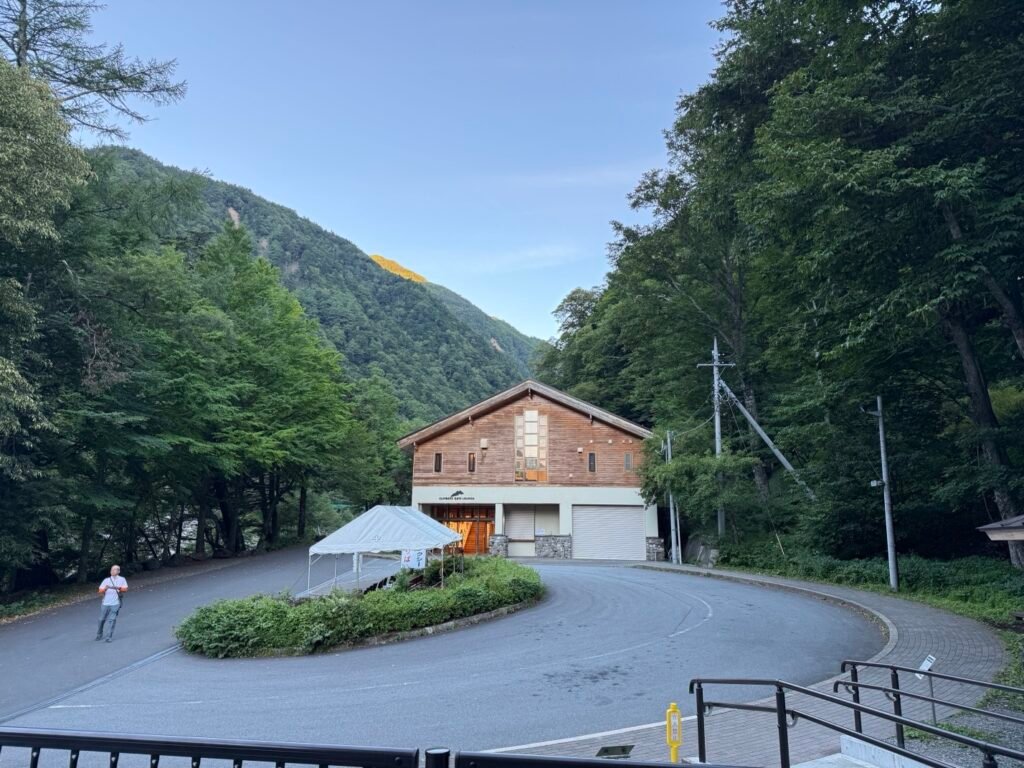
The next morning I did my best to get started up to my first target, the Katanokoya Hut. This was the hut closest to the Kita-dake summit. Even taking long rests, it soon became obvious that I was not going to make it, not even to the backup hut (Shiraneoike Hut) that was my fail safe if I couldn’t make it all the way to the Katanokoya Hut.
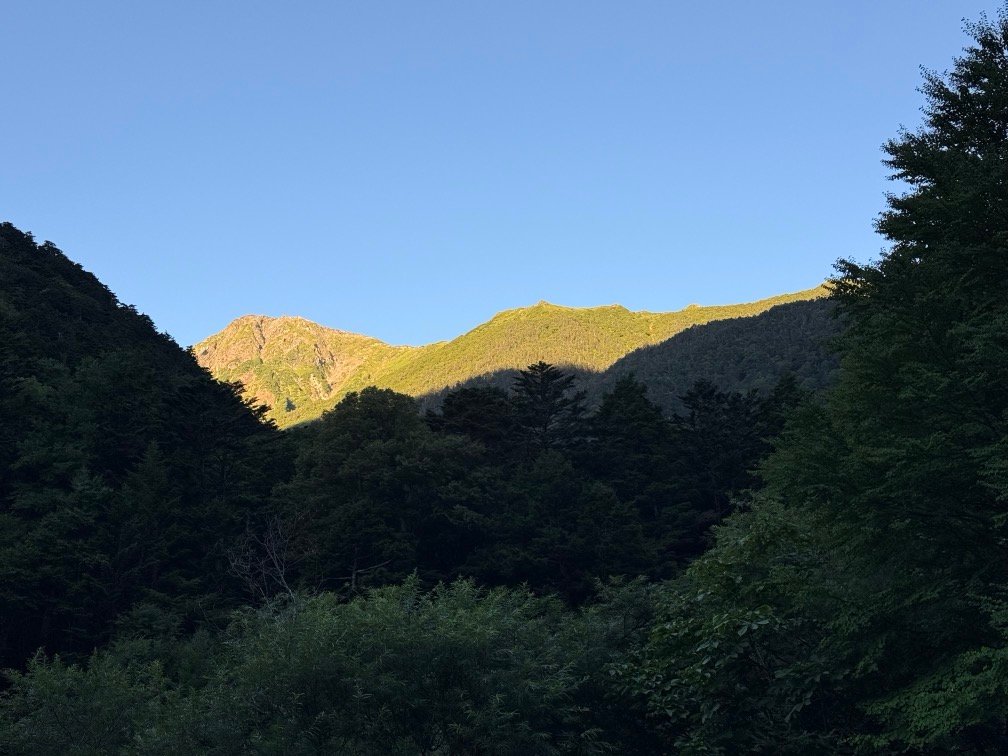
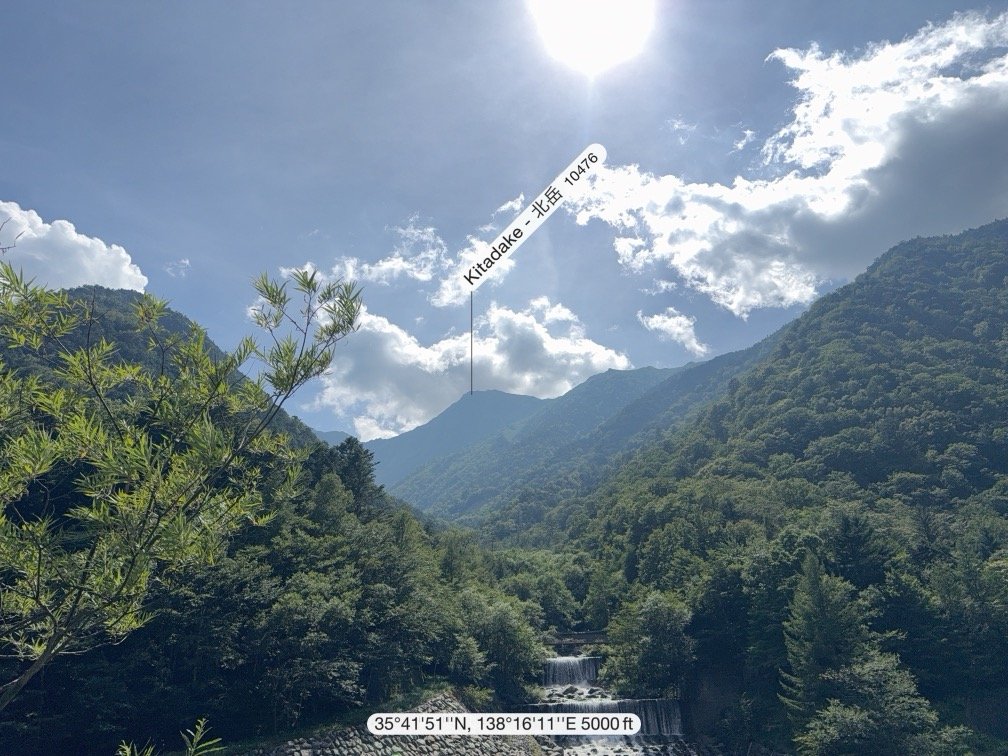
Sadly, this would be the closest I got to Kita-dake. 🙁
Aborting back down at Hirogawara, I waited for a bus back to Kofu, trying to decide what to do. I decided that I’d go to the Fuji Five Lakes area near Mt Fuji and recover from whatever ailed me and plan my next move. I decided to get a hotel near Lake Yamanakako, which is the last of the 5 lakes that I hadn’t seen up close.
The hotel had a great view of MT Fuji… most of the time. 😀
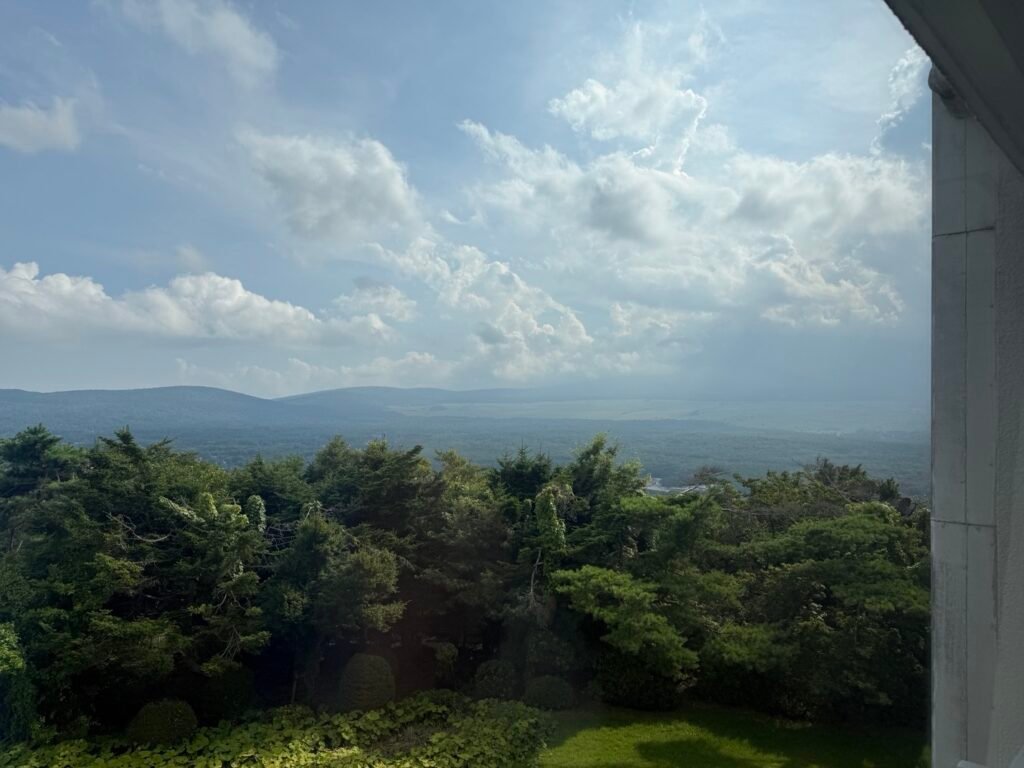
Lake was nice to look at as well from my room window.
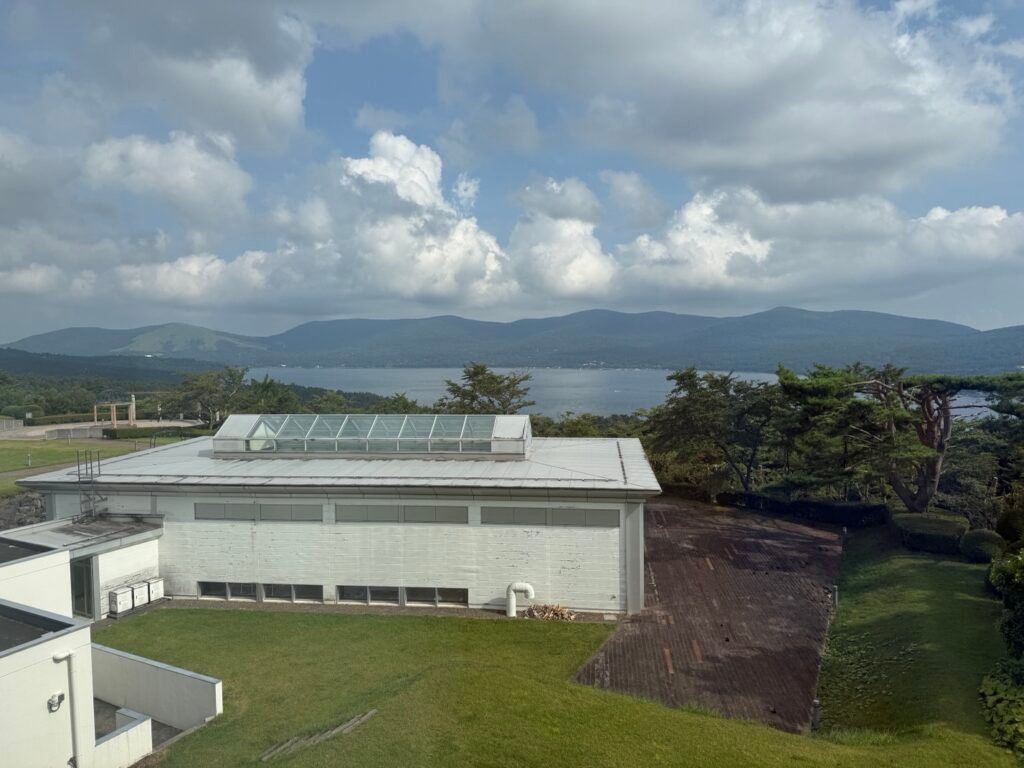
I did get a few peeks at Fuji that first day.
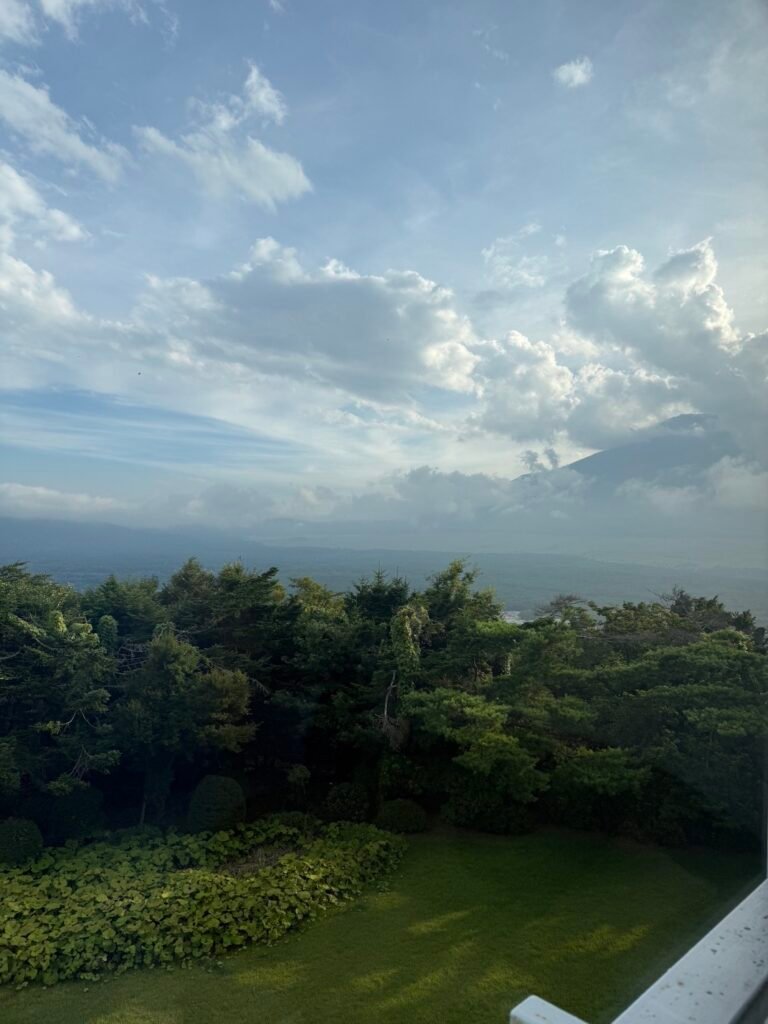
And some more for my 2 days of rest that came after.
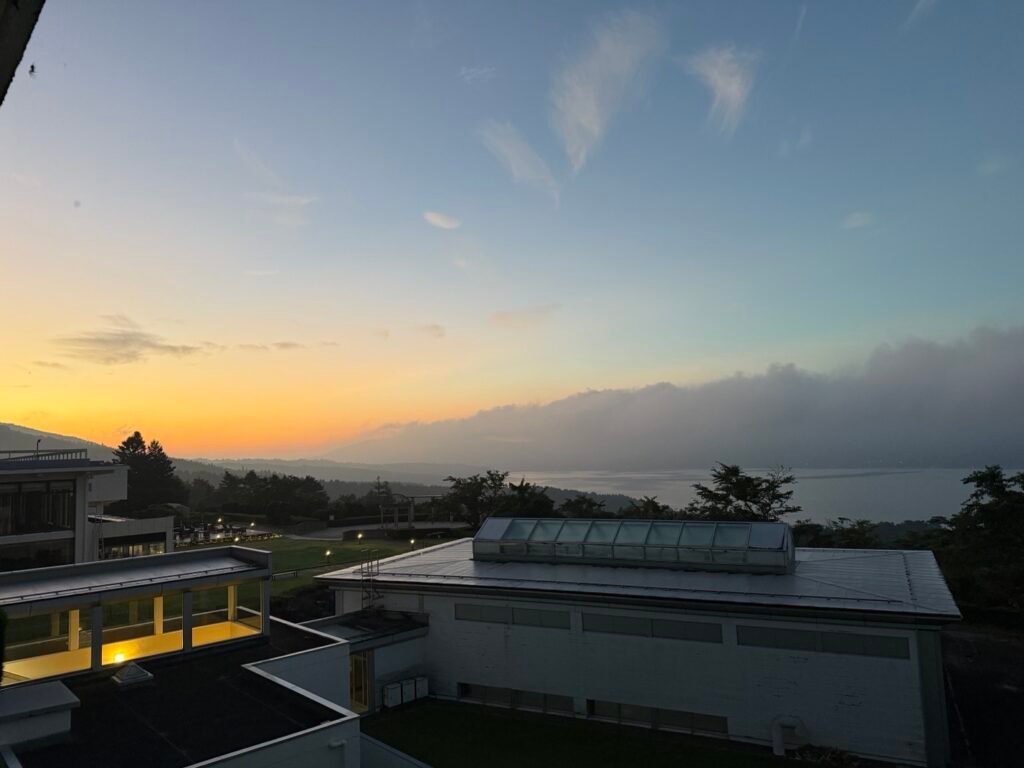
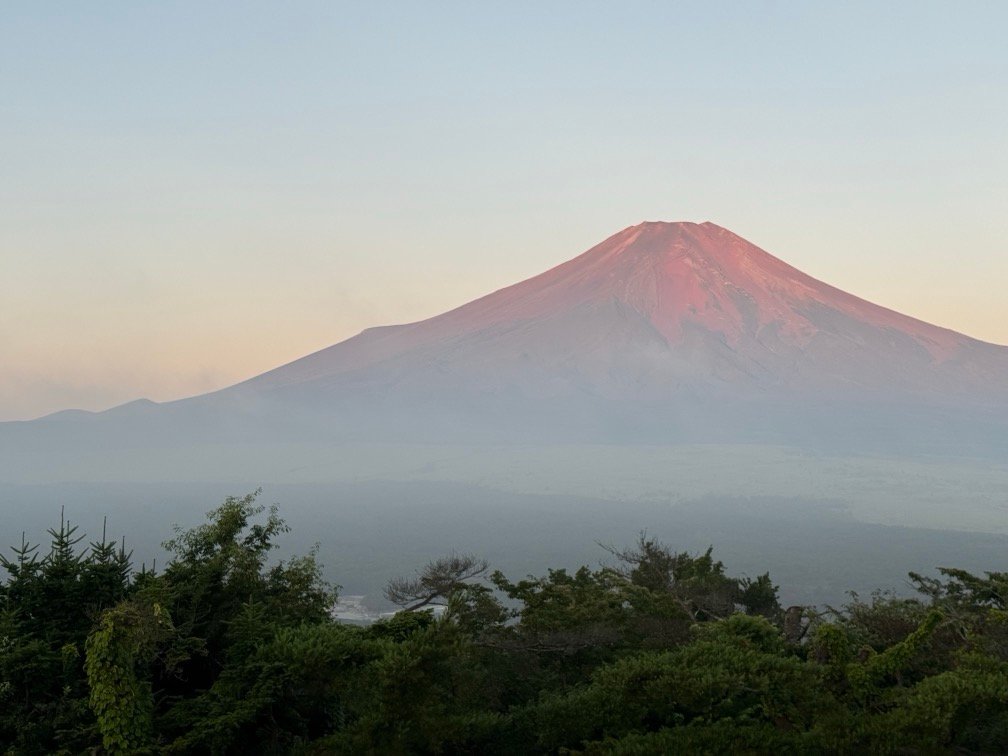
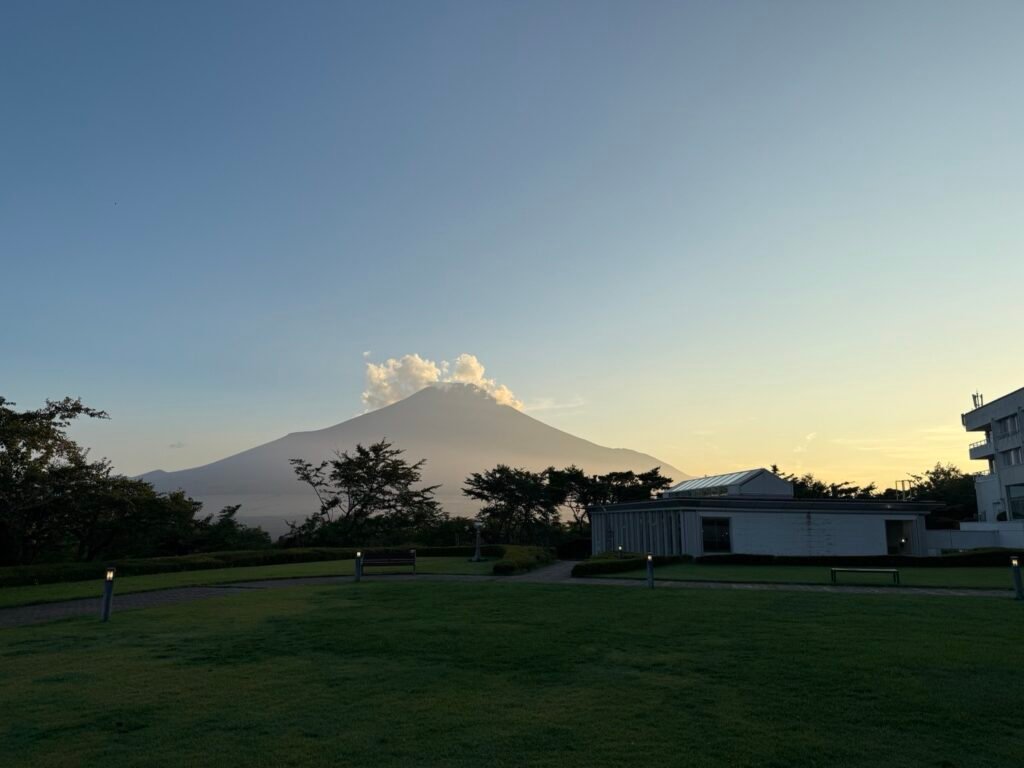
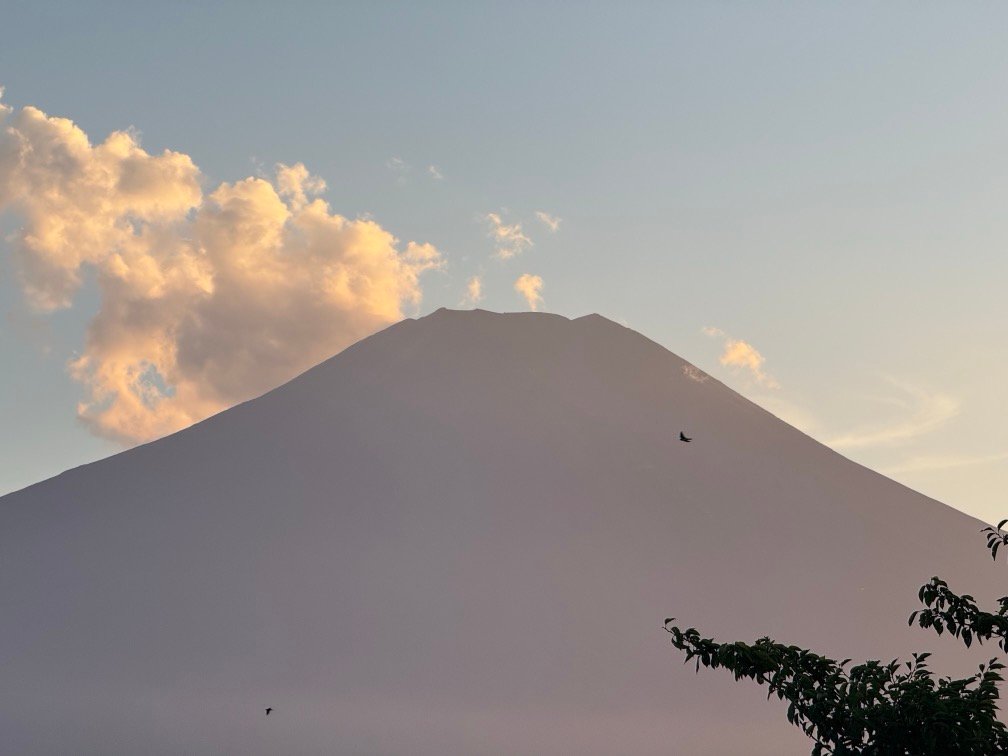
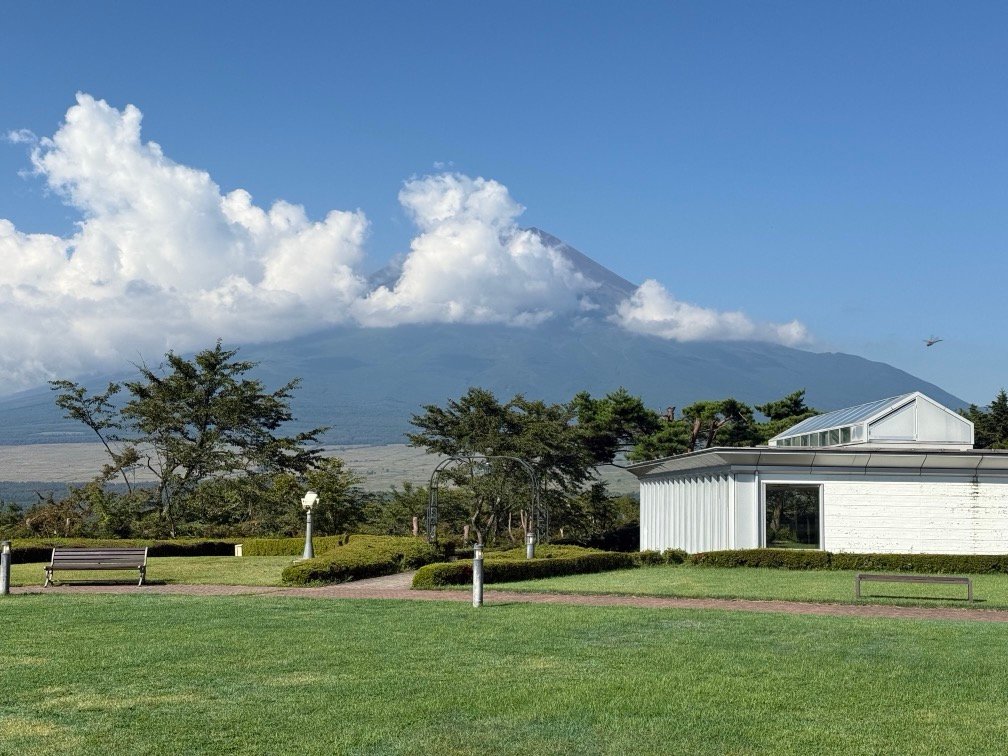
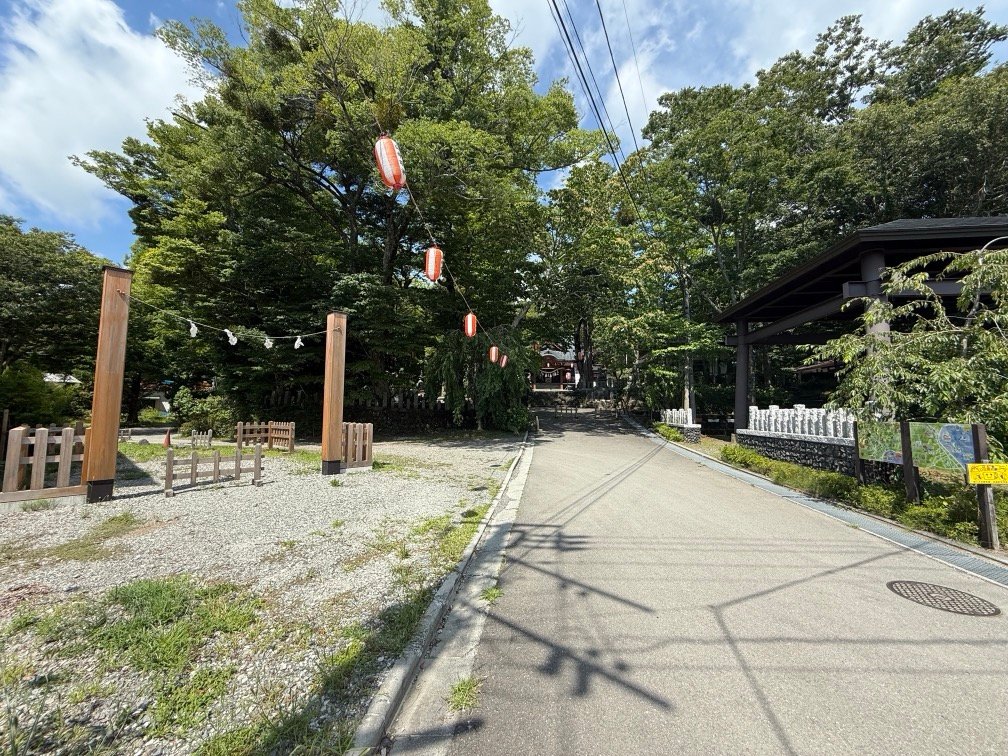
When I started to feel better, I changed to a hotel on the lake shore after visiting a small shrine nearby.
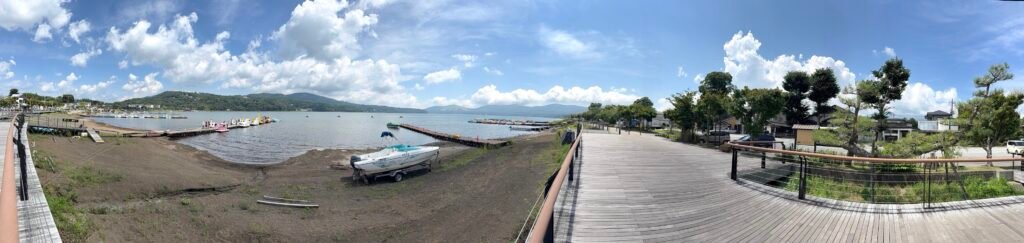
I was even able to see my first hotel from the lakeside.
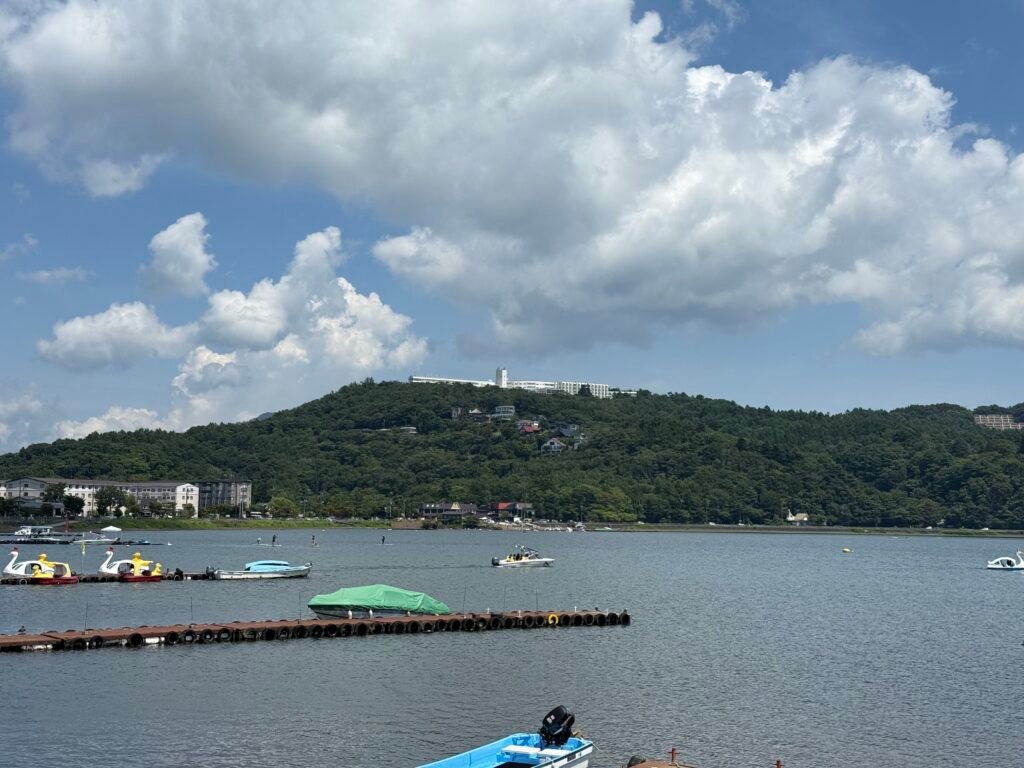
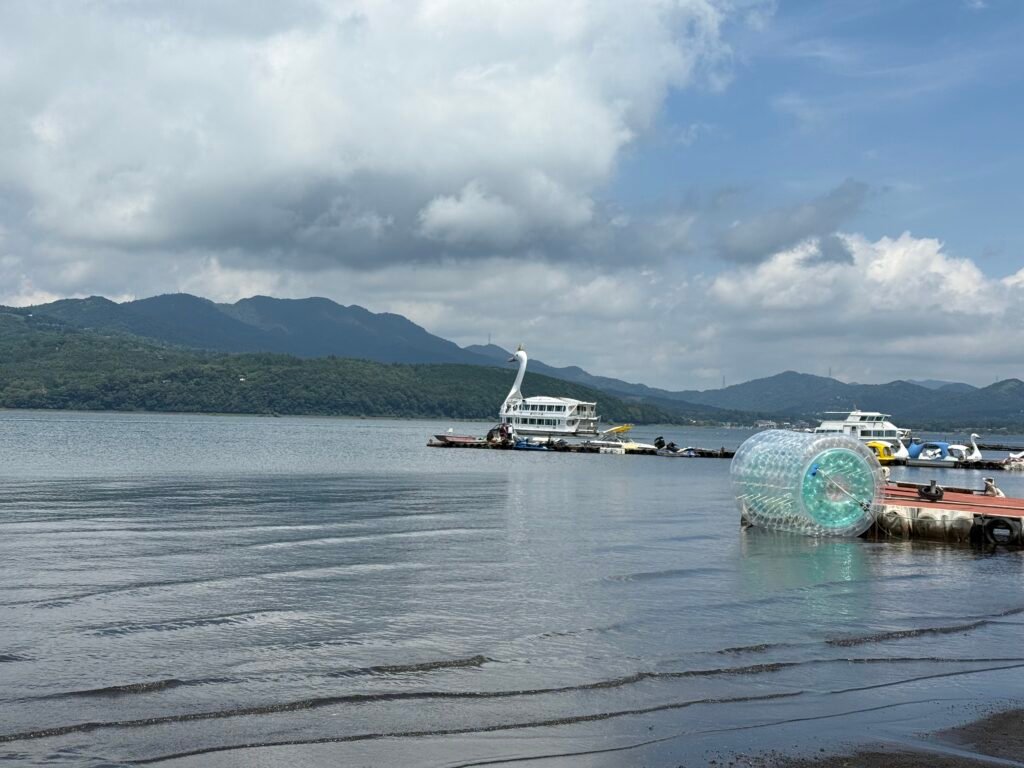
I even played tourist and took a duck boat on a ride around the lake.
Had another great view of Fuji from my new hotel room.
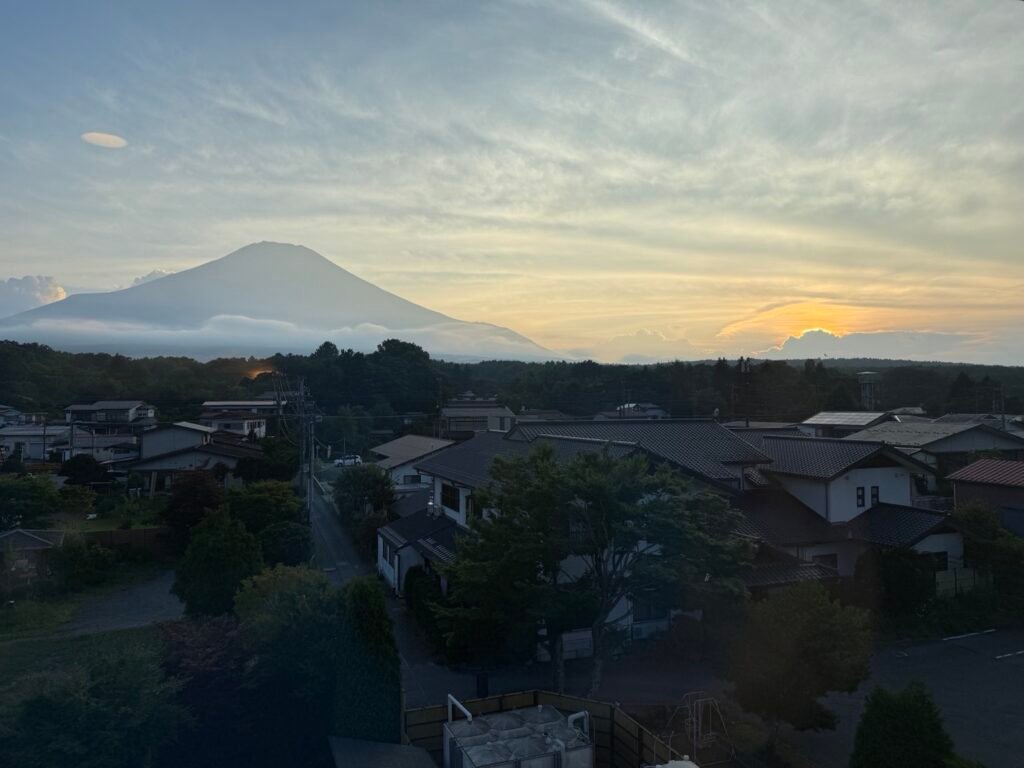
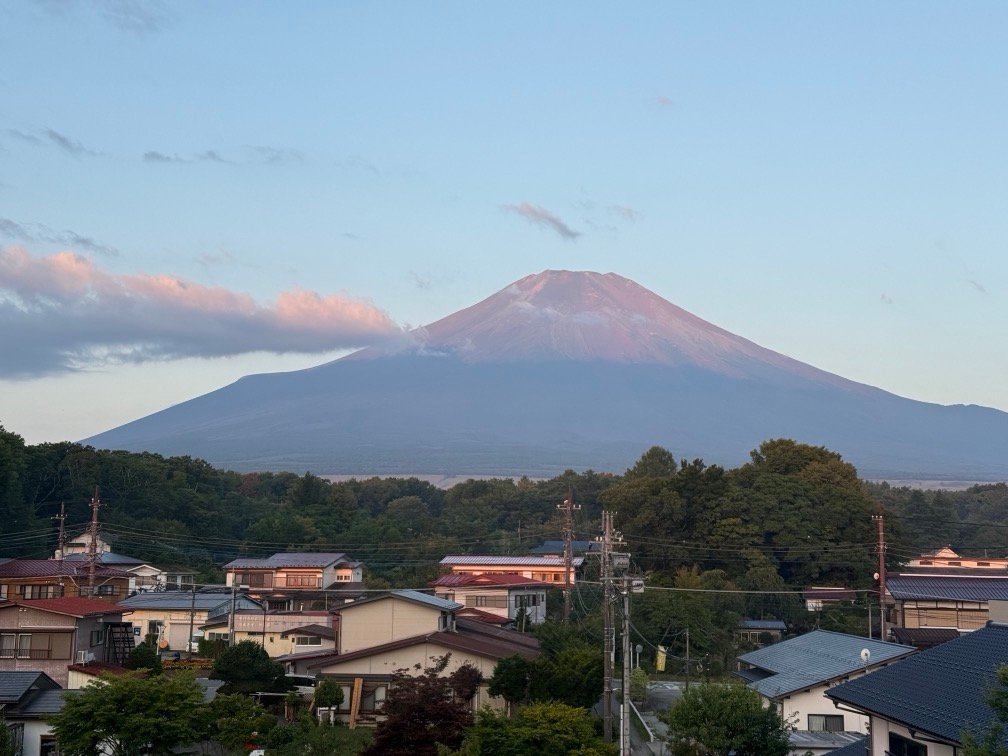
Most of the time. 😀
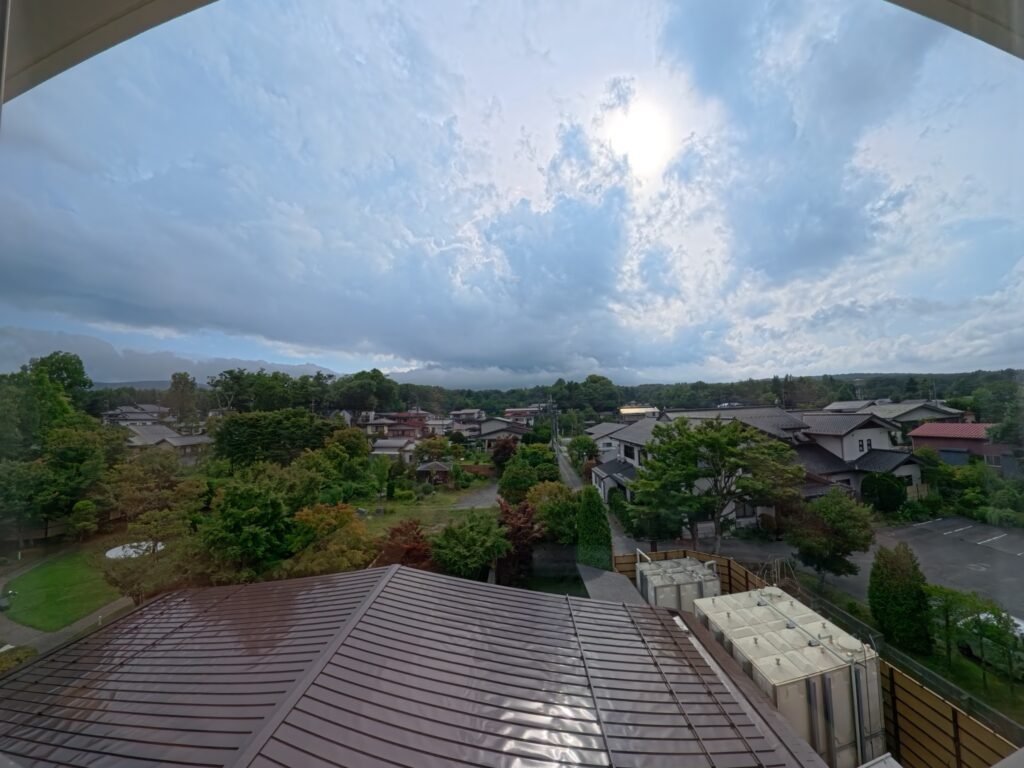
So, I after three days of rest, I decided to give Mt Fuji a try. I had to scramble to find mountain hut reservations at the last minute, but was able to secure them. One benefit of traveling alone is that you can usually squeeze into places at the last minute (more on that later).
So, having decided to climb Fuji, I prepared my gear and sent some extra things I didn’t need for Fuji to a hotel in Tokyo. I had packed for 9 days on trail in the southern Japan Alps and Fuji would only be a couple nights.
Since I had already climbed and descended Mt Fuji via the Yoshida and Gotomba trails, I decided to climb up the Subashiri Trail. You can kind of see where the two trails merge in this pre-dawn picture of Mt Fuji. The very heavily traveled Yoshida Trail comes from the right and Subashiri comes from the left until they merge for the final climb to the summit.
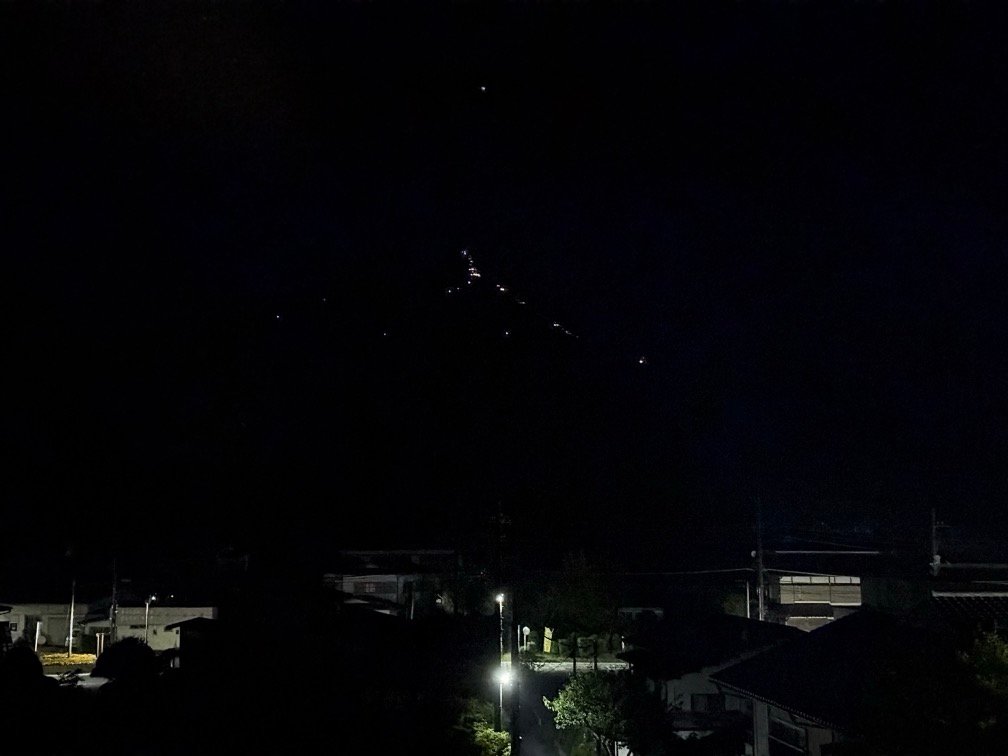
The climb from Subashiri 5th station was nice, until it started pouring rain from the skies.
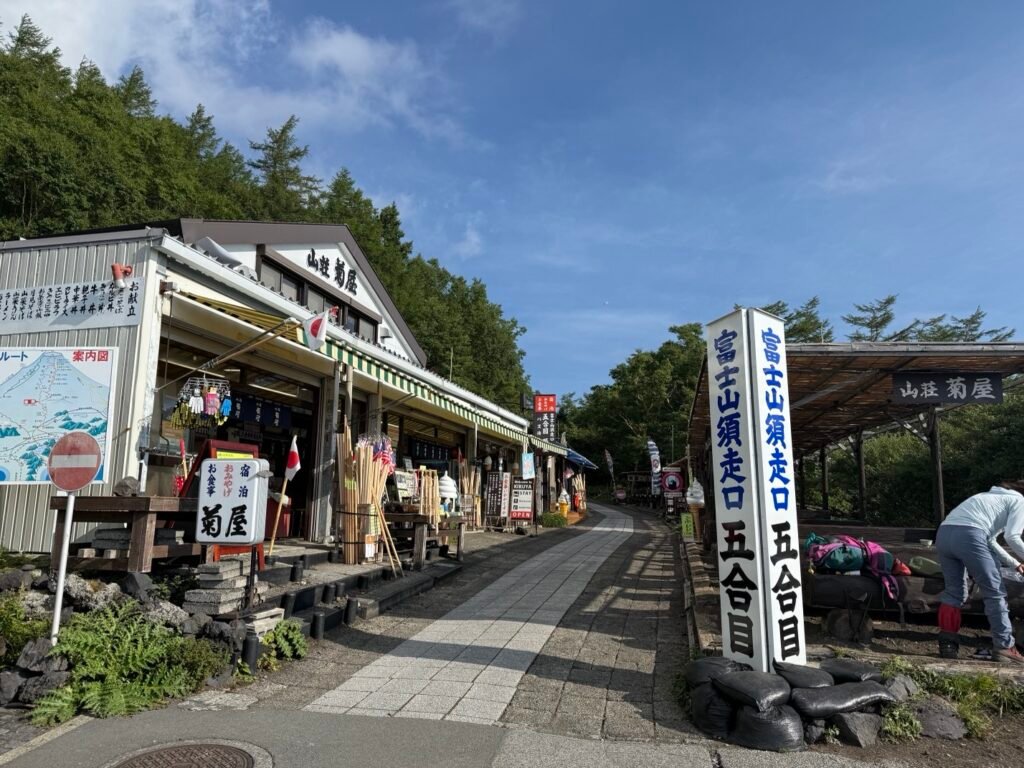
It wasn’t a surprise based on the cloud layer I hiked through much of the morning and I had my rain gear.
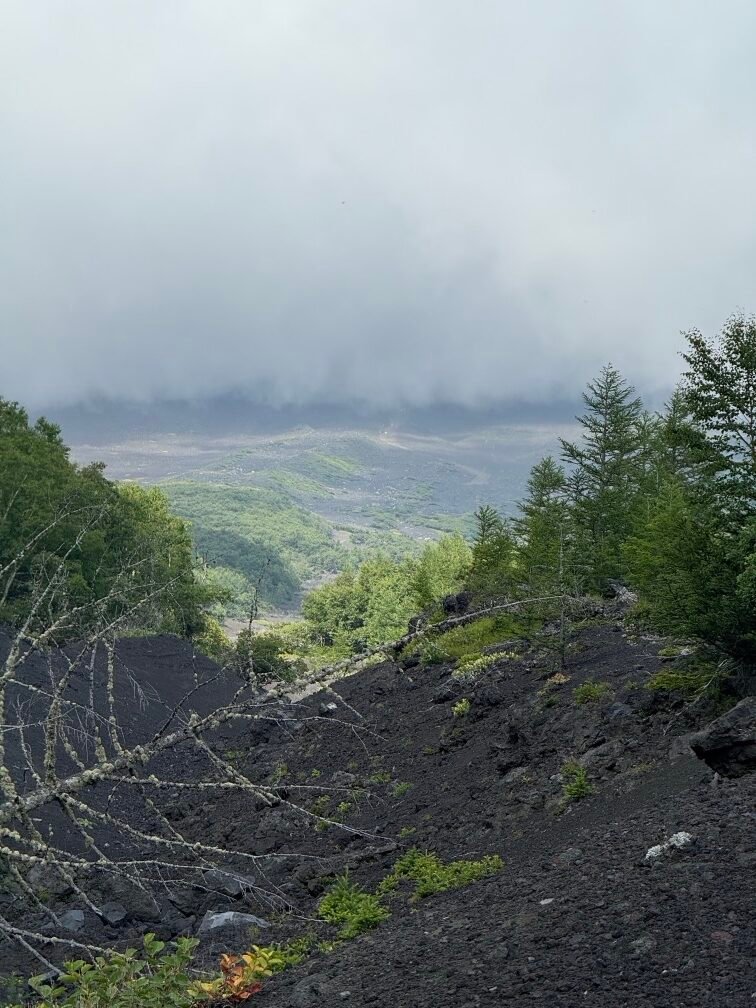
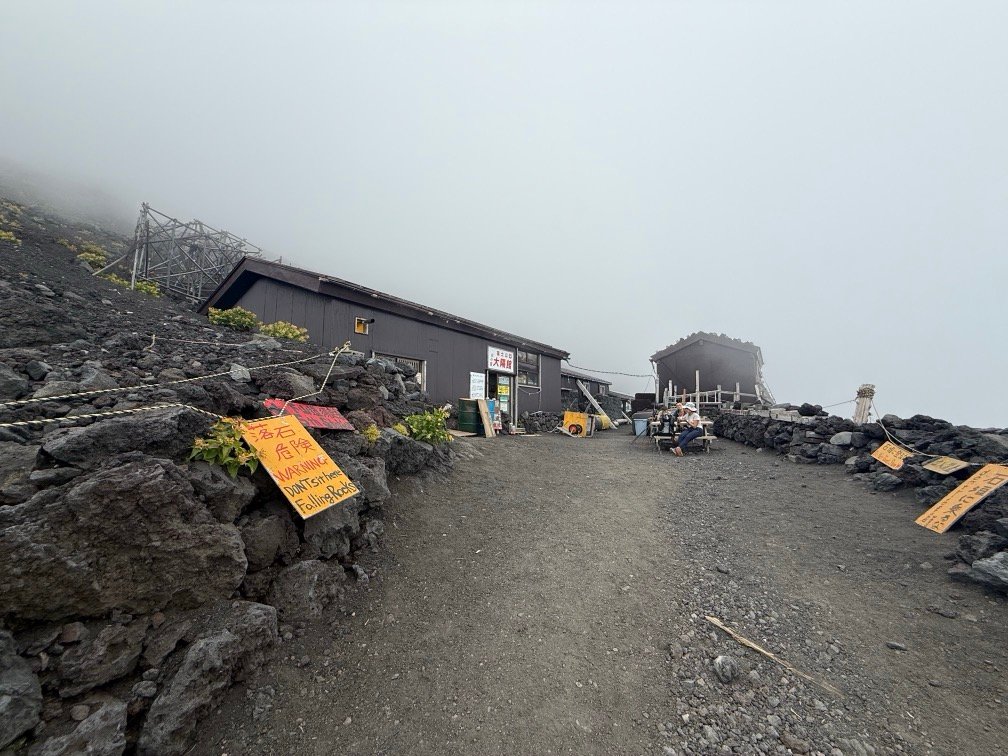
When the skies REALLY opened up, I and a lot of other climbers took shelter at a hut at the original Subashiri 7th station. Sadly, they had no room for the night. It wasn’t that much further to the hut I had a reservation at, so I held out until the rain slowed down and then continued upwards.
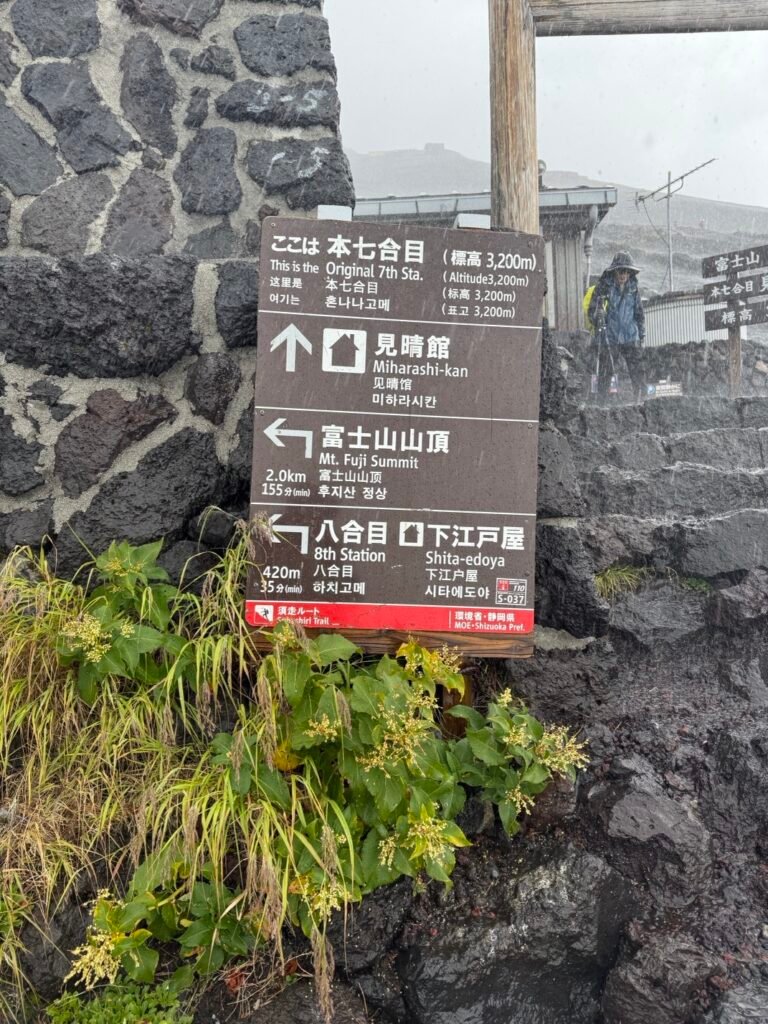
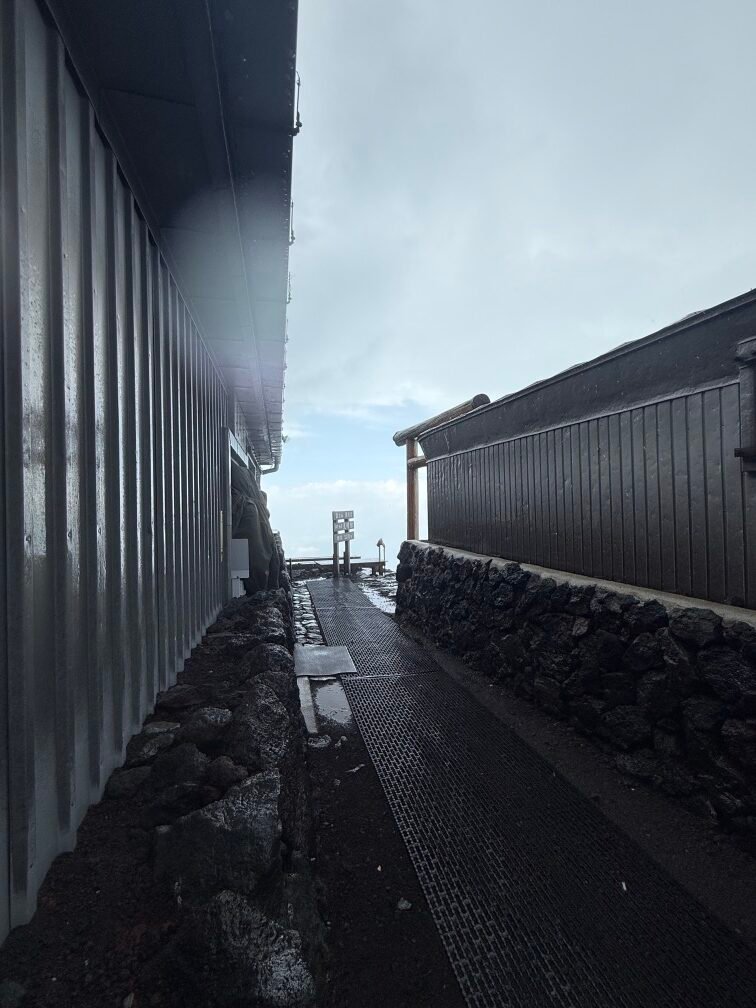
Thankfully, the clouds started to part and the rain trailed off as I climbed.
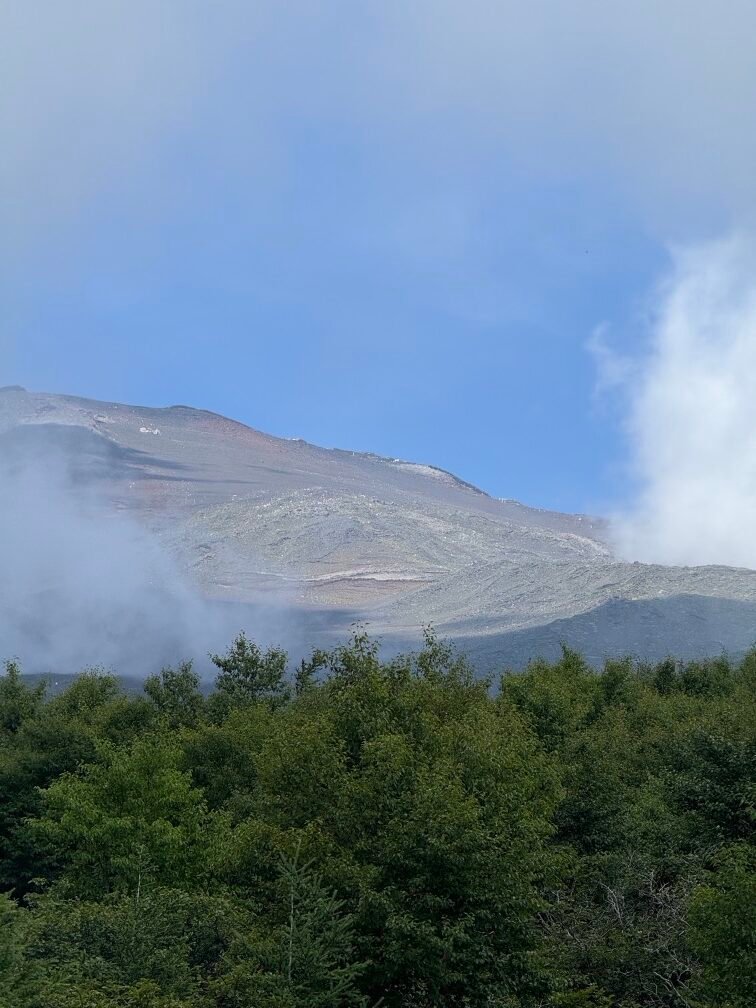
That was partly due to the fact that when climbing up a mountain you sometimes end up climbing above the clouds.
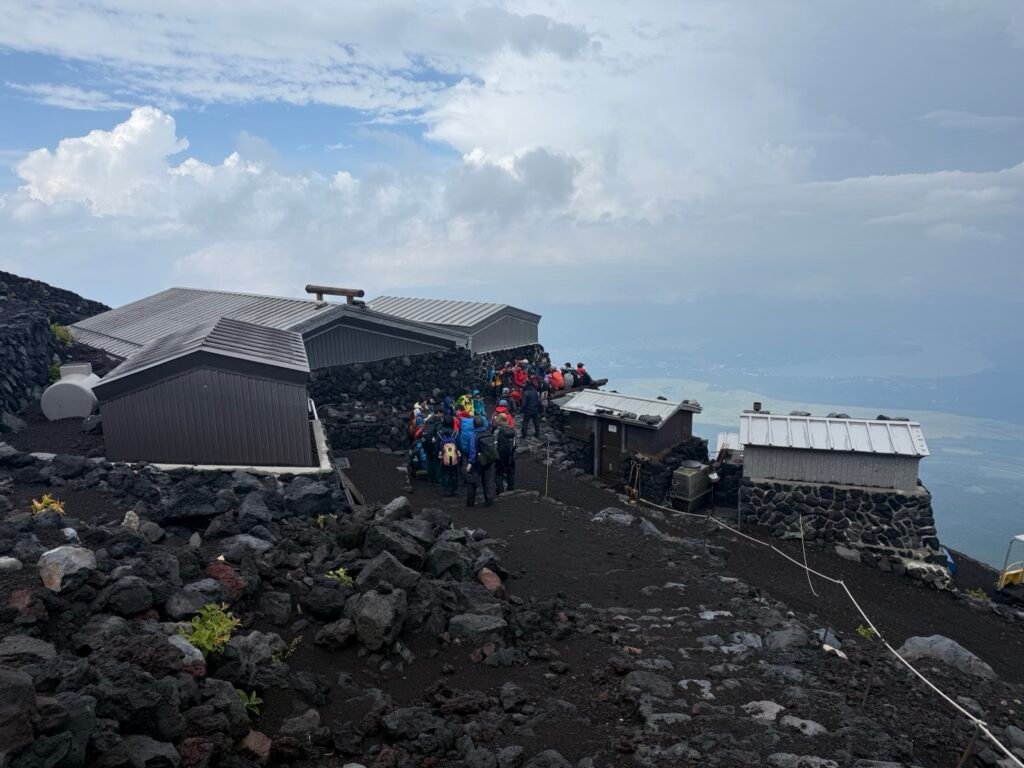
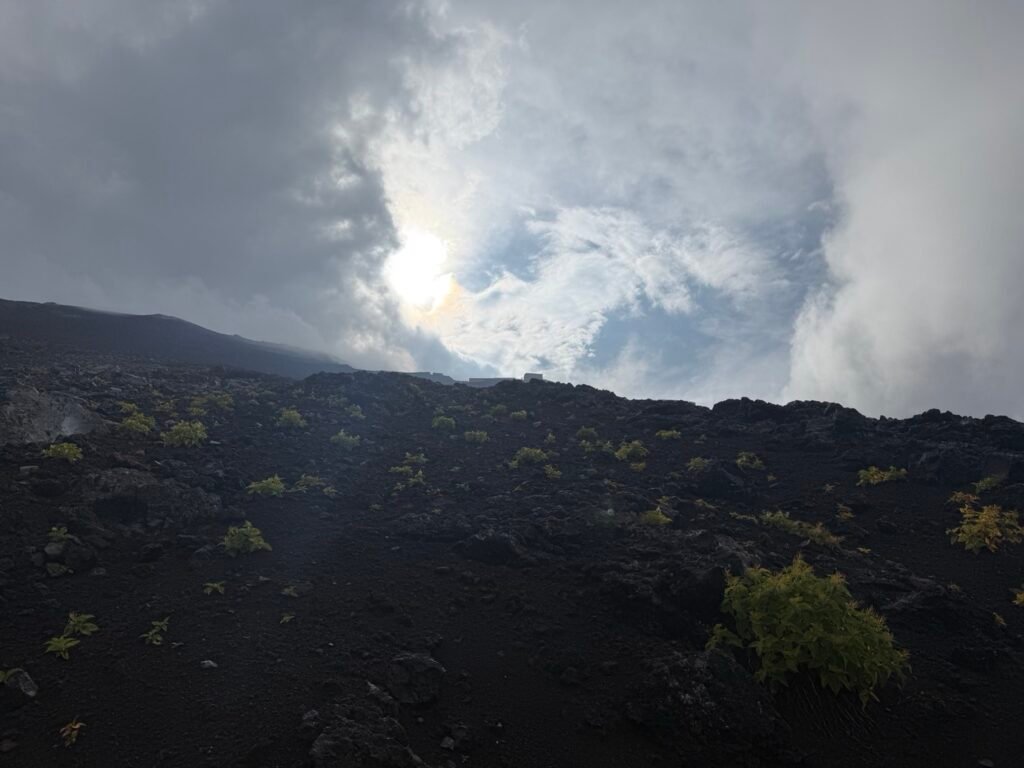
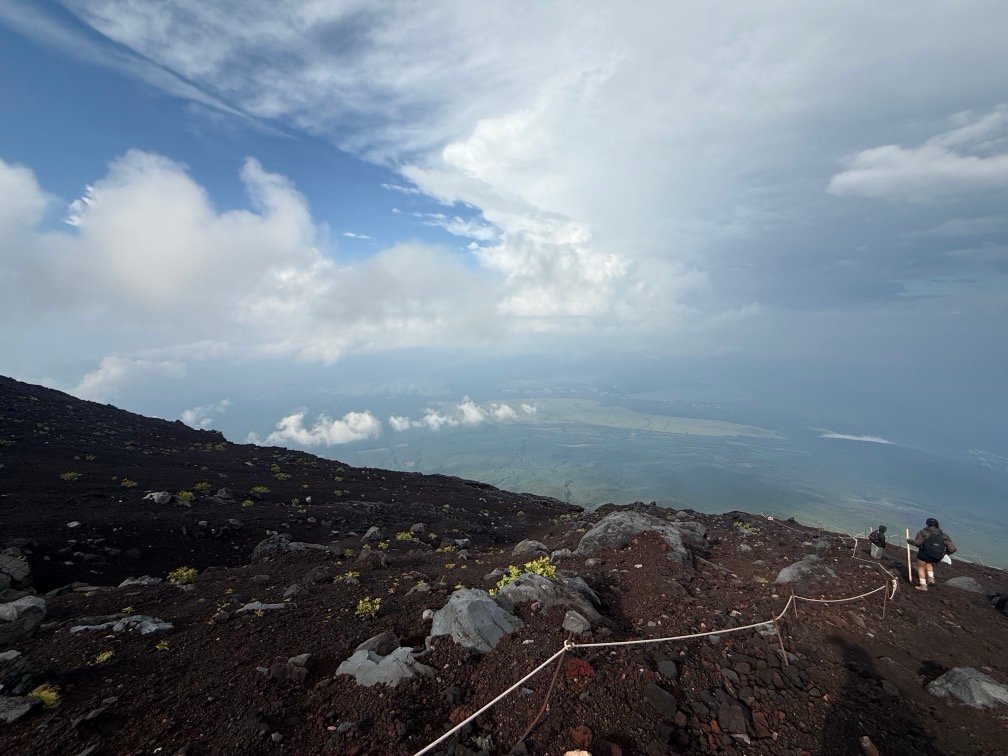
I was happy when I reached the junction between the Subashiri and Yoshida Trails, since I knew my mountain hut was near.
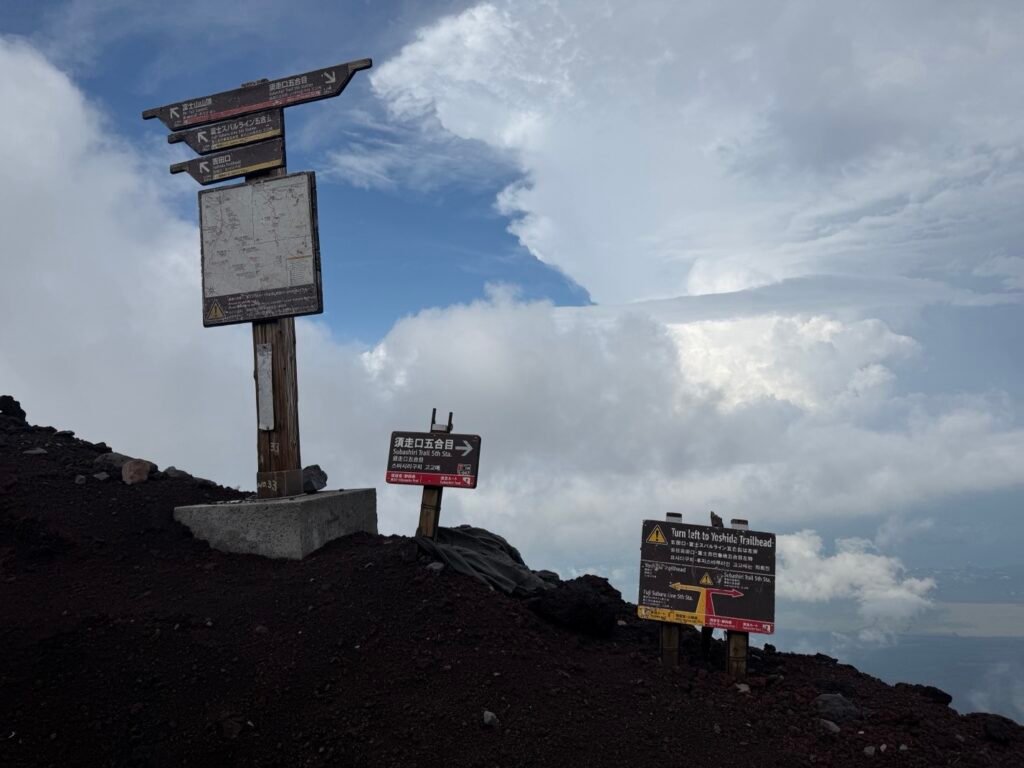
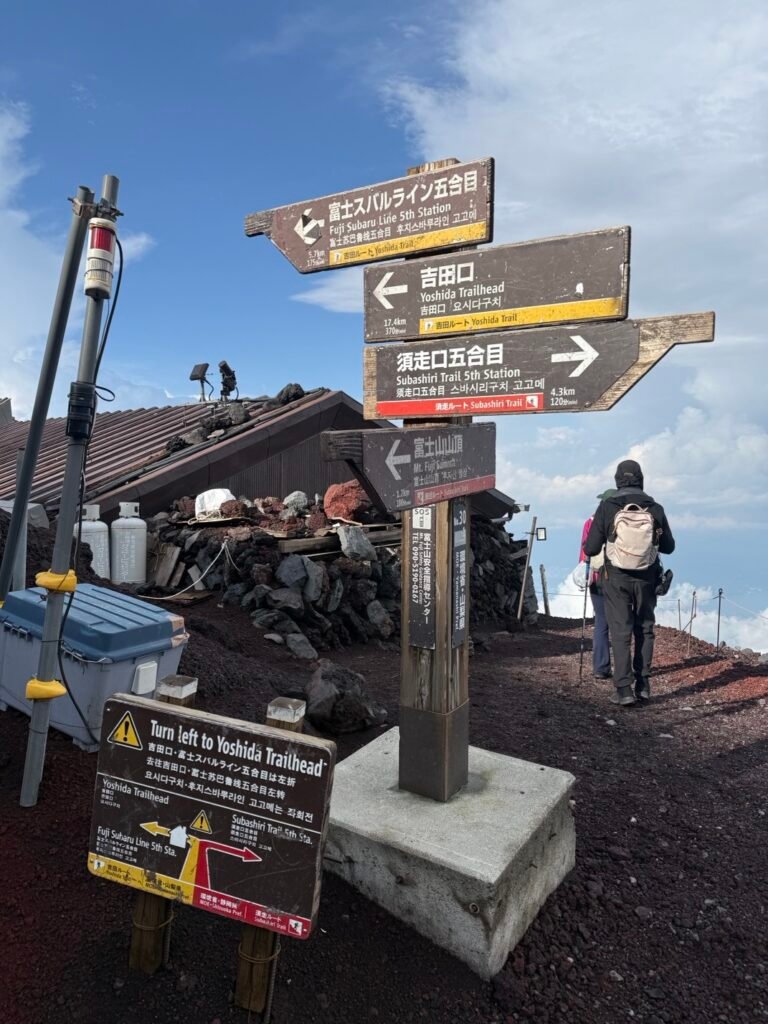
The view from 3,400 meters (11,125 feet) did not disappoint.
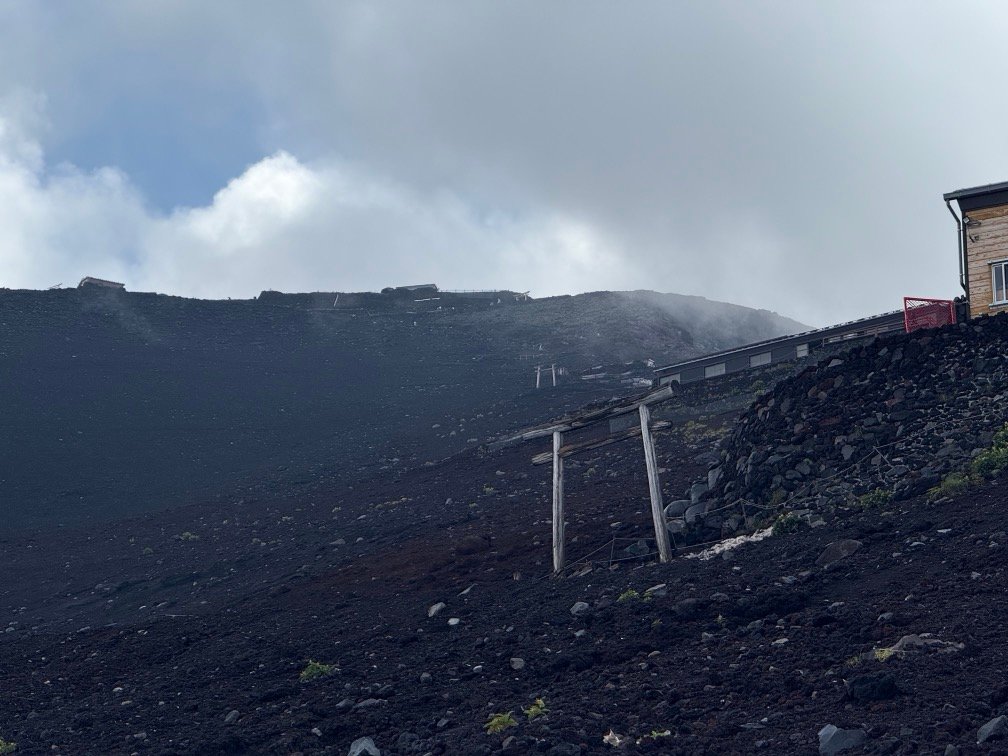
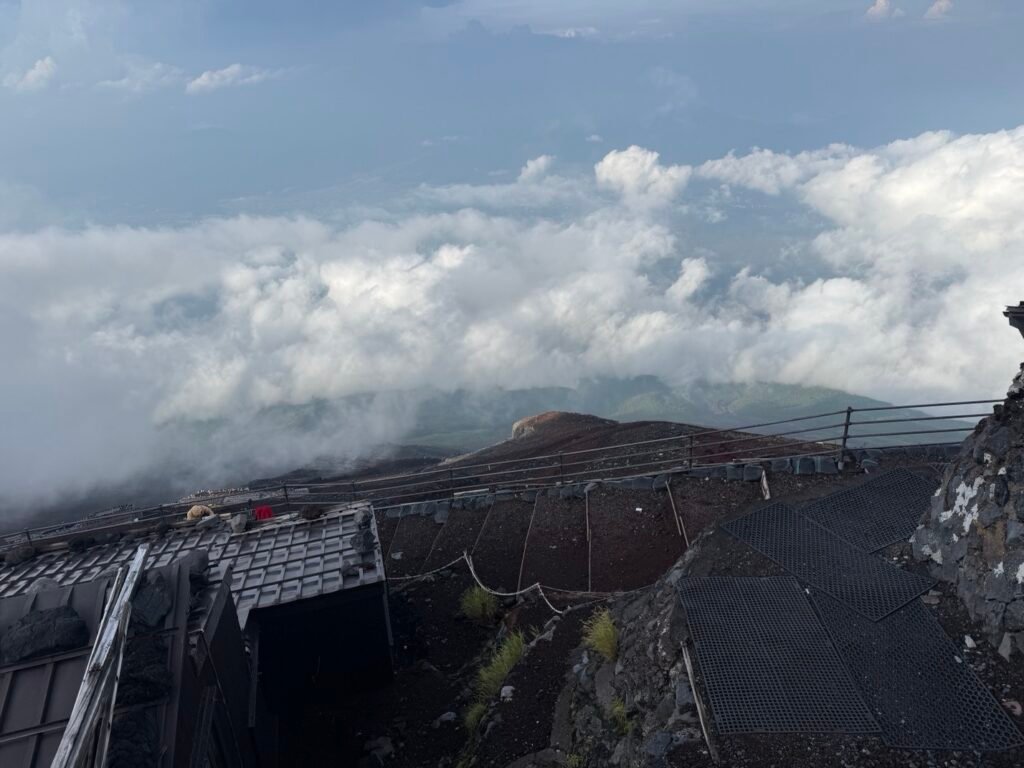
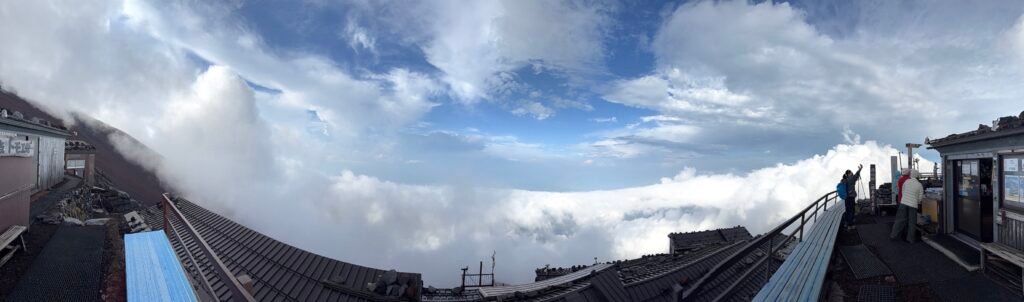
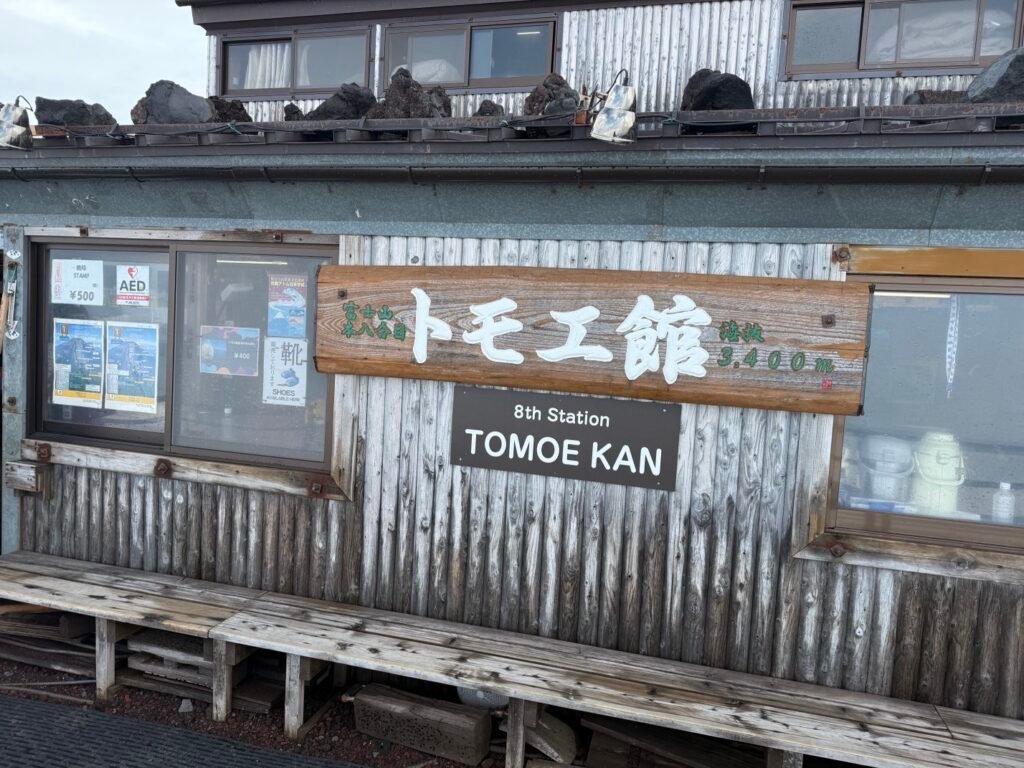
At the hut, I was able to change into some dryer fleece pants and shirt before getting a nice dinner and a box lunch for the morning. Before going to bed very early, I did get a chance to see the cloud that had surrounded the mountain up close. Such is the whims of Mother Nature on and around the mountains.
The sleeping loft I was assigned held three people and I only had one co-sleeper (that I knew of). It was pretty spacious as mountain huts went.
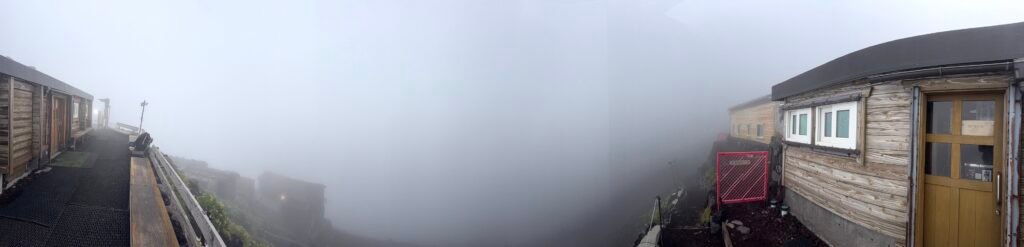
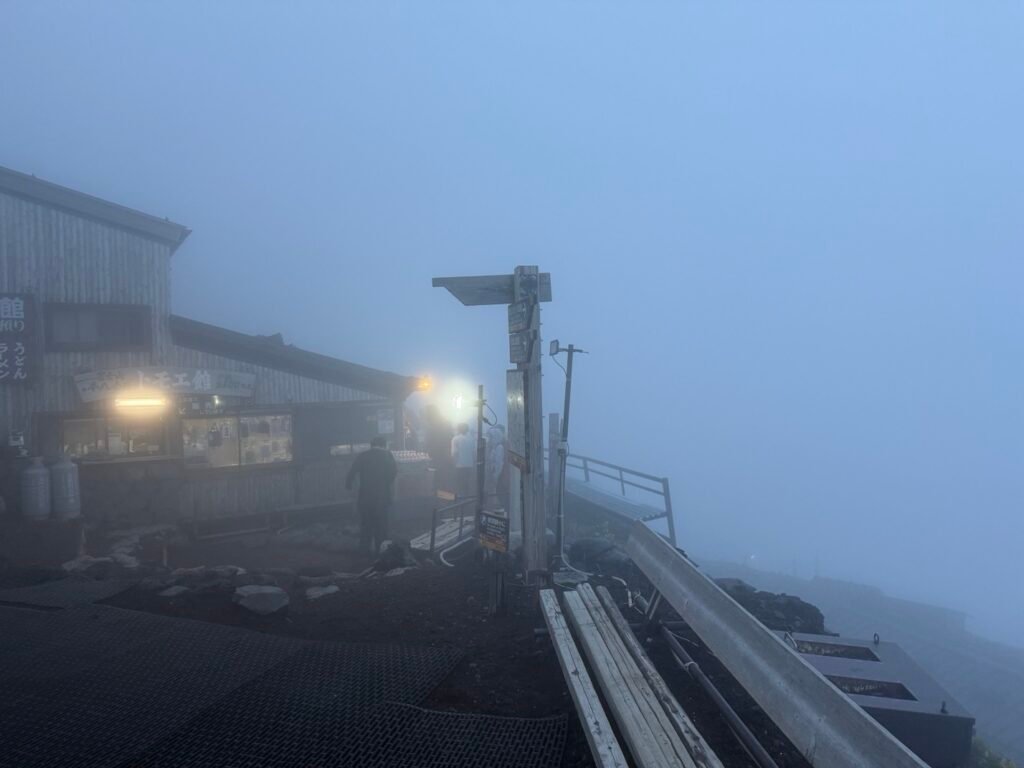
Fortunately, I was feeling pretty good when I woke up and changed into my climbing gear that morning.
Or pre-morning.
One of the biggest things to see when you climb Mt Fuji is the sunrise from the summit. Since there was no hut that you could stay in on the summit itself, you had to get up hours before sunrise and join the queue of hikers making their way to the summit. Fortunately, the clouds had cleared out for the most part and I got some nice views of the city lights all around Mt Fuji and up the coast.
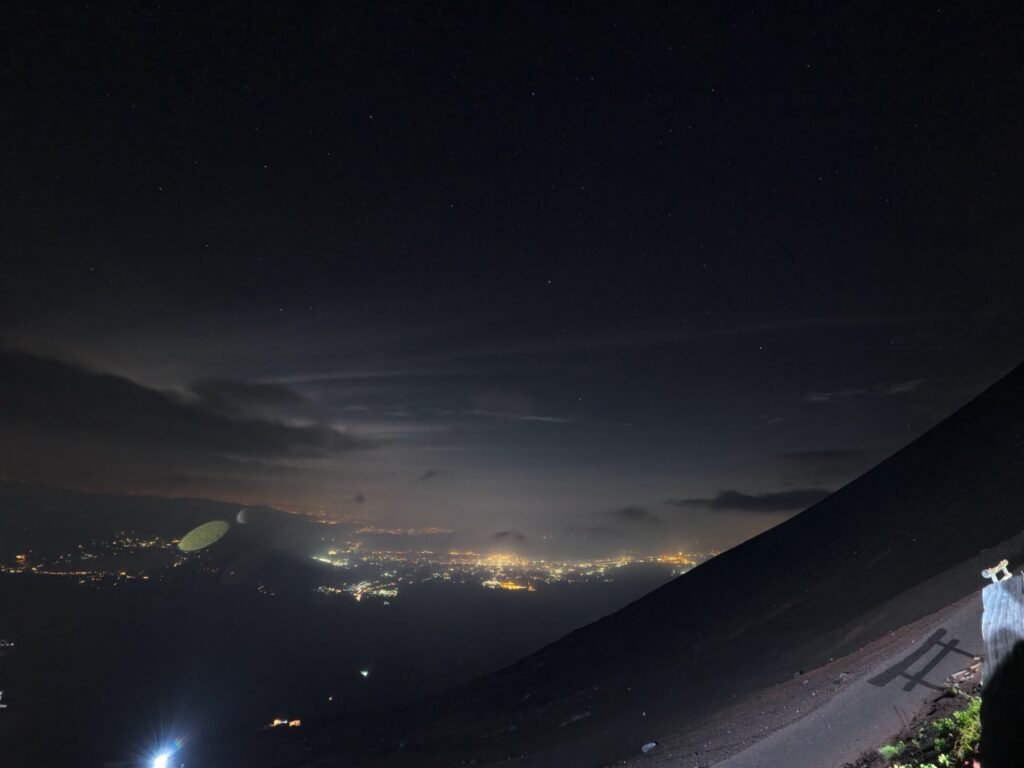
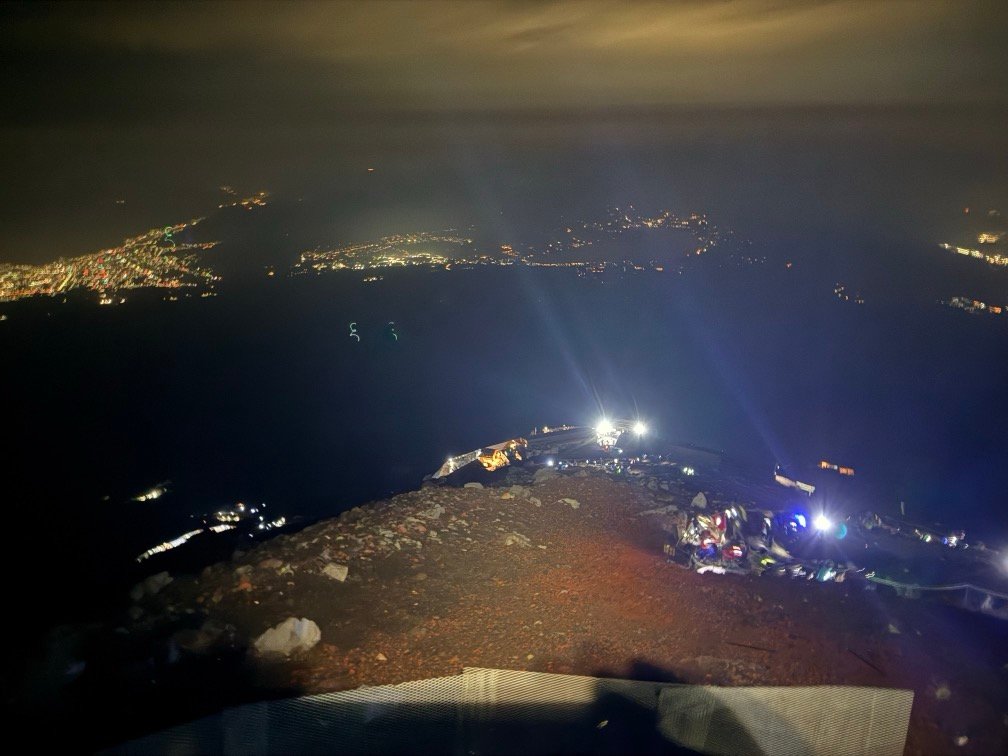
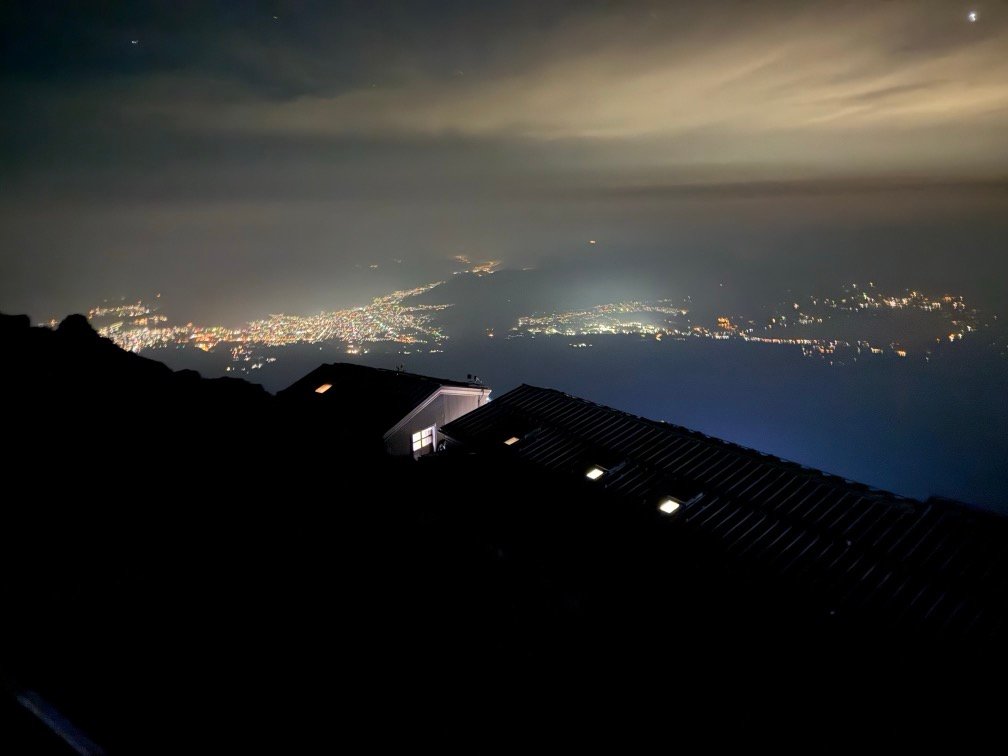
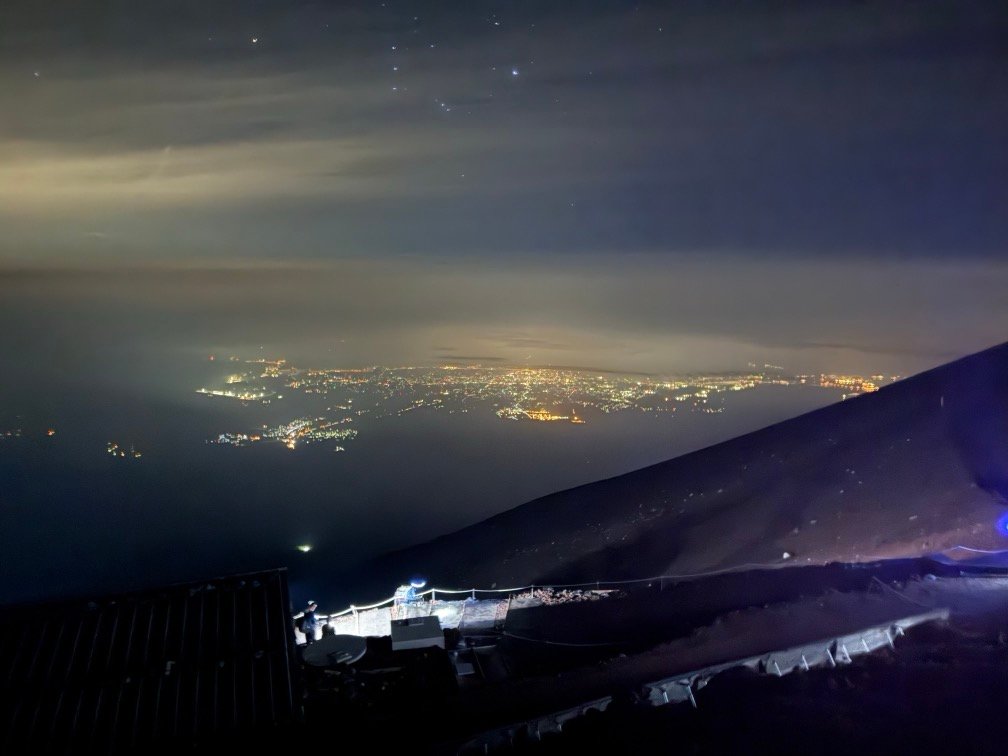
Looking up towards the summit, it was easy to follow the trail of lights that snaked upwards…
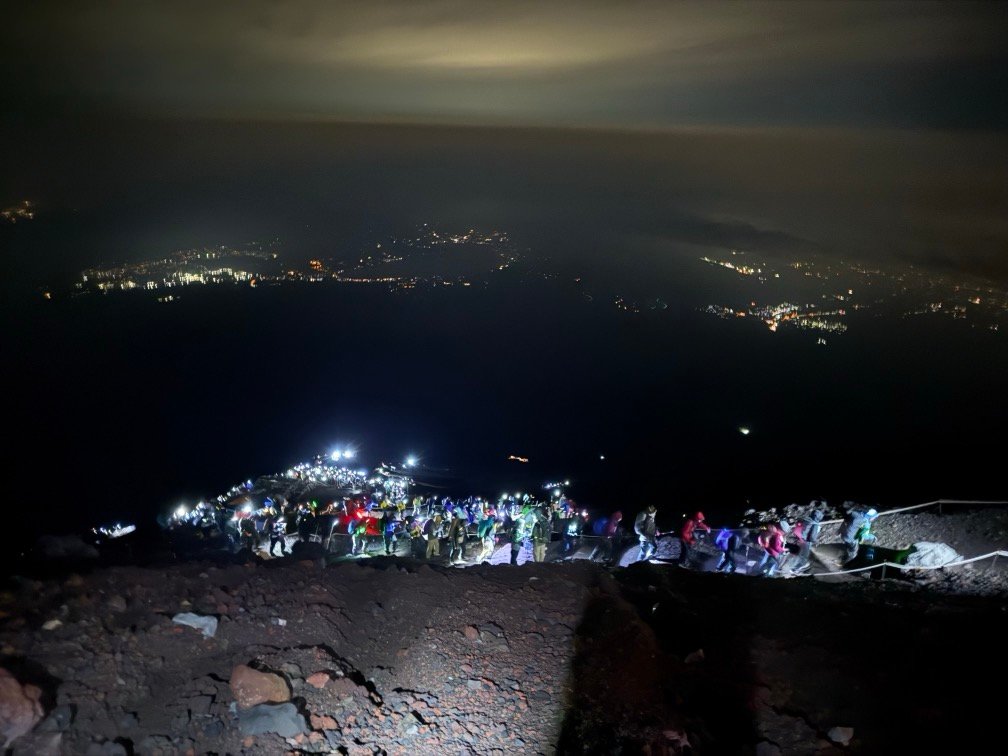
The flood lights illuminating the trail up to the summit were new. I don’t recall seeing them the first two times I climbed Fuji. They have been trying to increase safety on Fuji in recent years, so those may have been a result of those efforts.
From my previous climbs, I knew that once I saw the lion and Tori Gate I was steps away from the rim of the crater.
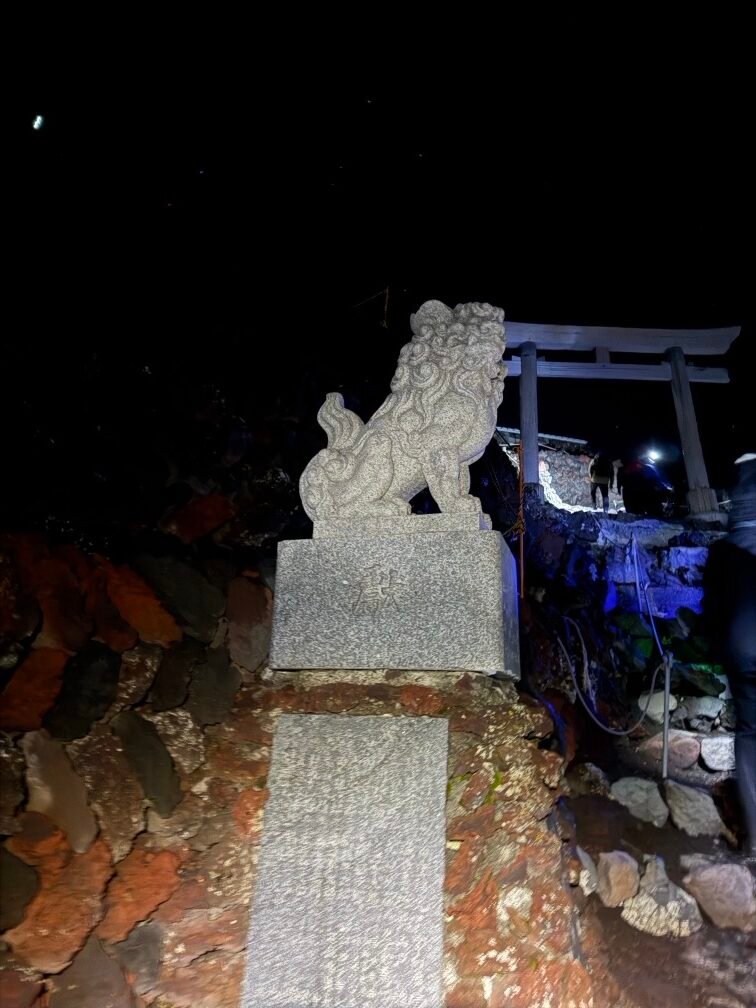
I reached the top of the rim and headed east to get away from the crowds. There were thousands of people lining the side of the rim, so I got as far as I could and found a spot that probably wouldn’t have people walking in from of my camera shot (this had happened during my previous two climbs, so was being extra careful this time). So, I took a selfie and a whole bunch of pre-dawn photos as I waited for the sun to hopefully show itself (the clouds don’t always play nice).
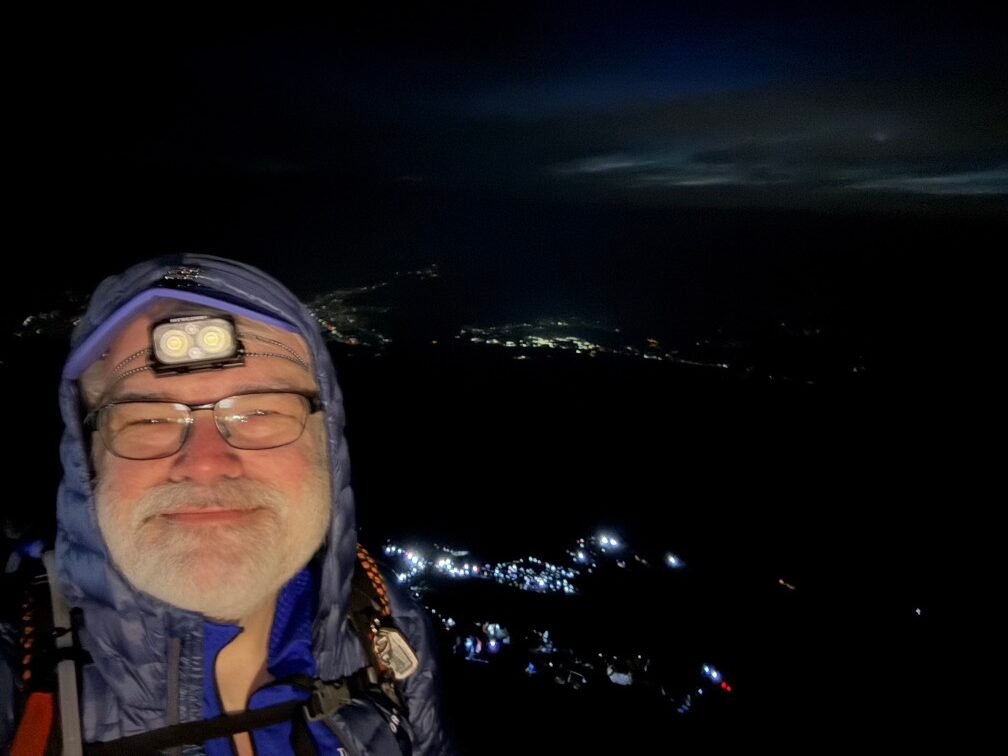
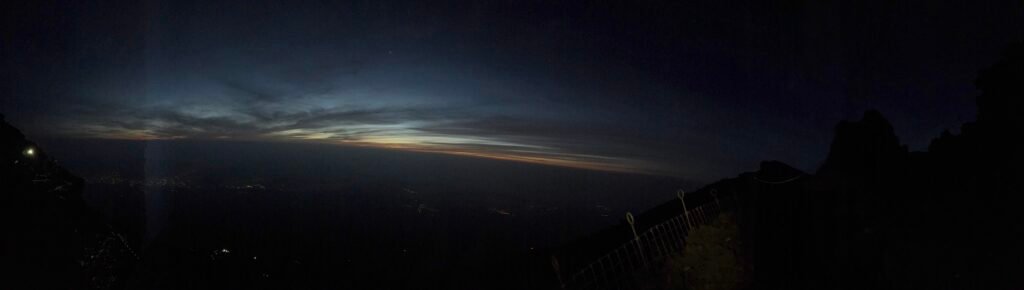
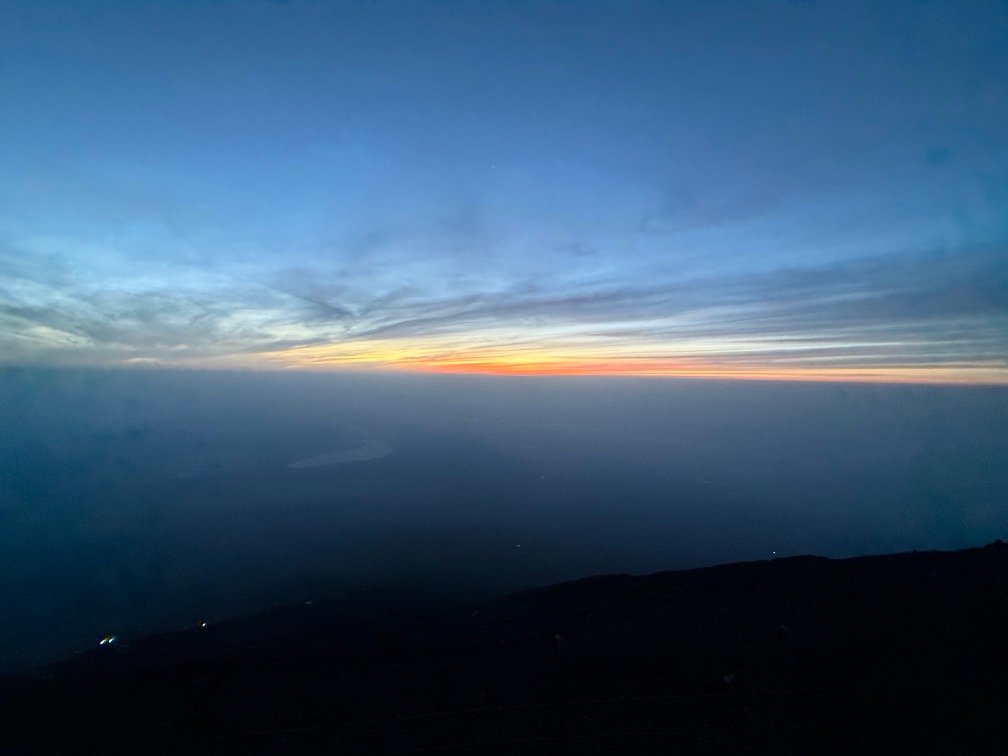
It was a pretty good show and worth the wait.
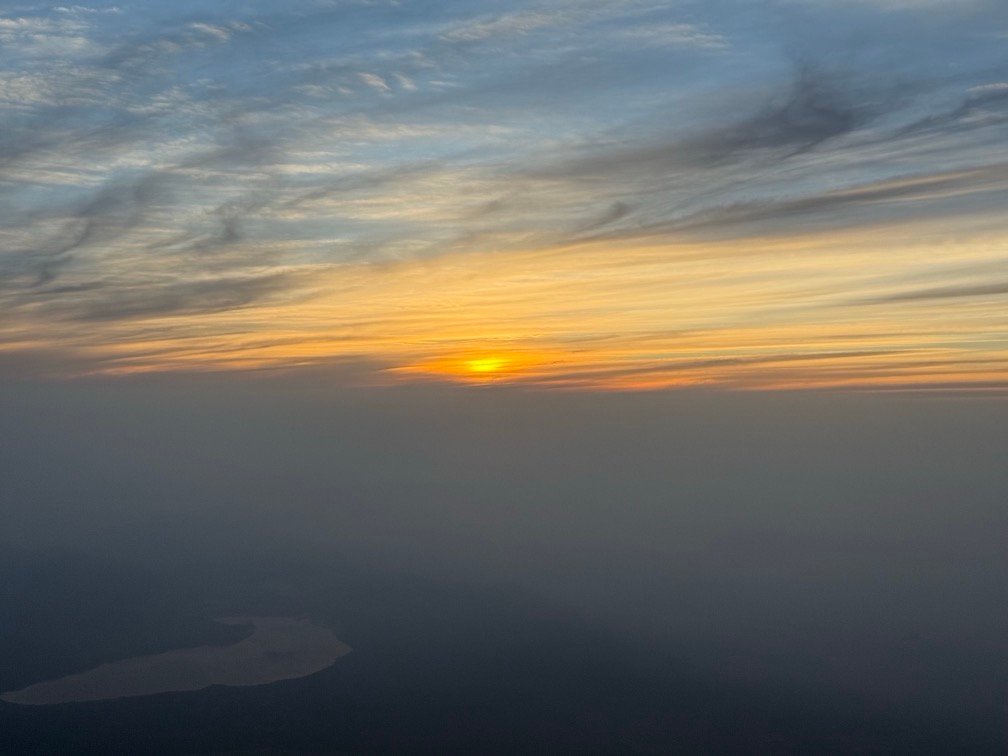
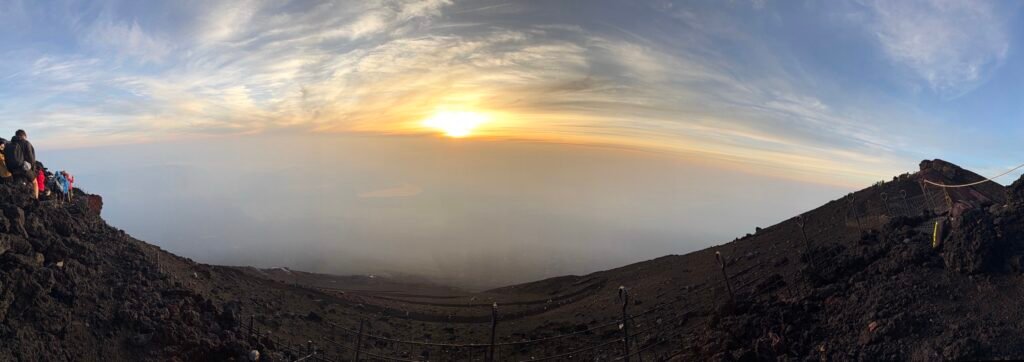
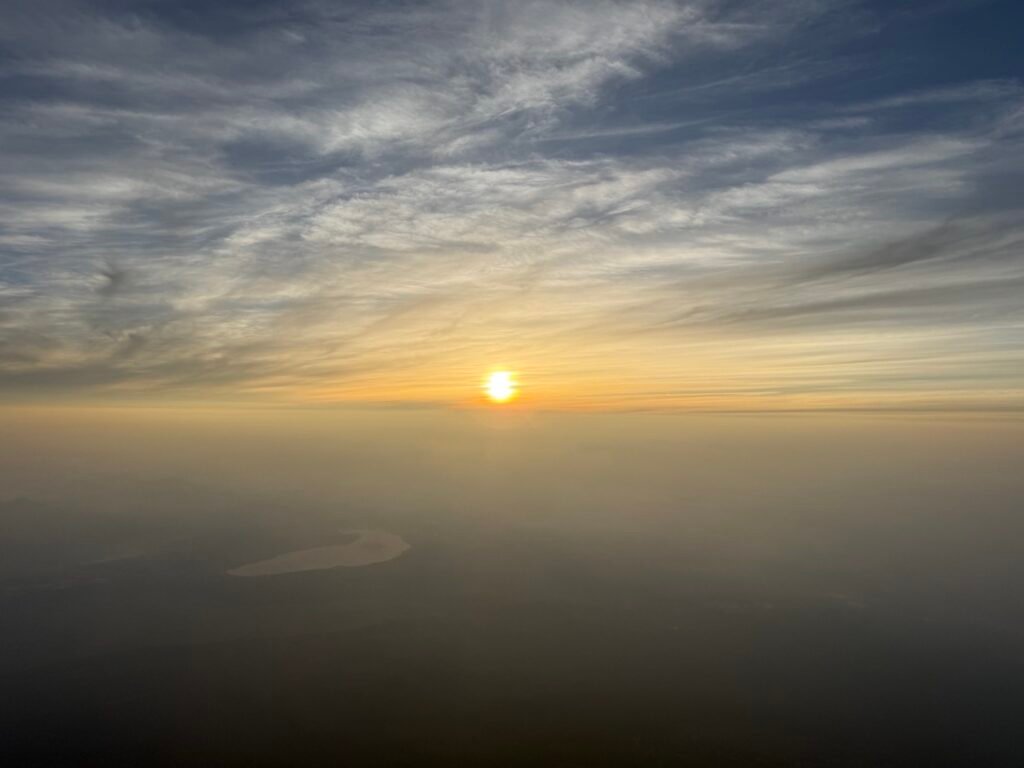
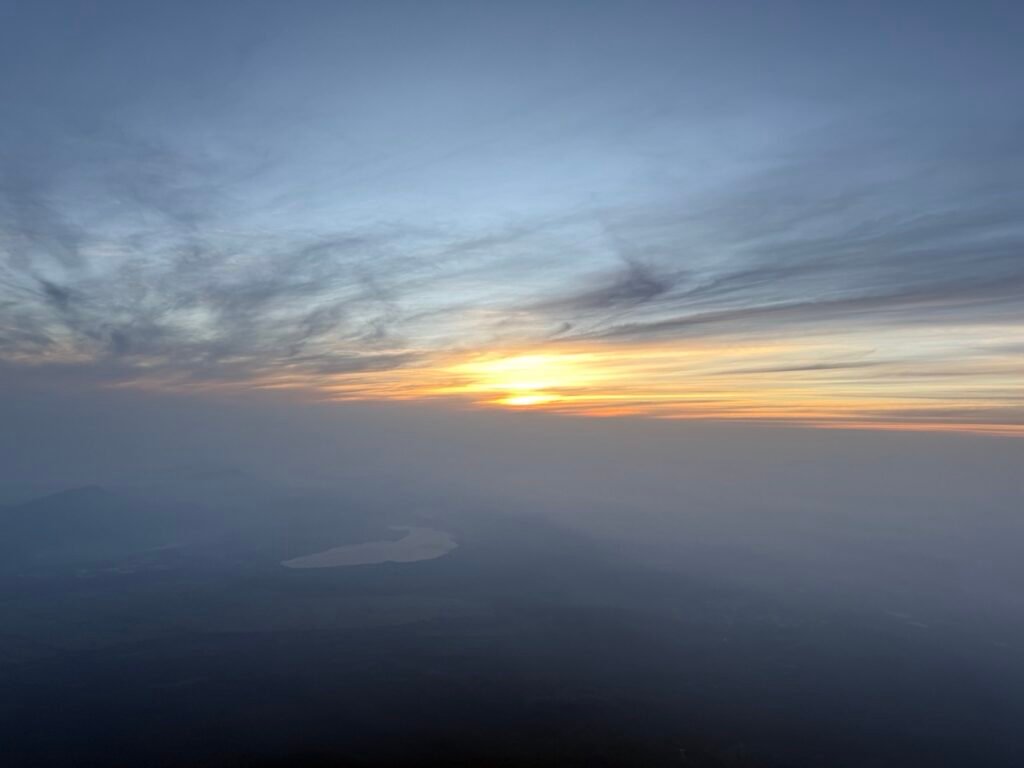
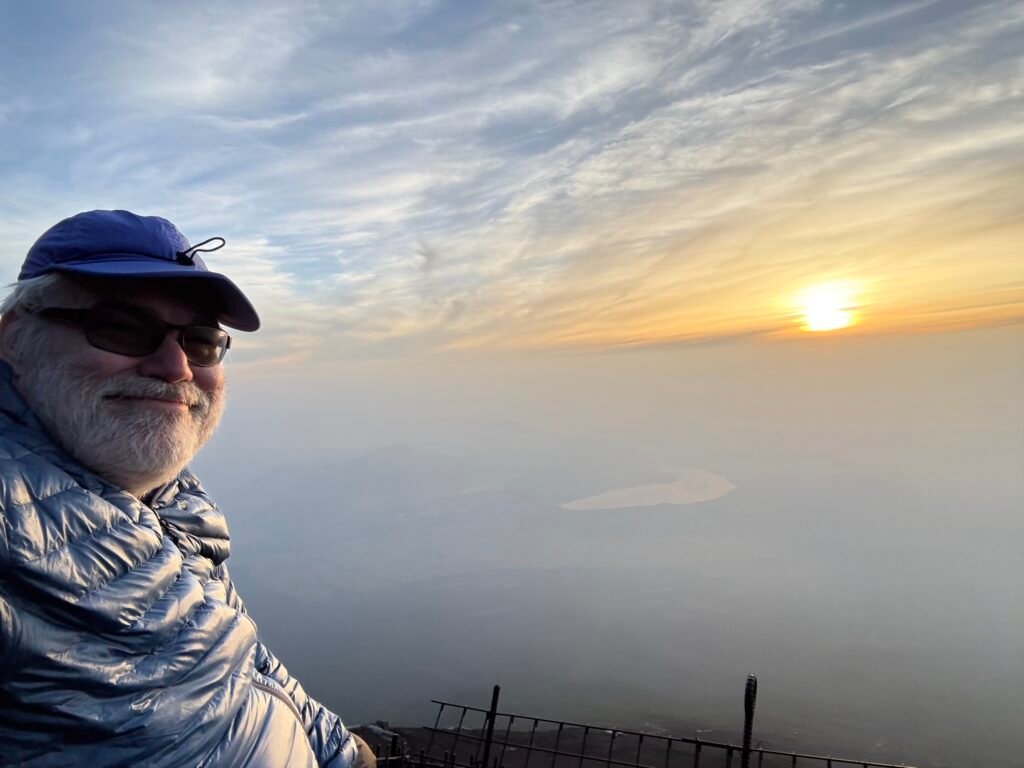
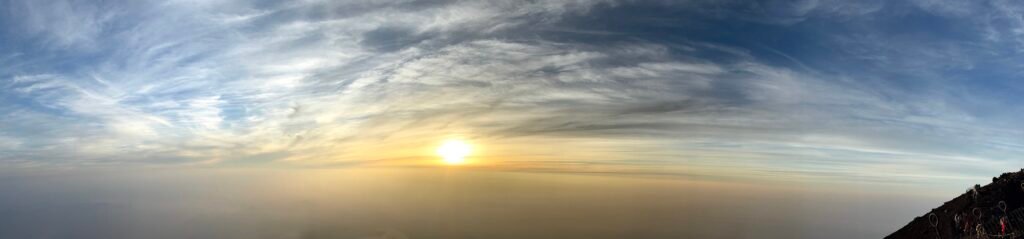
After the Sunrise was over, I always see a lot of people making their way back to the trail and heading down right away. Not me. There was a trail circling the whole crater and more to see. Taking a hike around the crater really allows you to take in the full majesty of his mountain.
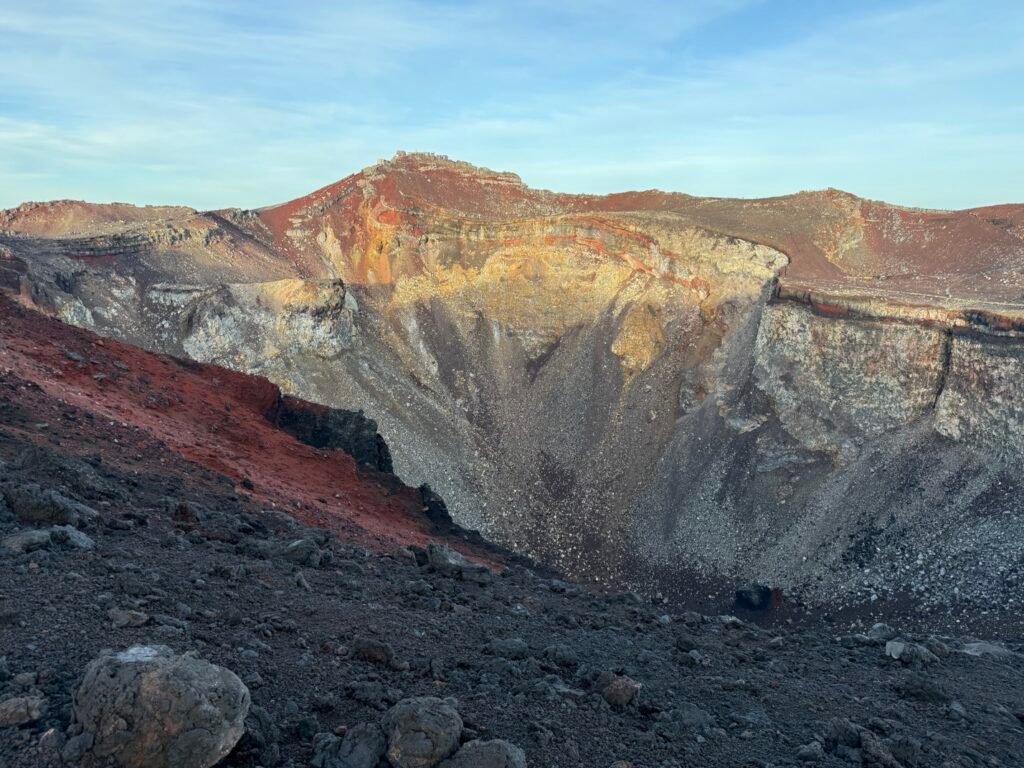
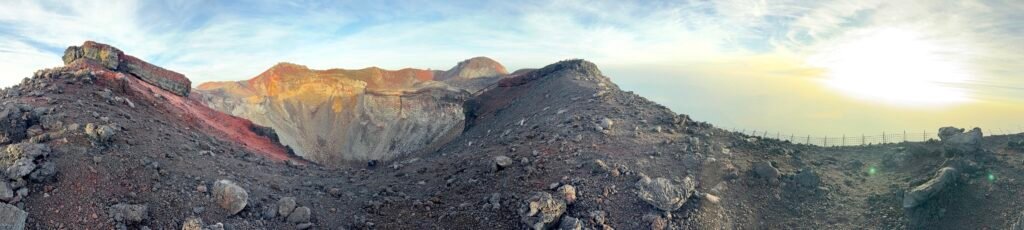
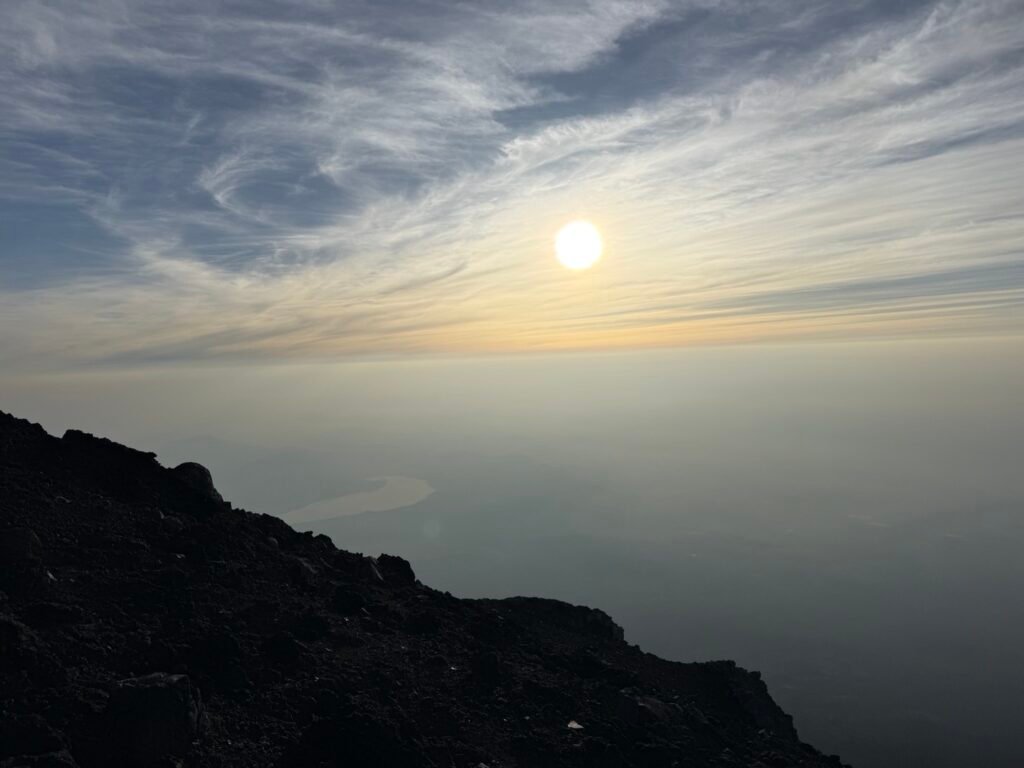
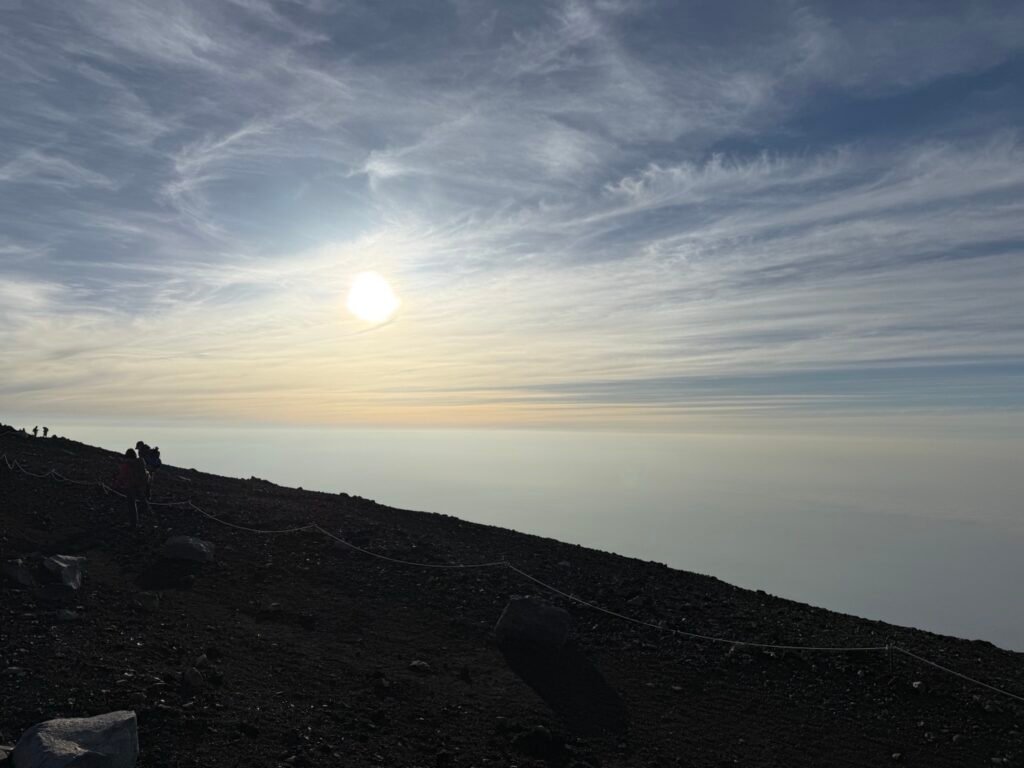
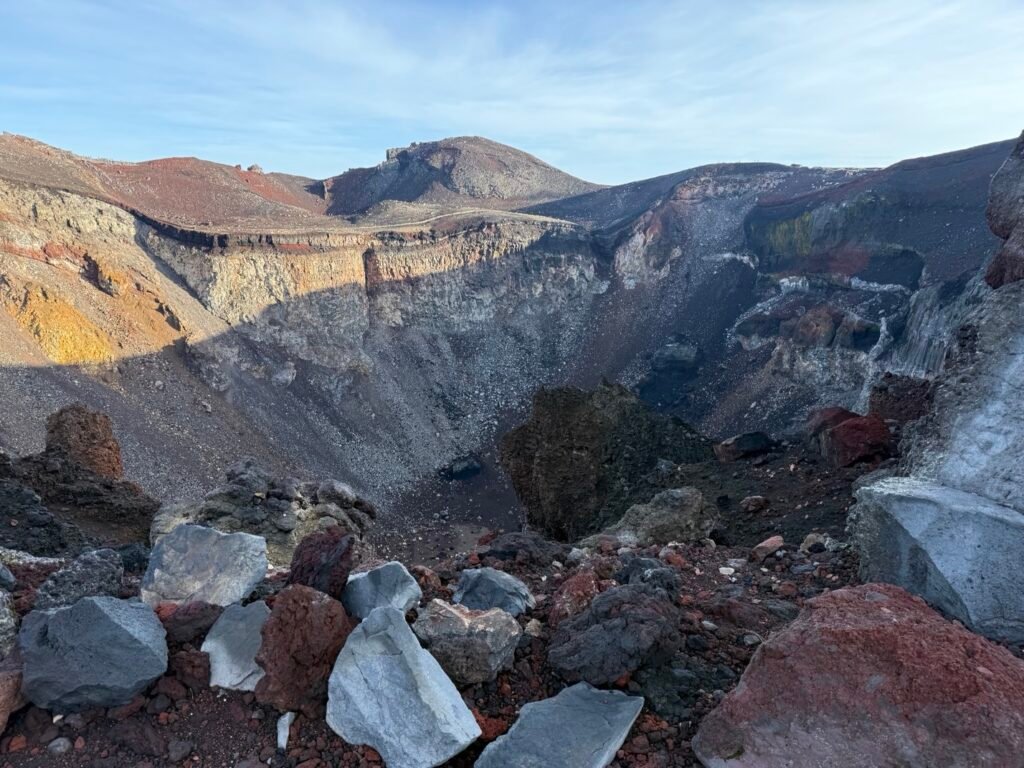
While there were no mountain huts that you could stay in overnight around the summit crater, there were various buildings: Shrines, rest houses, vending machines (yes, you heard that right 😀 ), and a weather observatory.
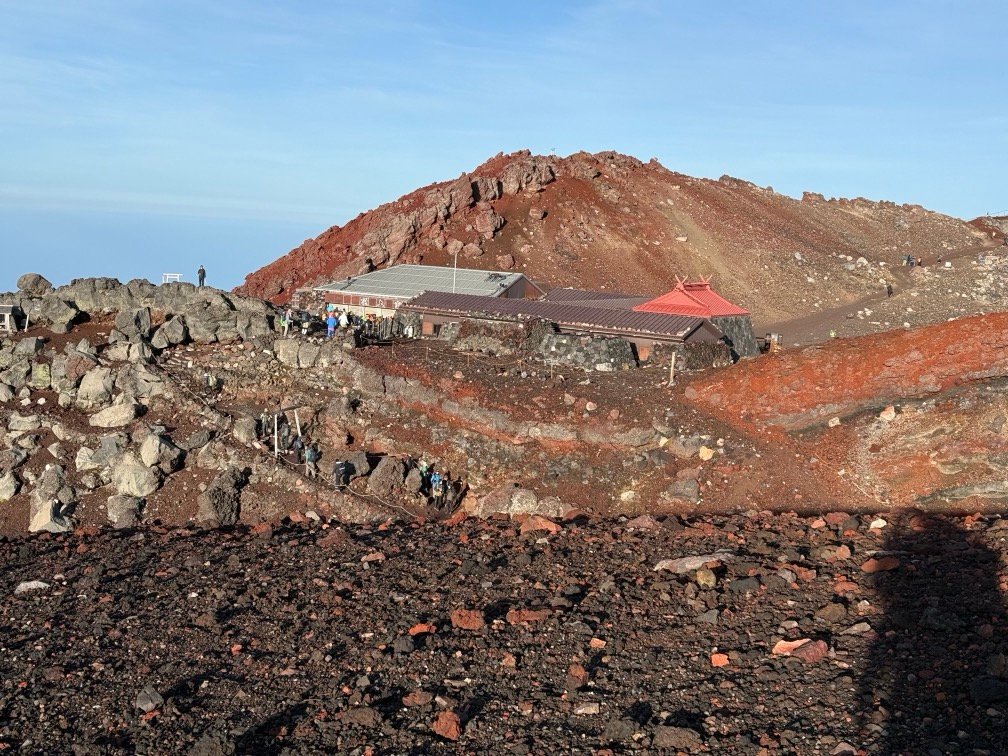
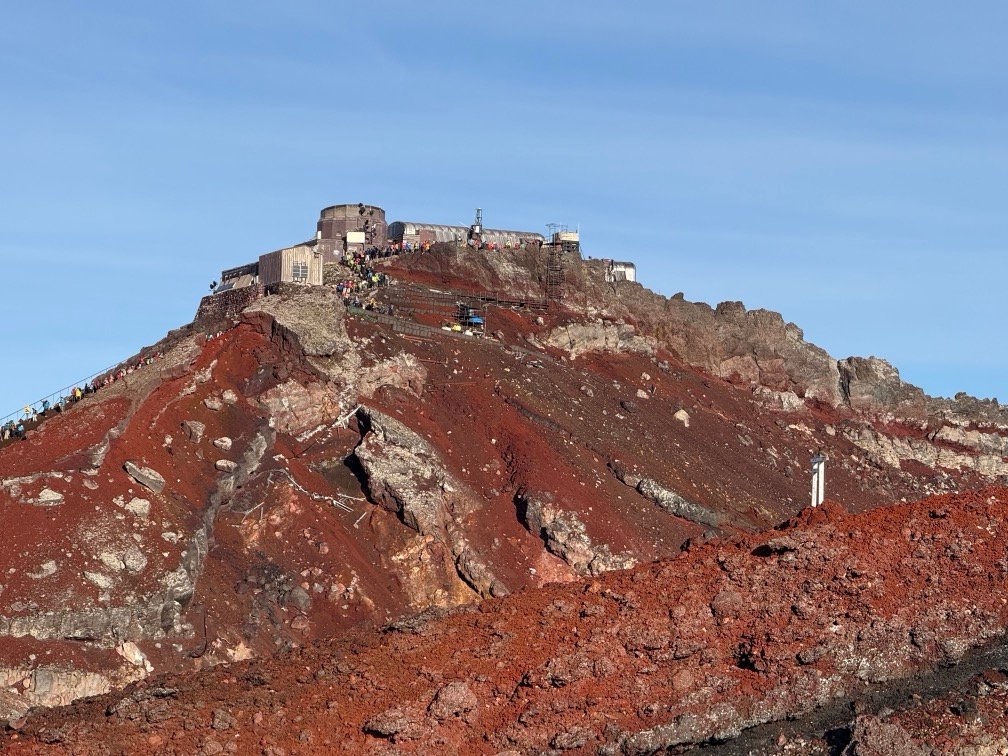
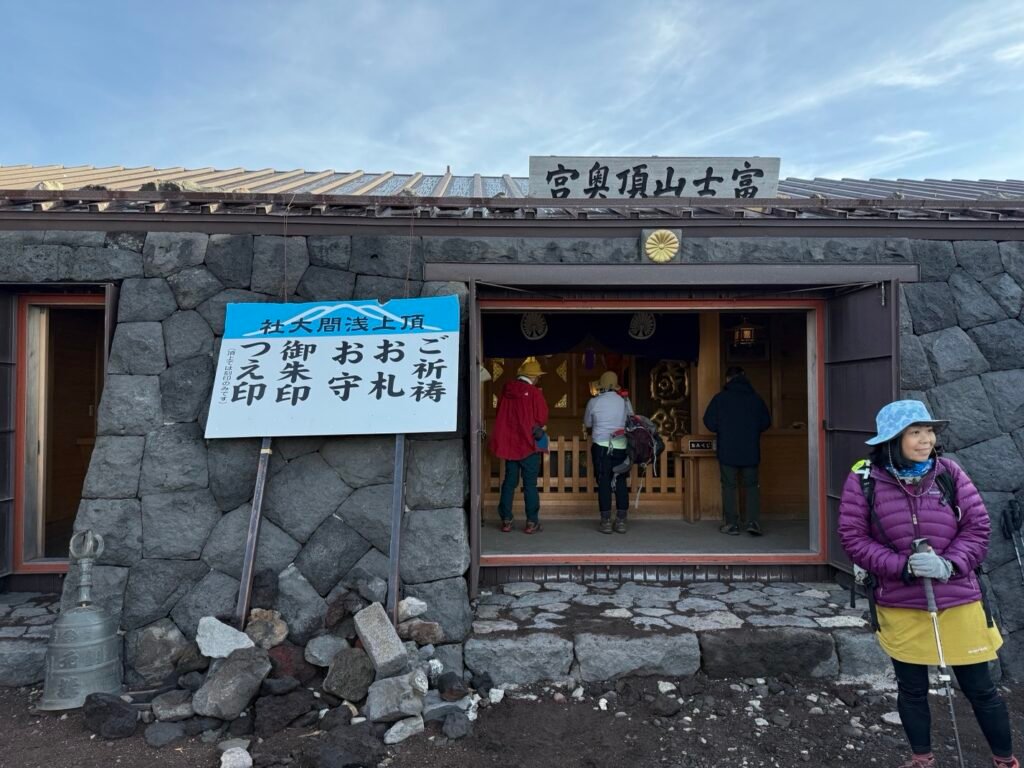
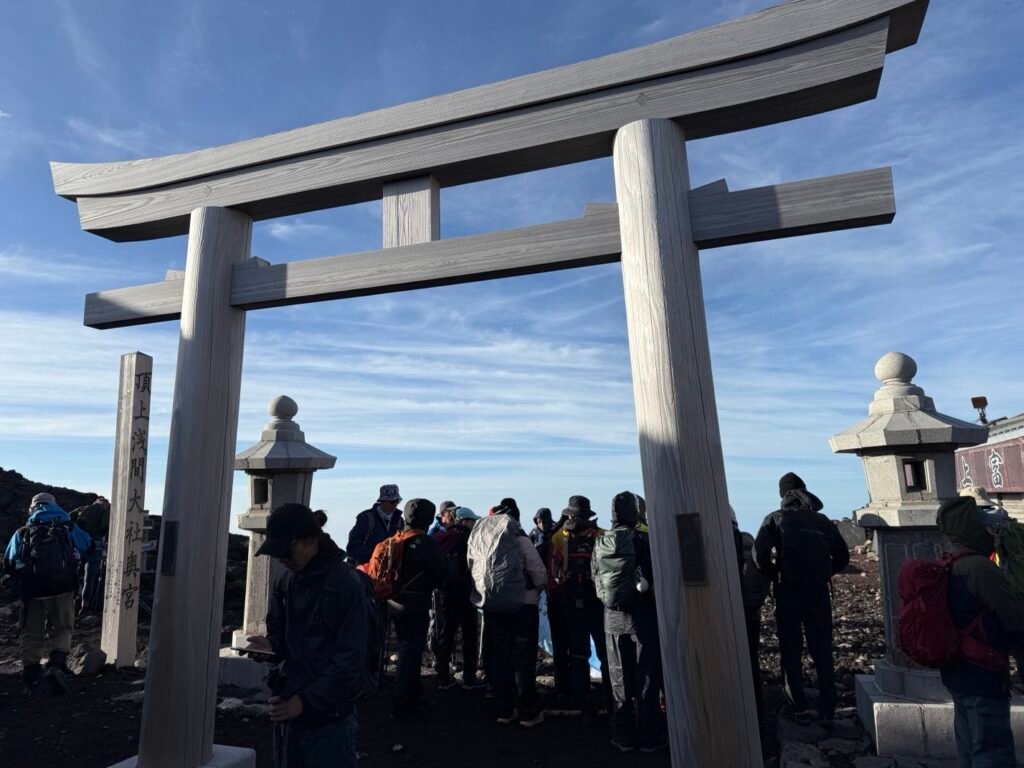
The weather observatory was of particular interest to me (and the long line of people below it).
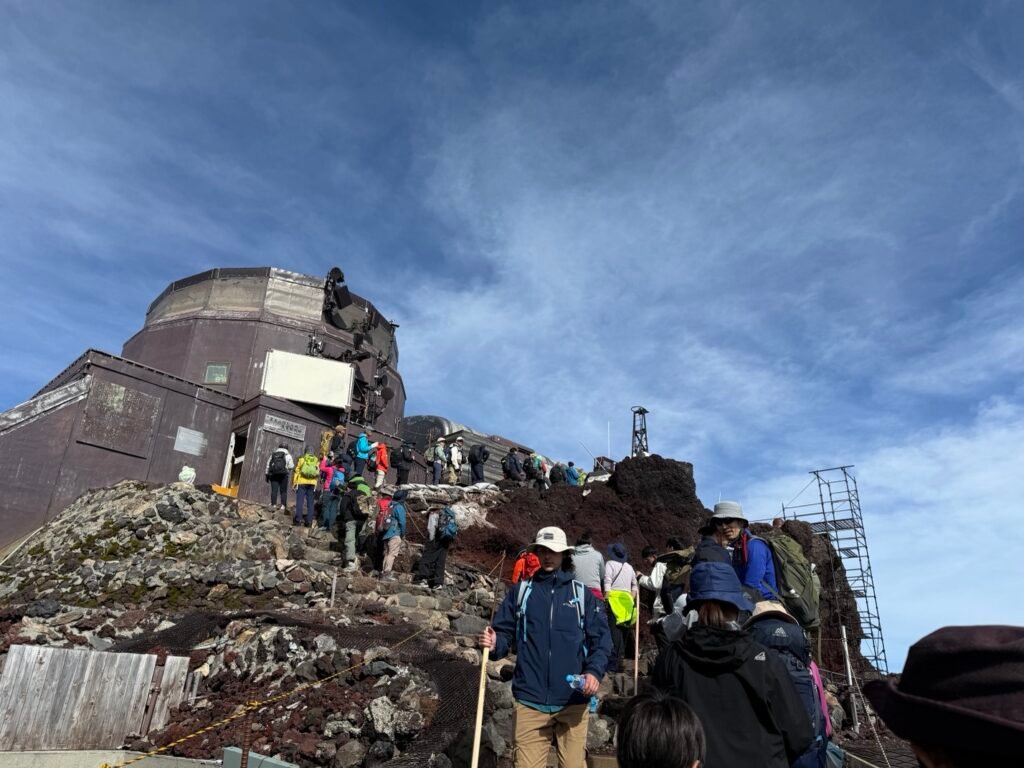
The weather was okay, but wasn’t the reason to go up the trail next to the observatory.
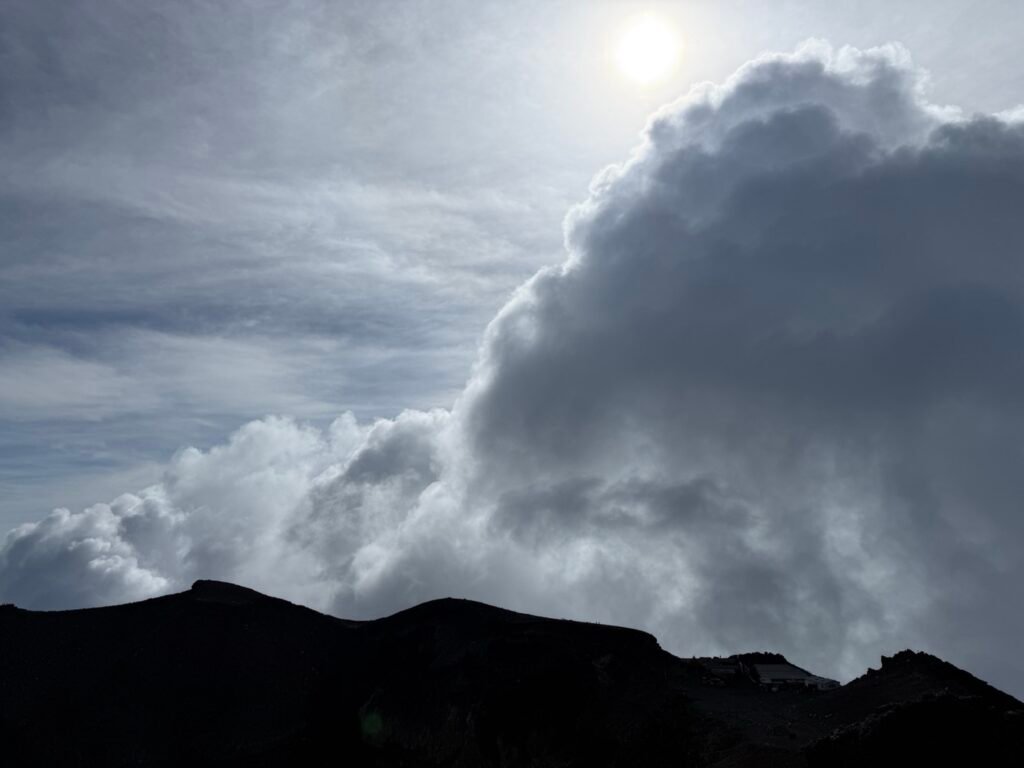
This was:
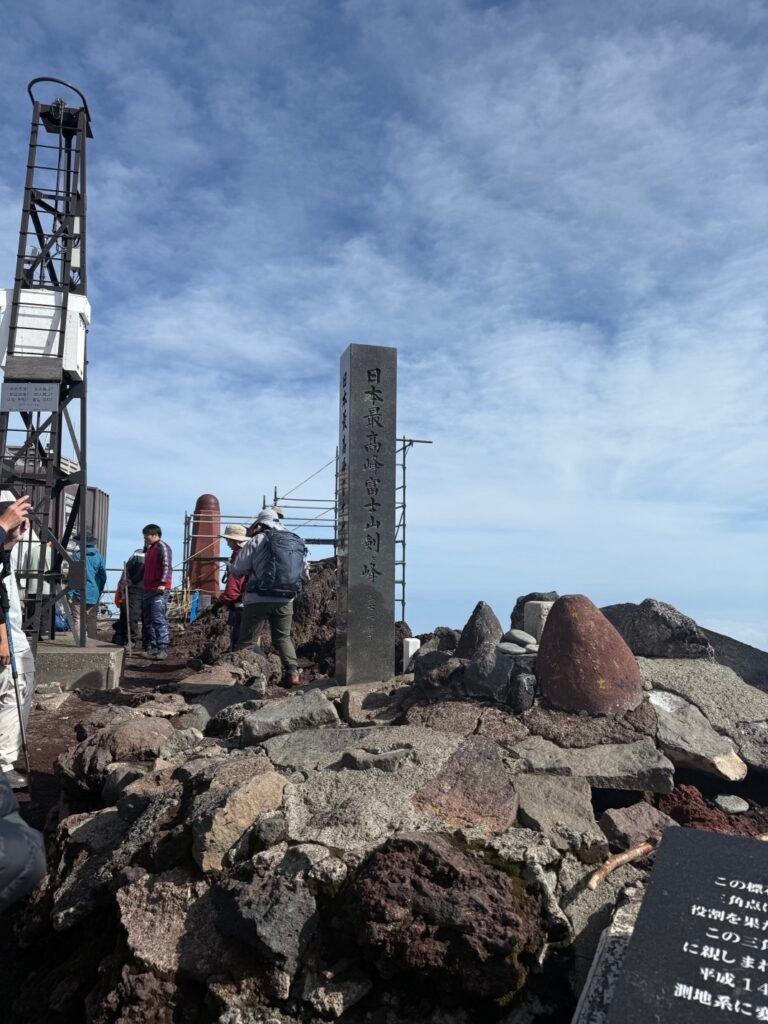
The actual SUMMIT of Mt Fuji!!!
Just reaching the crater rim wasn’t the summit, it was this pillar that marked the highest summit and was half-way around the crater rim trail from the Yoshida trail. Not everyone who climbed Mt Fuji bothered to touch the actual summit with their feet and hands.
I was not one of those people.
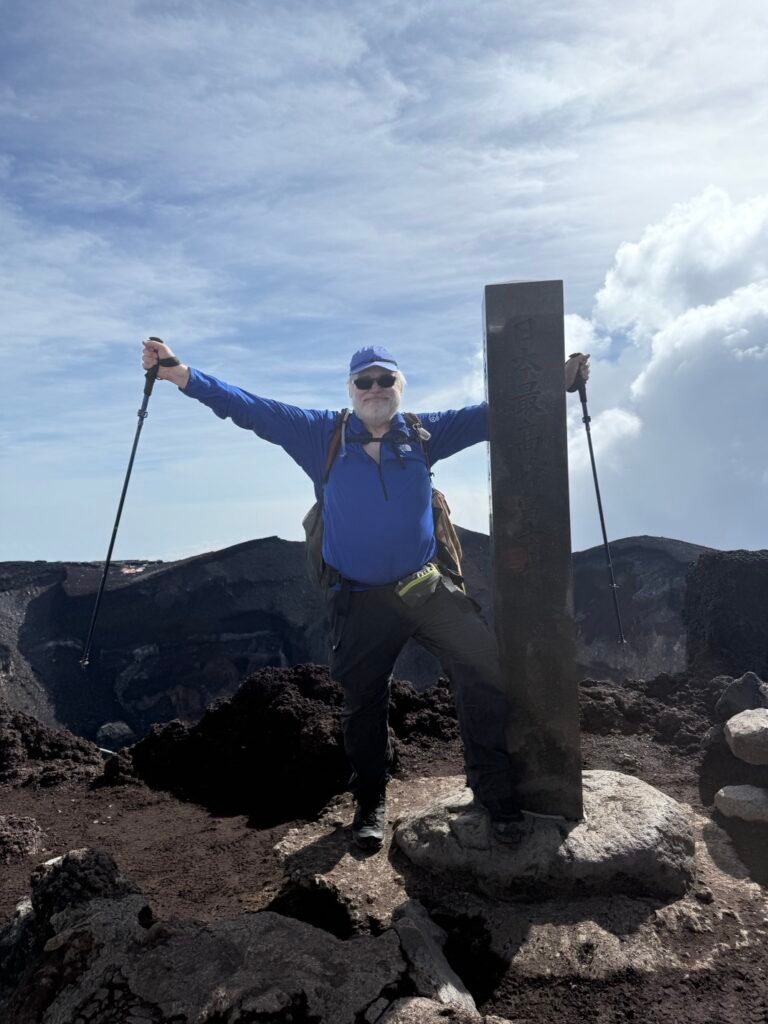
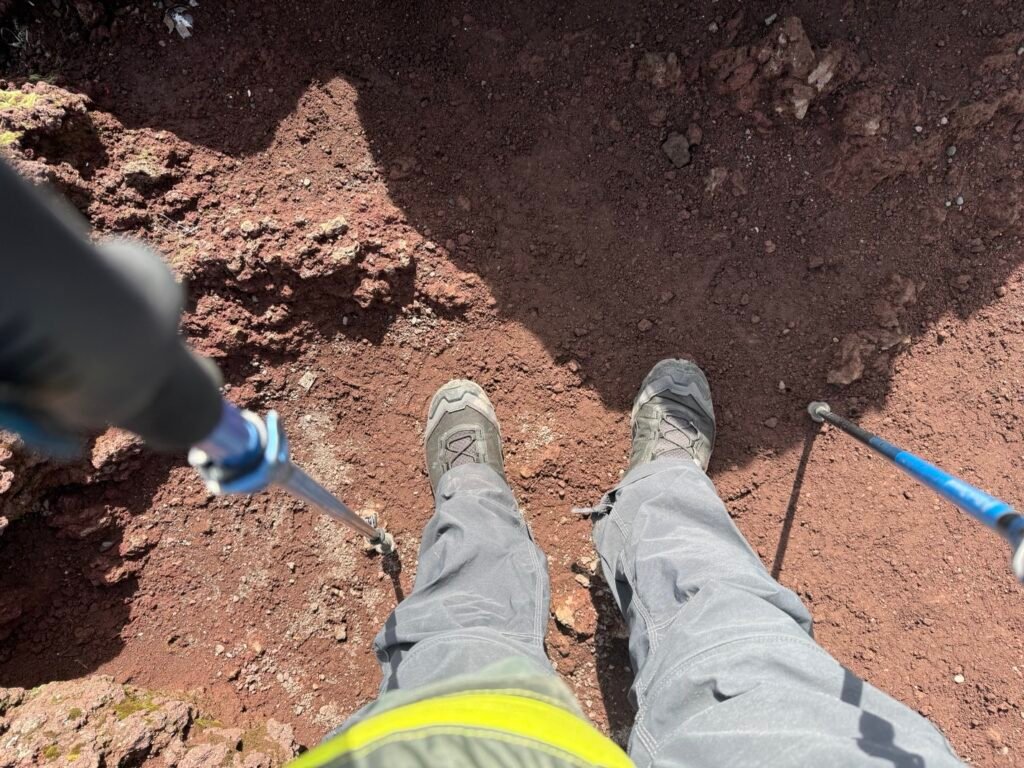
Mt Fuji actually had 8 summits in total. Some of them can be climbed (and I have climbed the ones I could), but there are a few that are off limits due to dangerous terrain.
After stepping onto the main summit, I continued my hike around the crater until I reached the starting point where the Yoshida trail meets the crater.
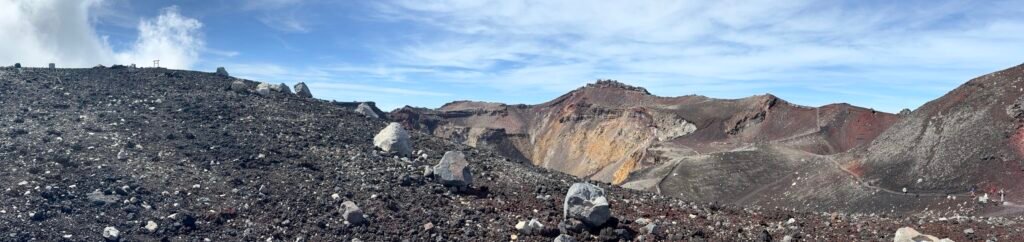
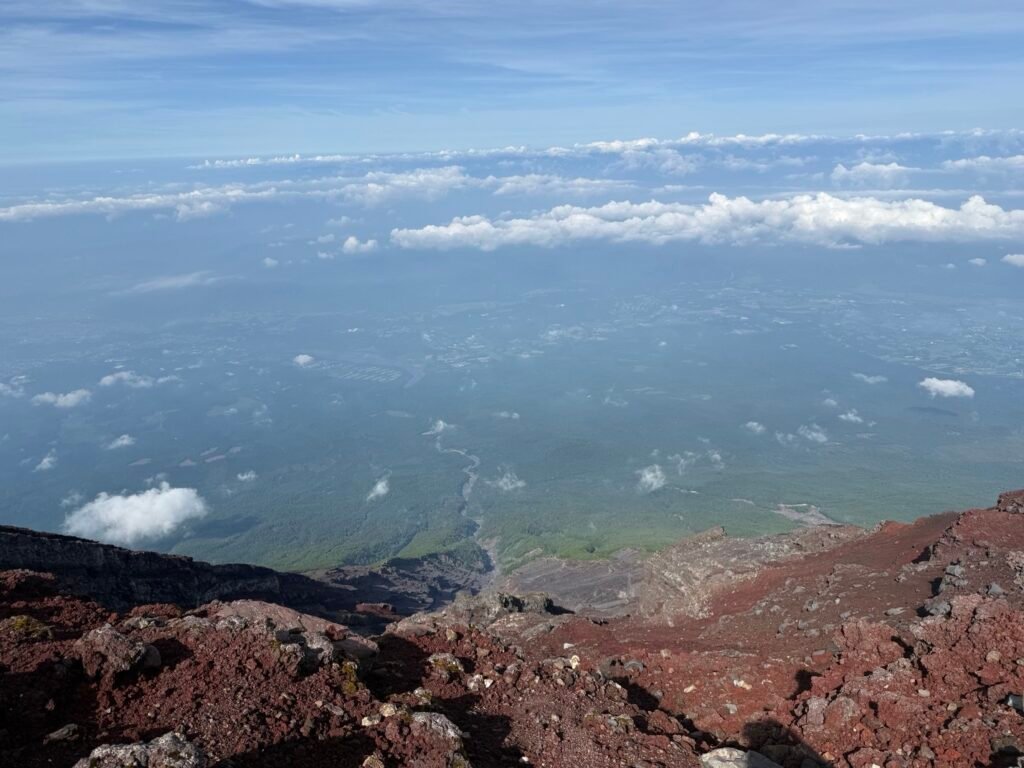
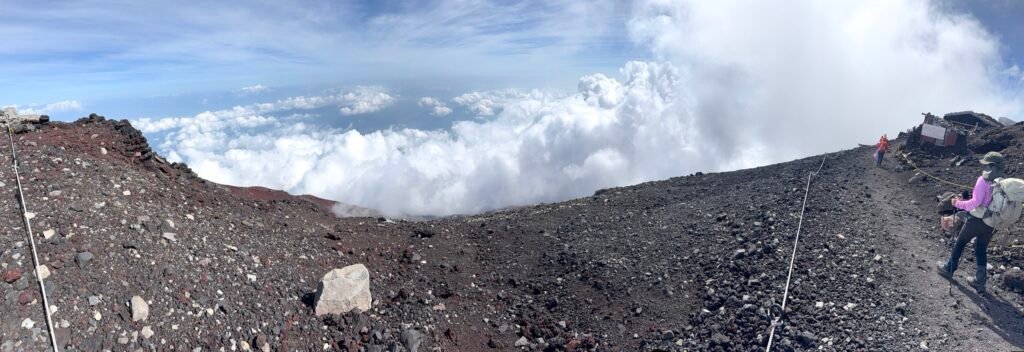
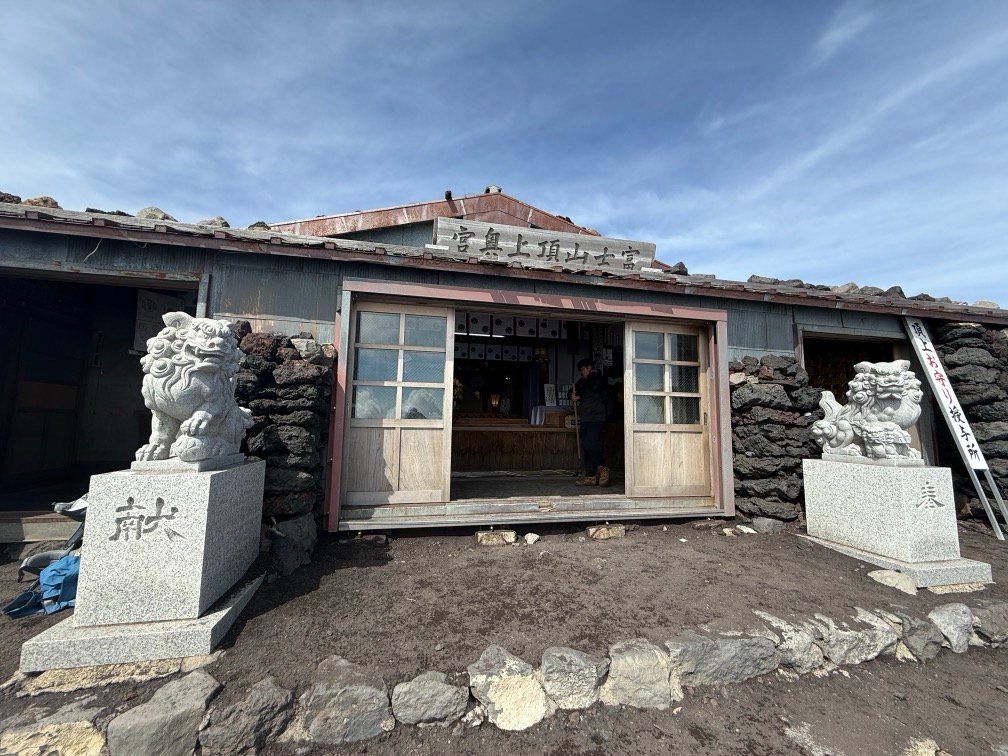
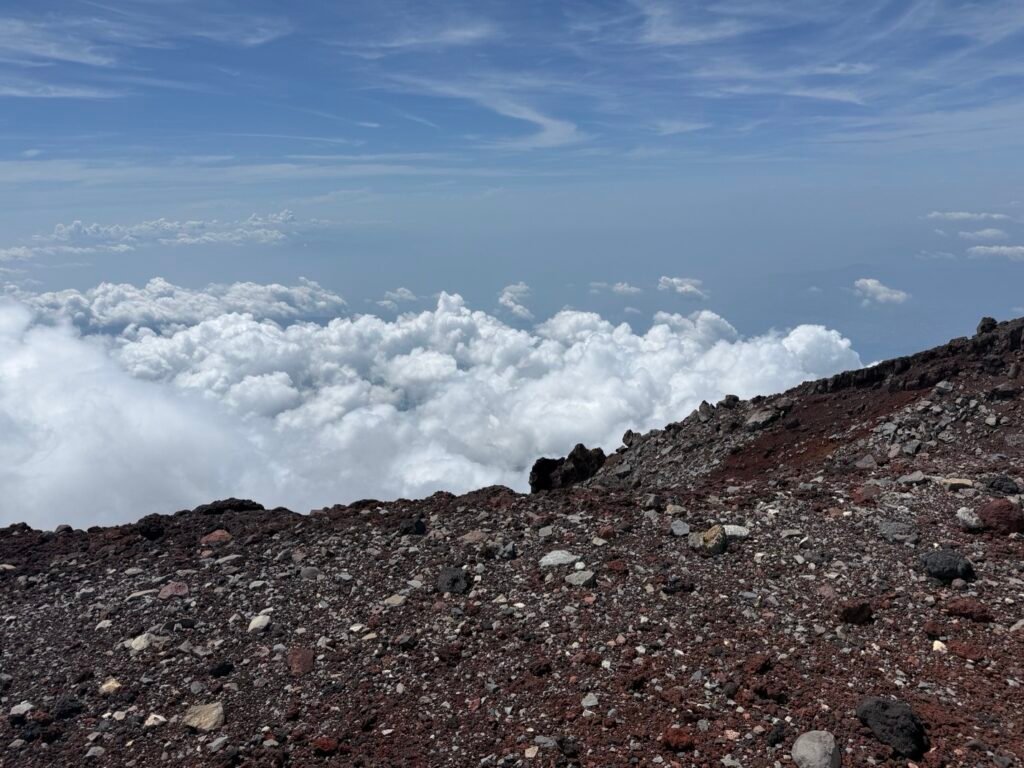
At that point, I could have descended the Yoshida Trail and be back in a real bed, real food, and a real shower by sunset. But where would the fun be in that?
The plan was always to descend the Fujinomiya Trail, allowing me to cross the last Fuji trail that I hadn’t climbed up or down on off my list. I had to hike halfway along the crater rim to get back to that trail, which I had passed earlier.
But the views were just as great in the full sunlight, so it was an enjoyable hike.
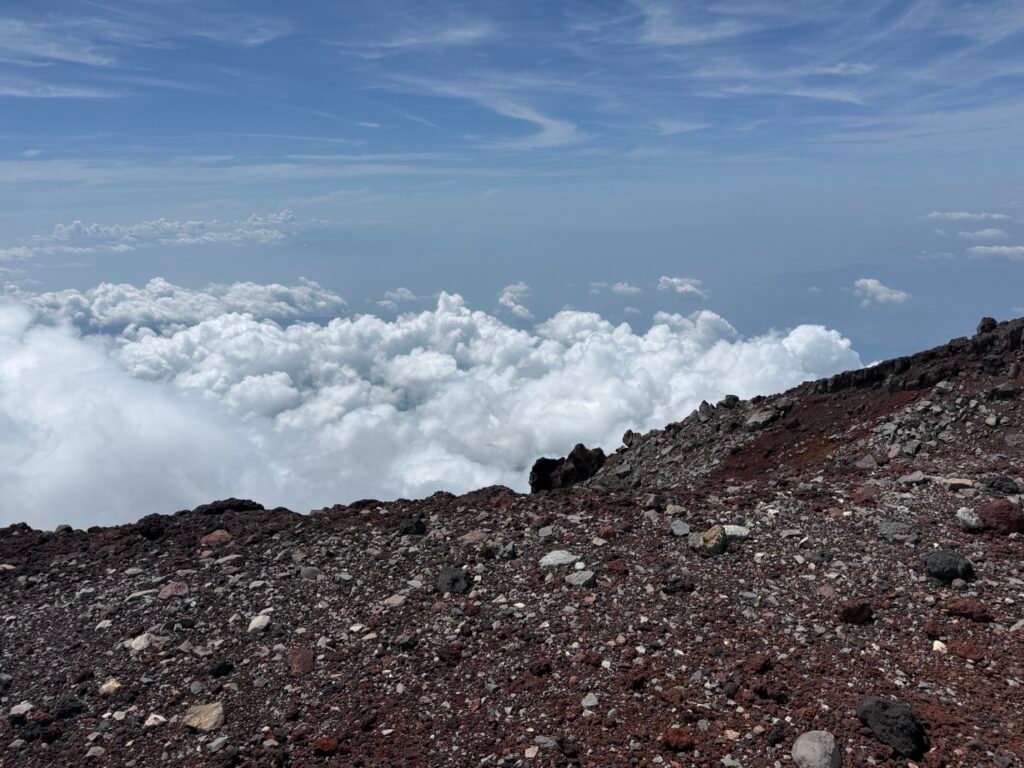
Reaching the Fujinomiya trail, I looked down at the descent in front of me and was happy that it looked like a pleasant enough descent. Since I way staying at a hut near the top, it would be a short descent.
The first part immediately below the crater rim was a pretty loose collection of scree, so you had to carefully watch each step you took. But once past that part, it was a gentle hike down.
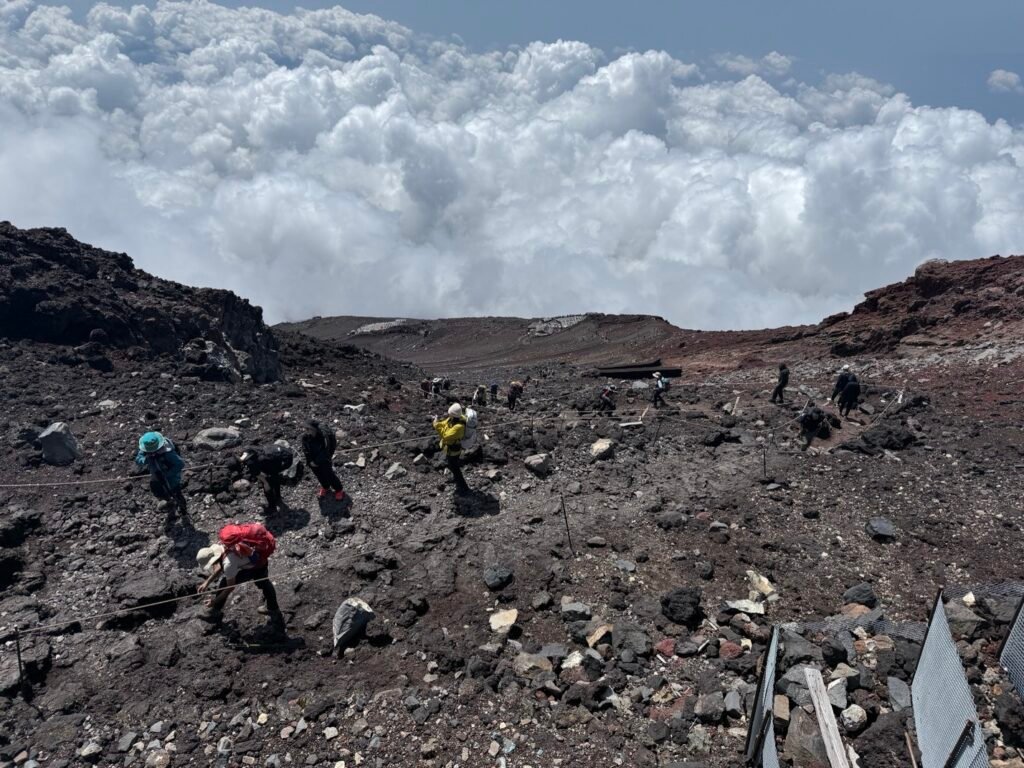
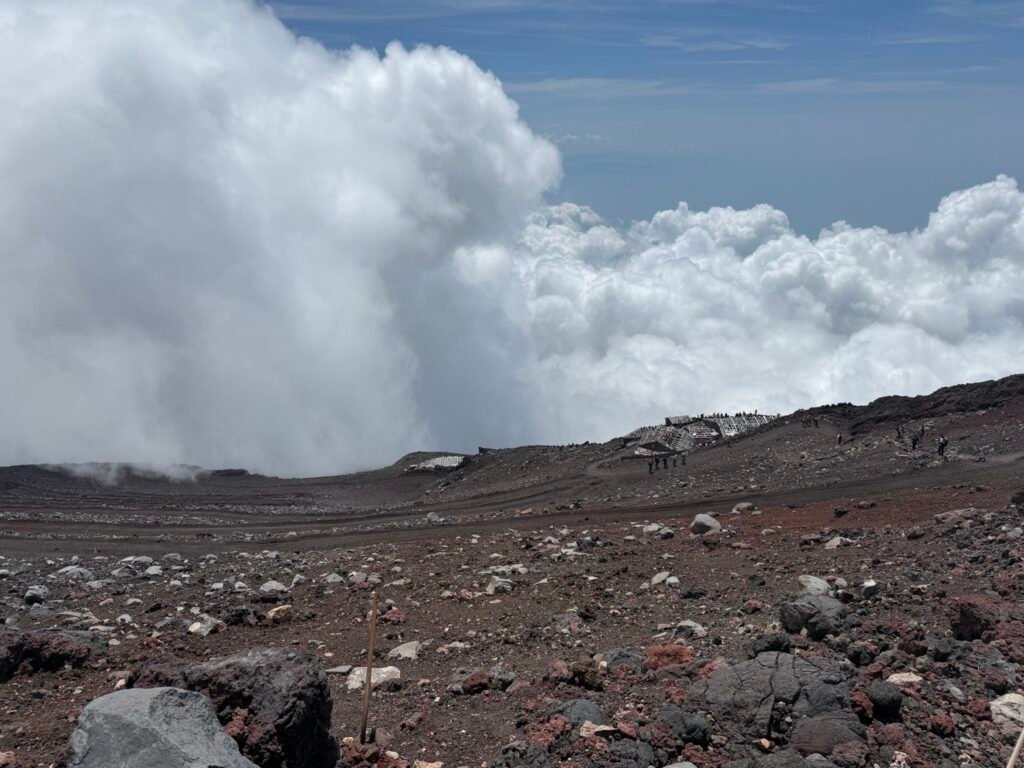
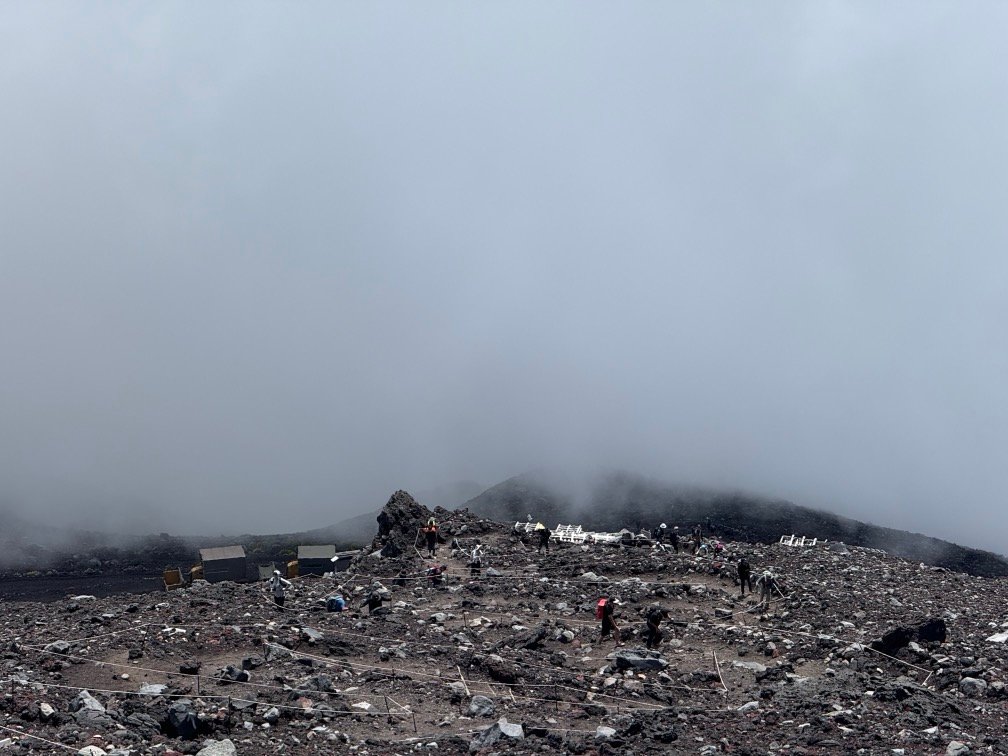
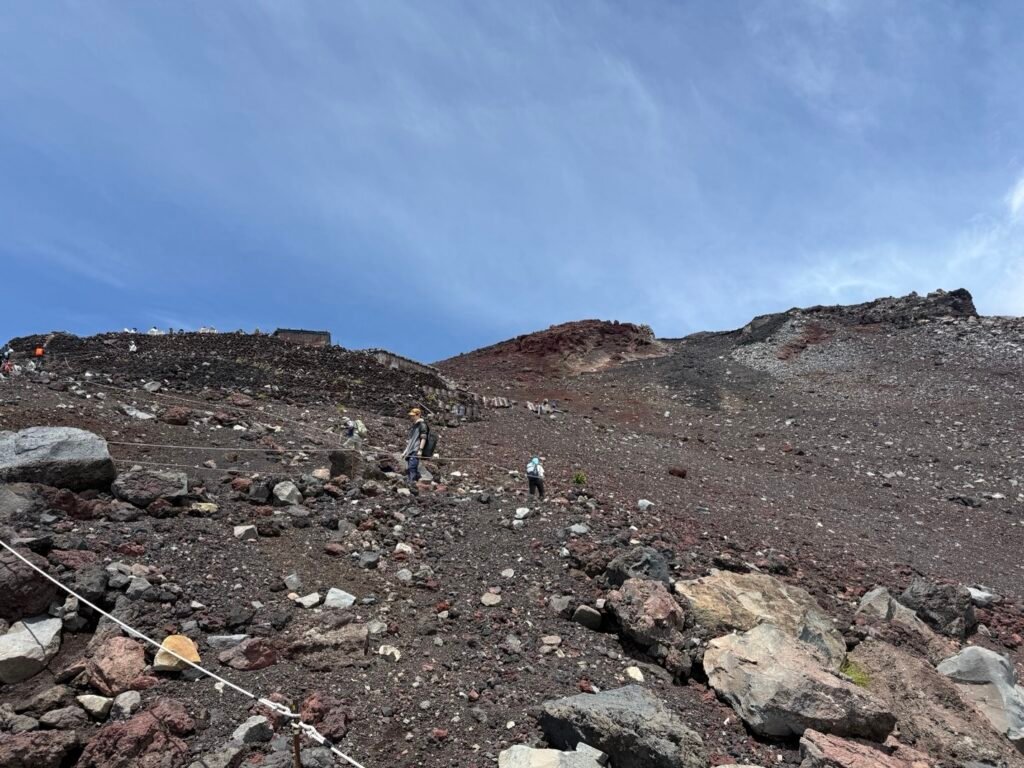
It wasn’t long before I reached Mt. Fuji Omote Fujinomiyaguchi 9th Station Manen-no-setsu Sanso Hut and was able to relax. I cleaned up and changed into my fleece and enjoyed the rest of the day until sunset.
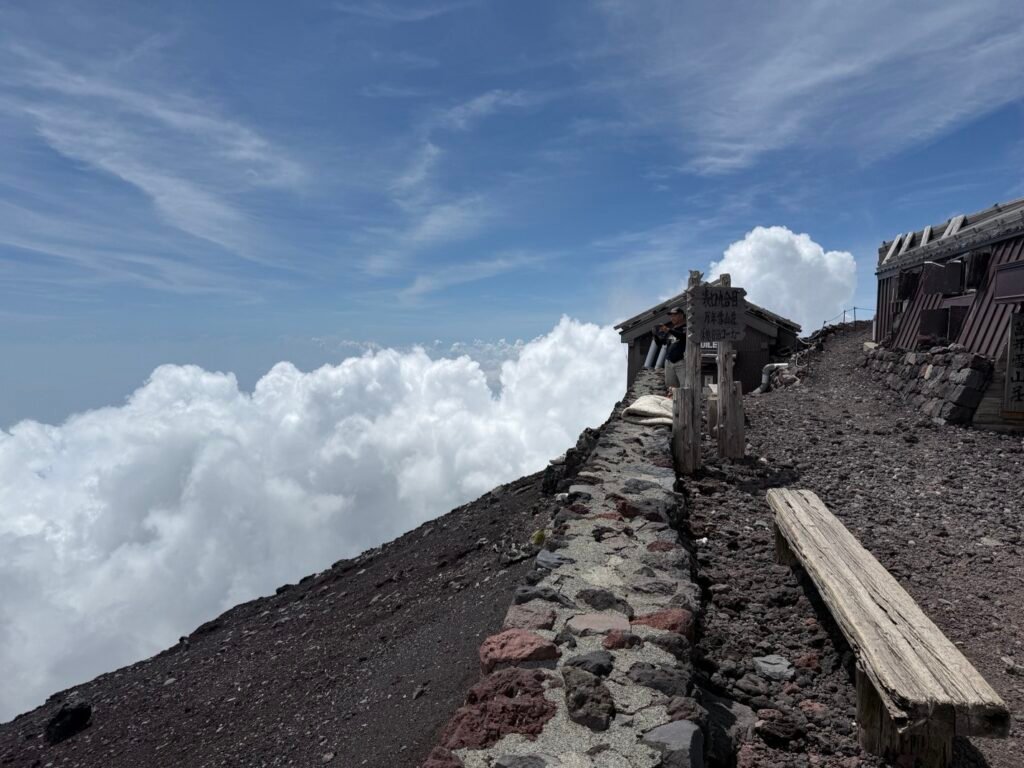
Well, part of it. The actual sunset would be hidden by the side of the mountain, but there was some good lighting effects from the front of the hut.
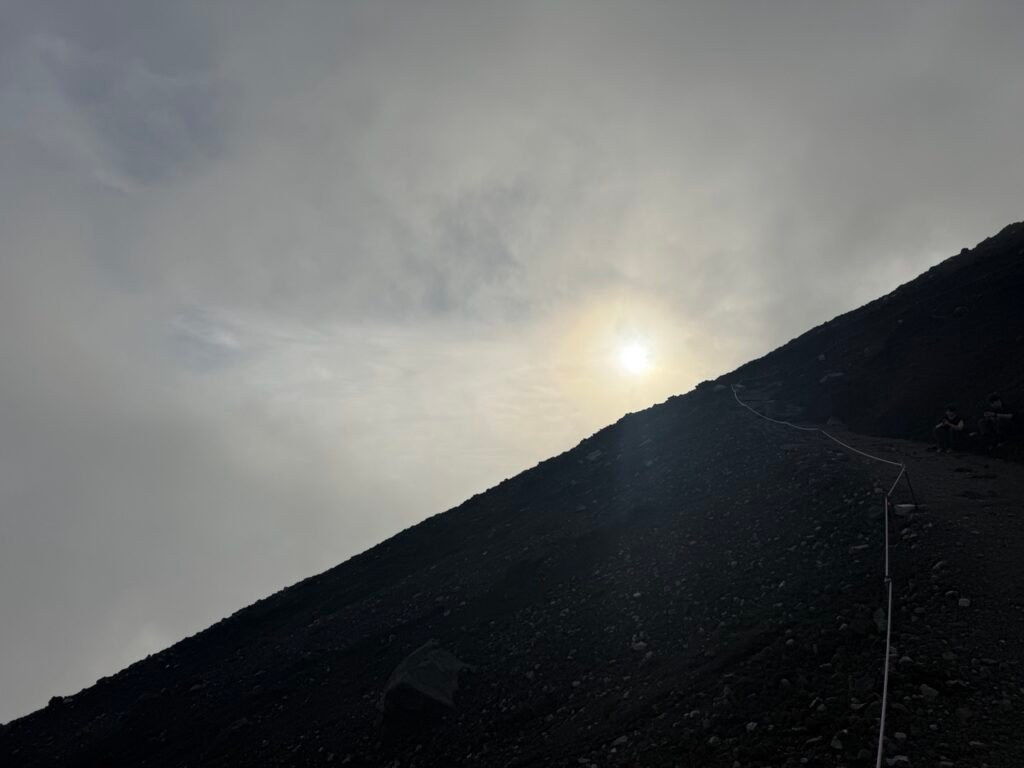
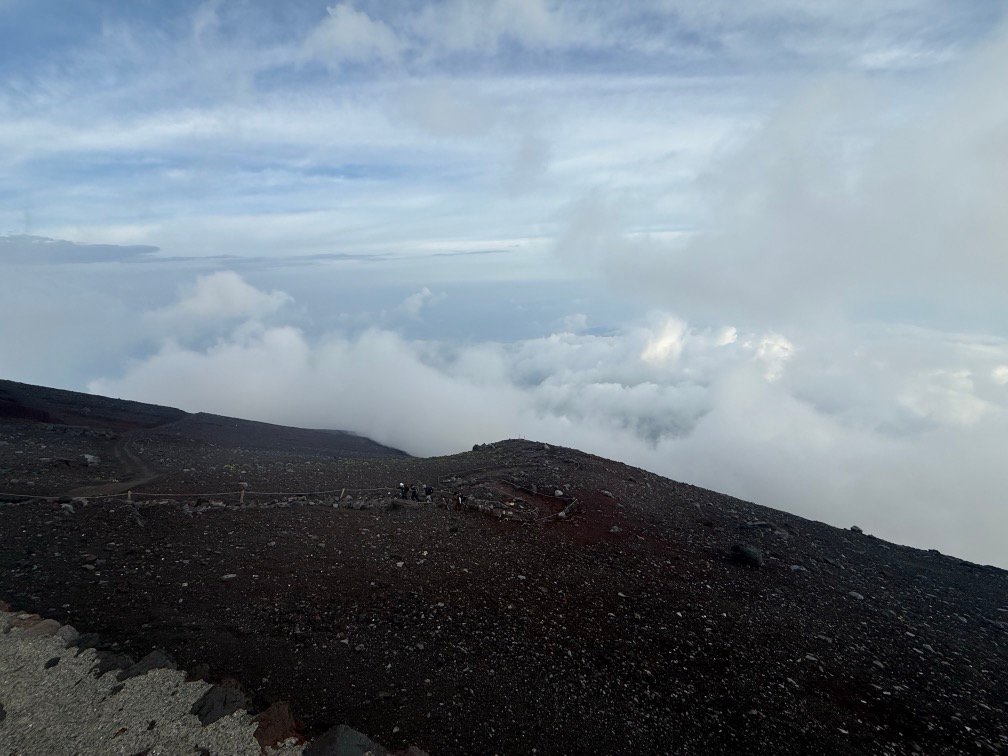
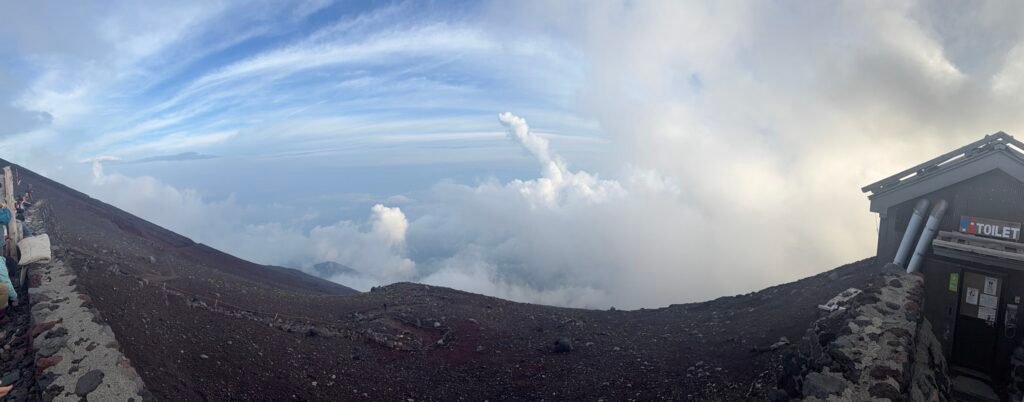
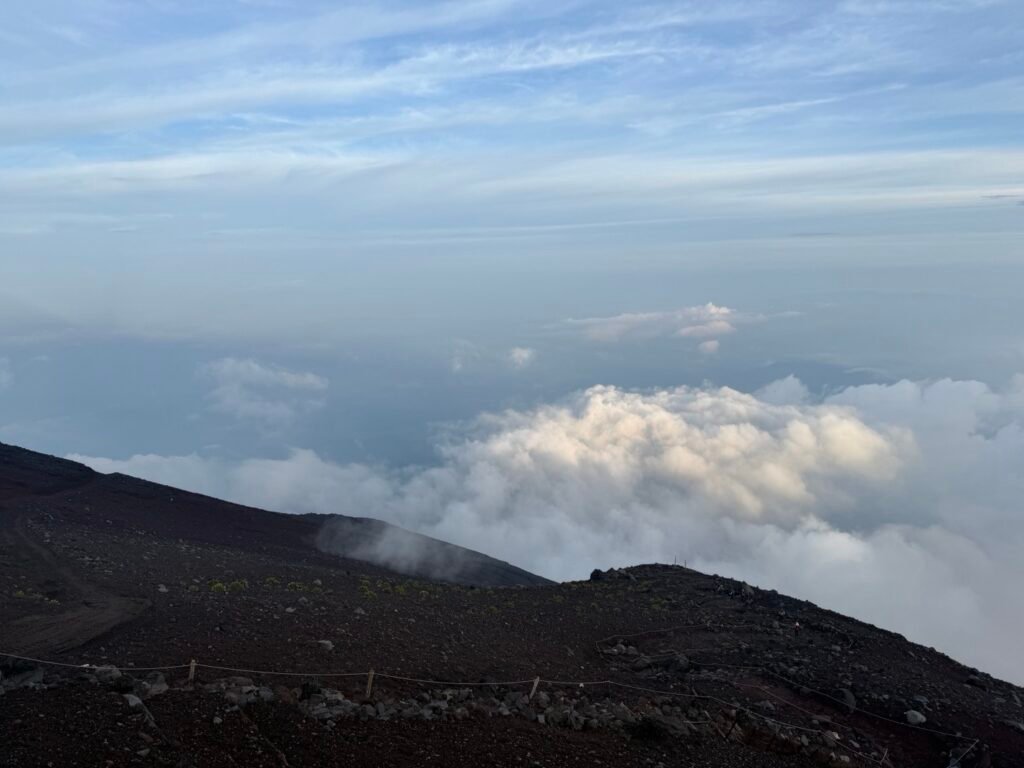
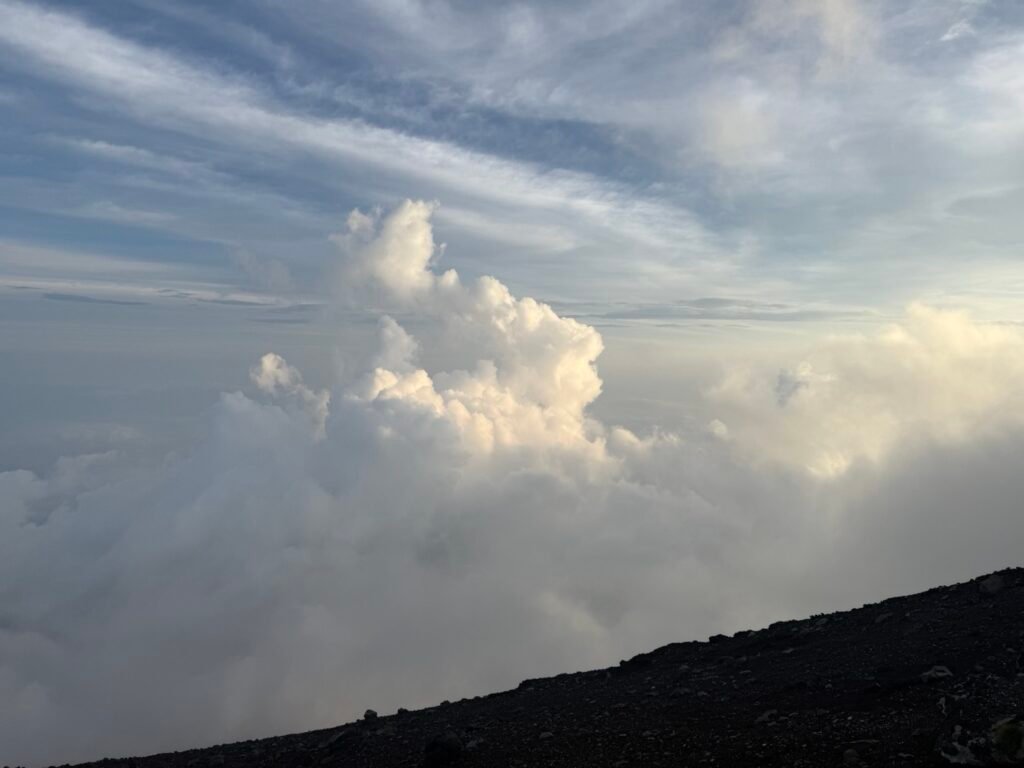
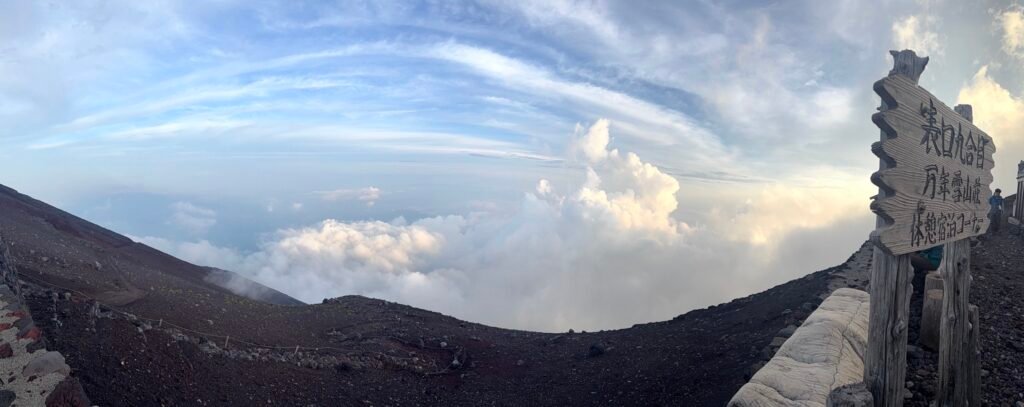
After dinner, I crammed myself in with 3 other people into one of the most cramped alcoves that I had ever had to sleep in on a Japanese mountain hut. I was used to them being somewhat cramped, but this space really should have been for 2 people. 3 people who were close friends or family, sure. 4 strangers? They were really pushing it.
Having decided to see the sunrise from the hut instead of doing another pre-sunrise climb back to the crater rim, I was able to go to sleep later than I would normally have. And two of the men left in the middle of the night to climb to the summit, so that helped give me some room to sleep better until sunrise.
While the sunrise from the crater rim was glorious, the sunrise from the mountain hut was great too.
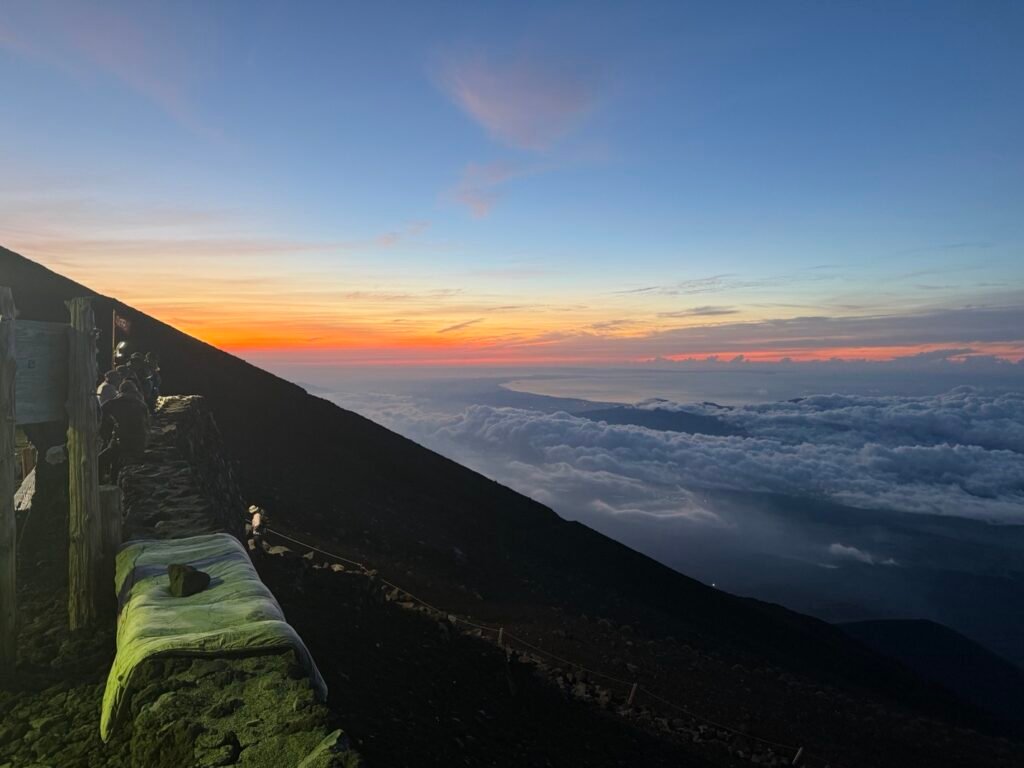
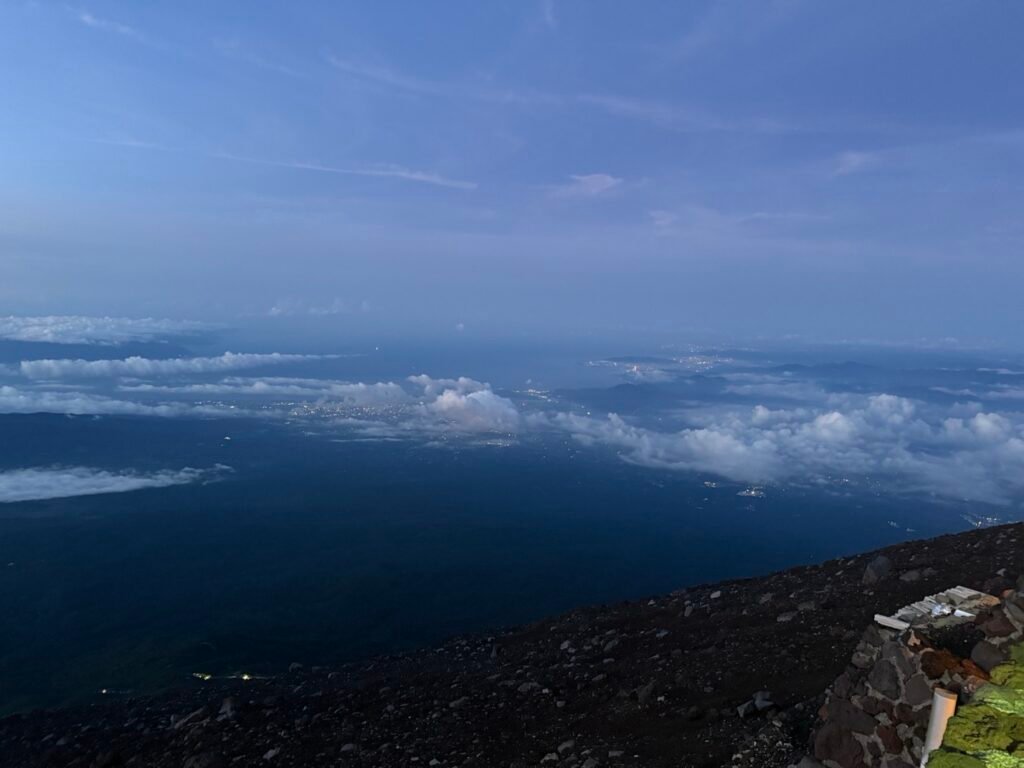
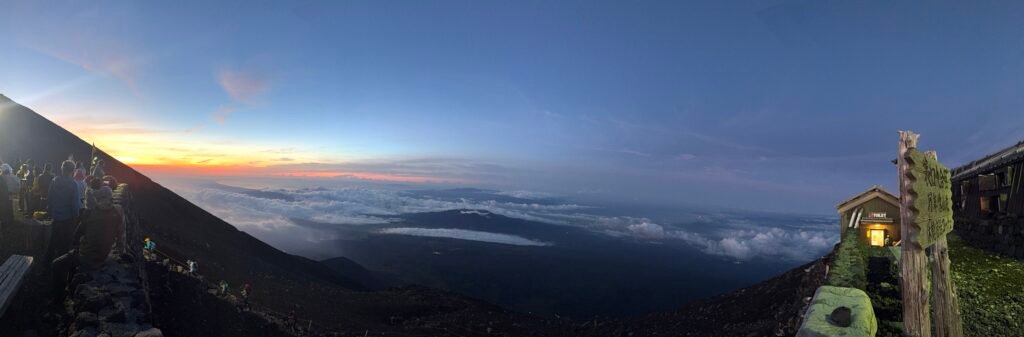
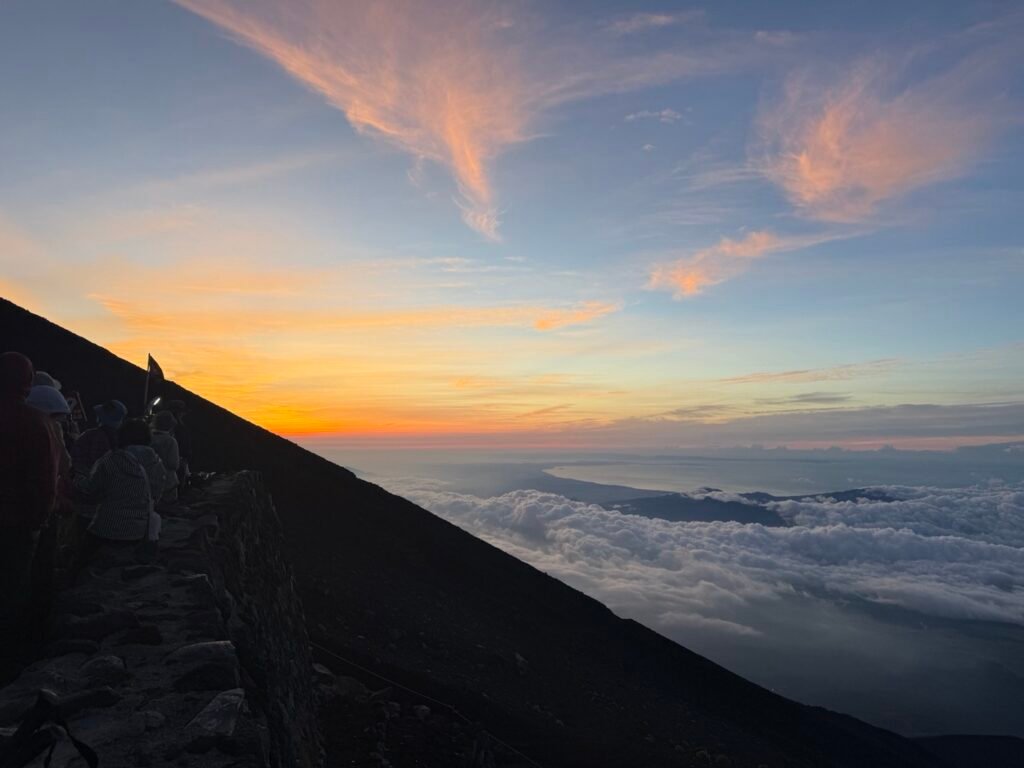
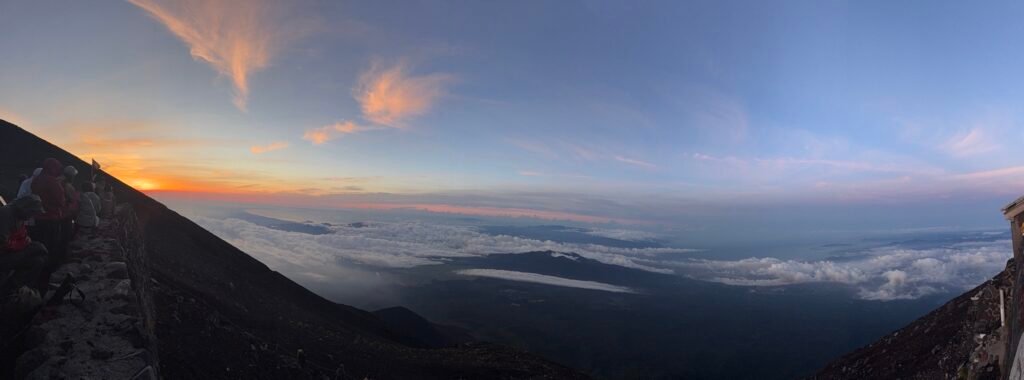
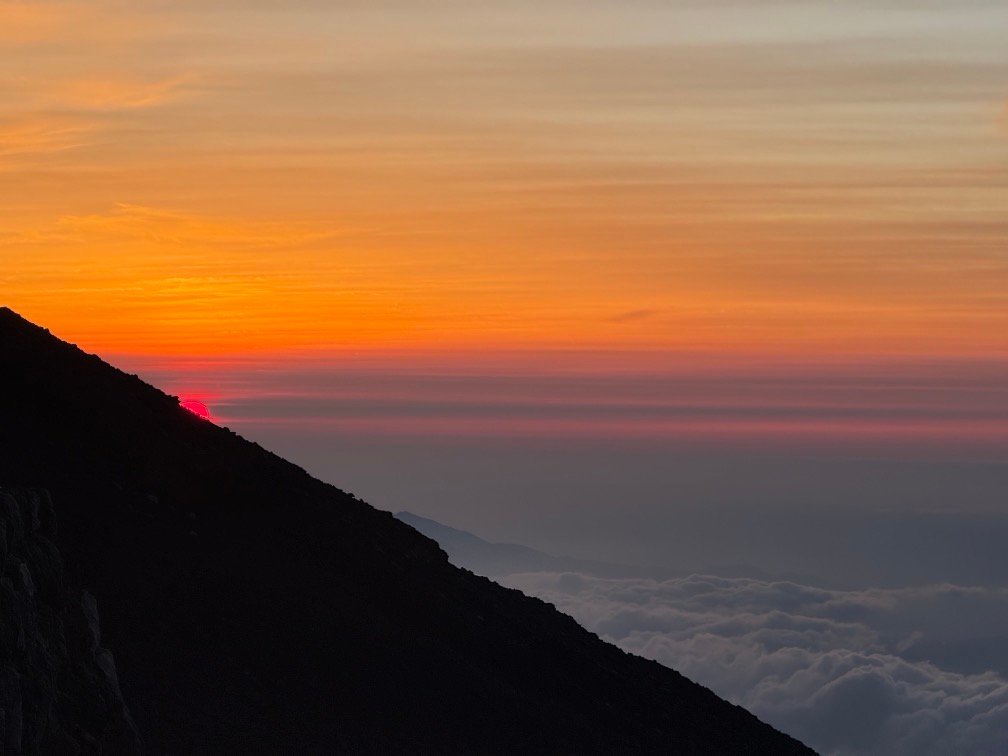
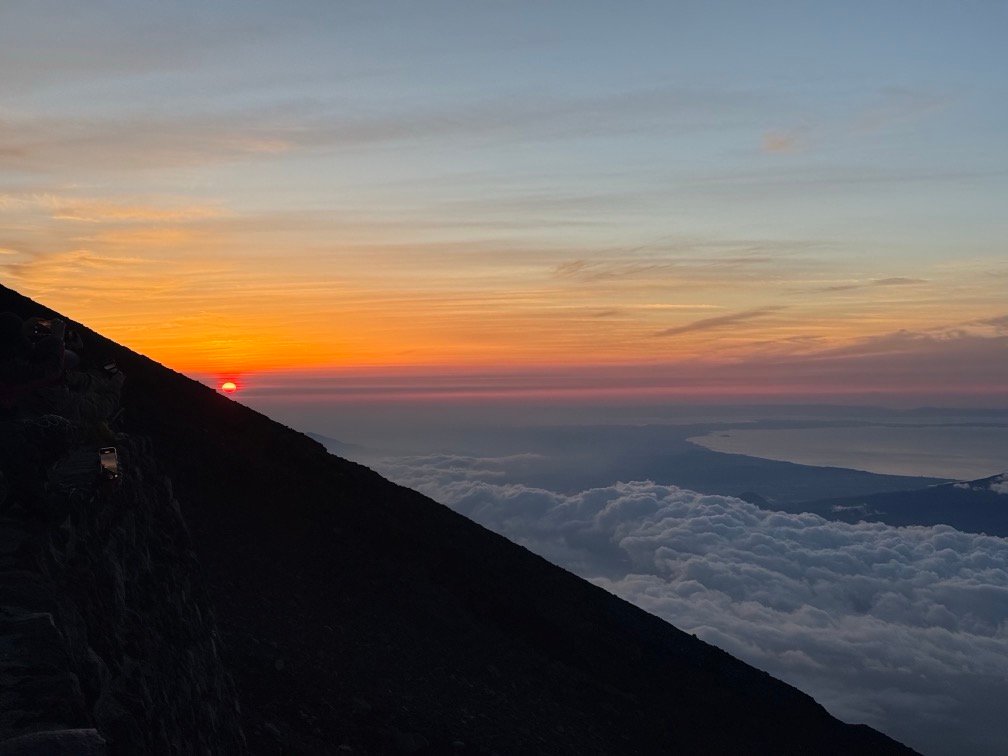
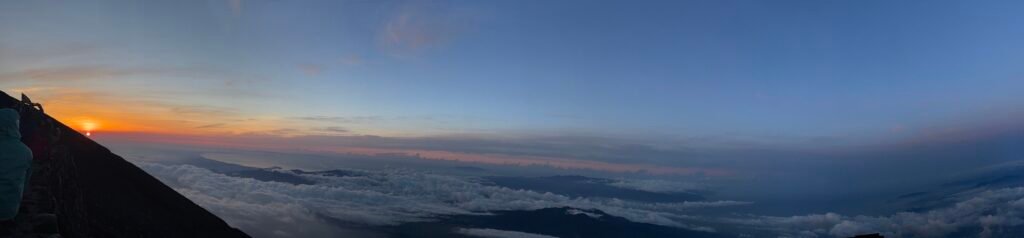
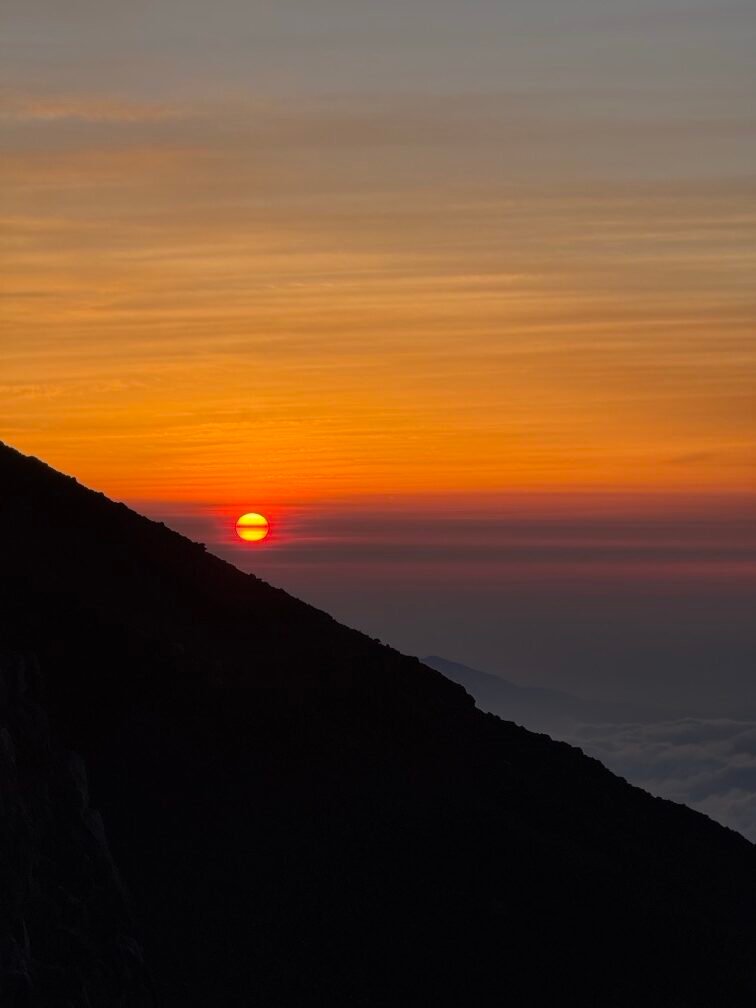
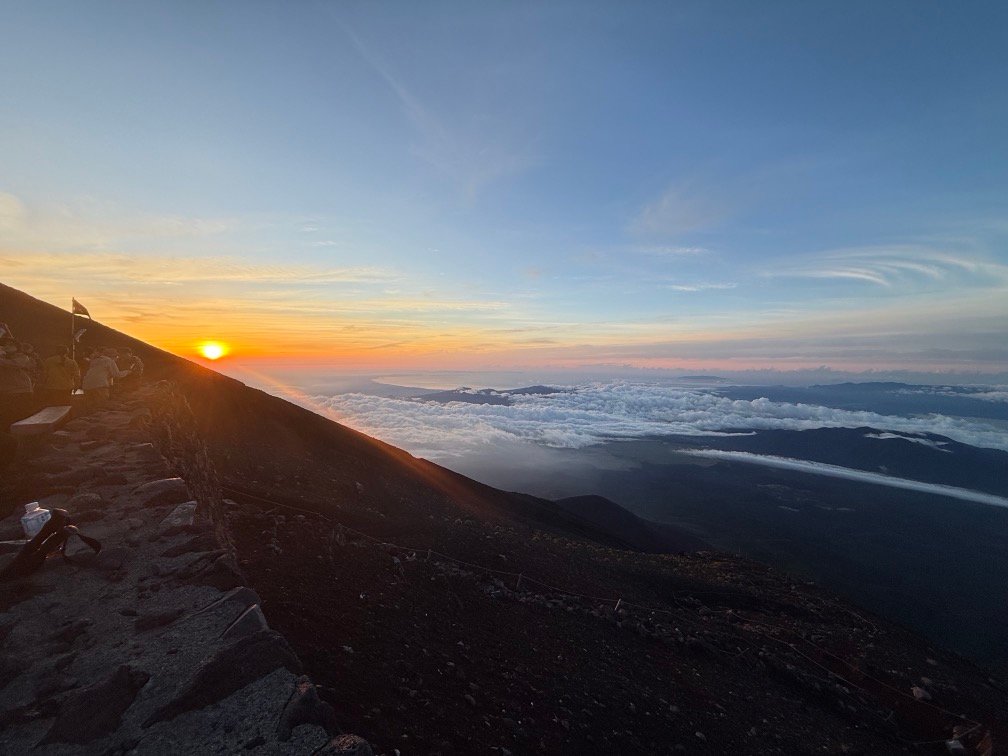
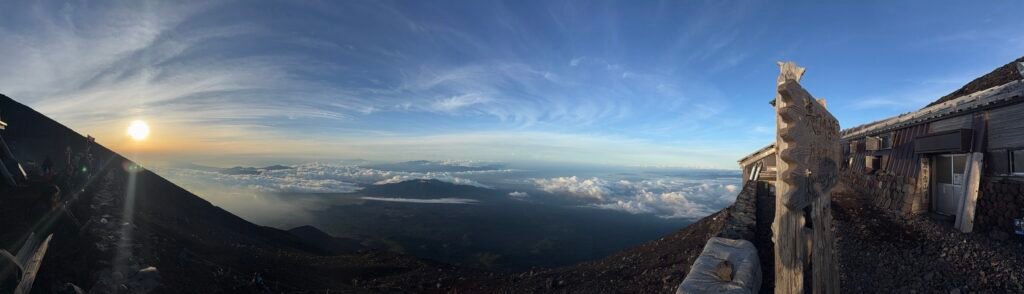
Looking down, the hike down didn’t seem like it would pose any problems. So, after a quick breakfast and a look back up at the edge of the summit crater, I started my decent.
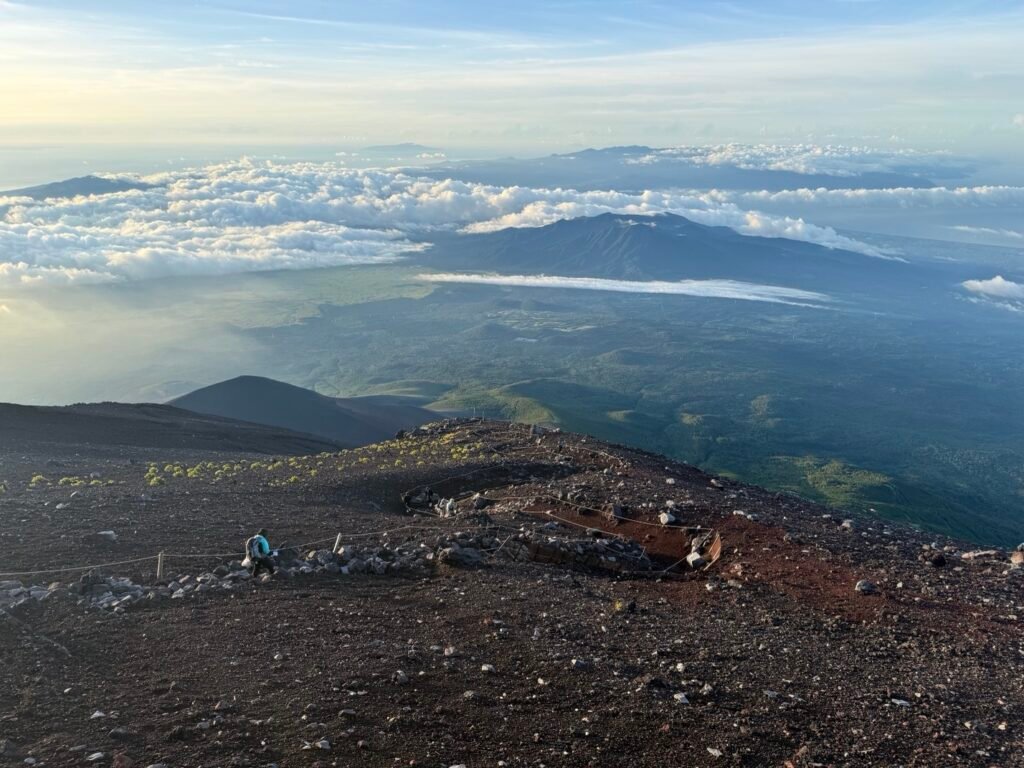
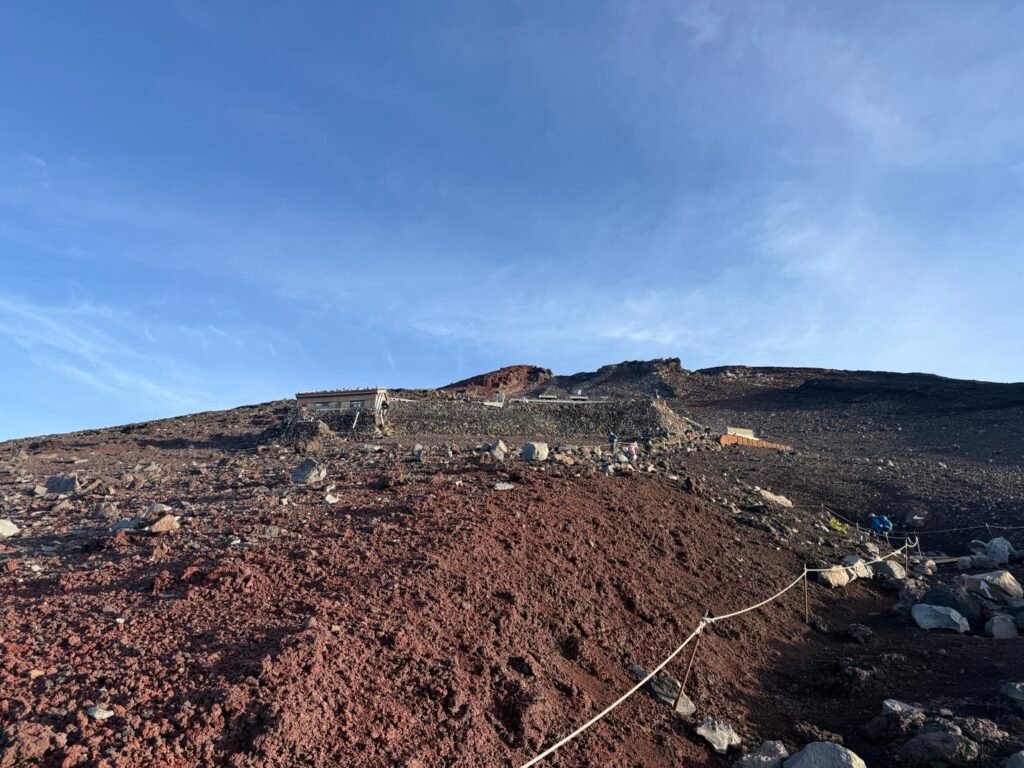
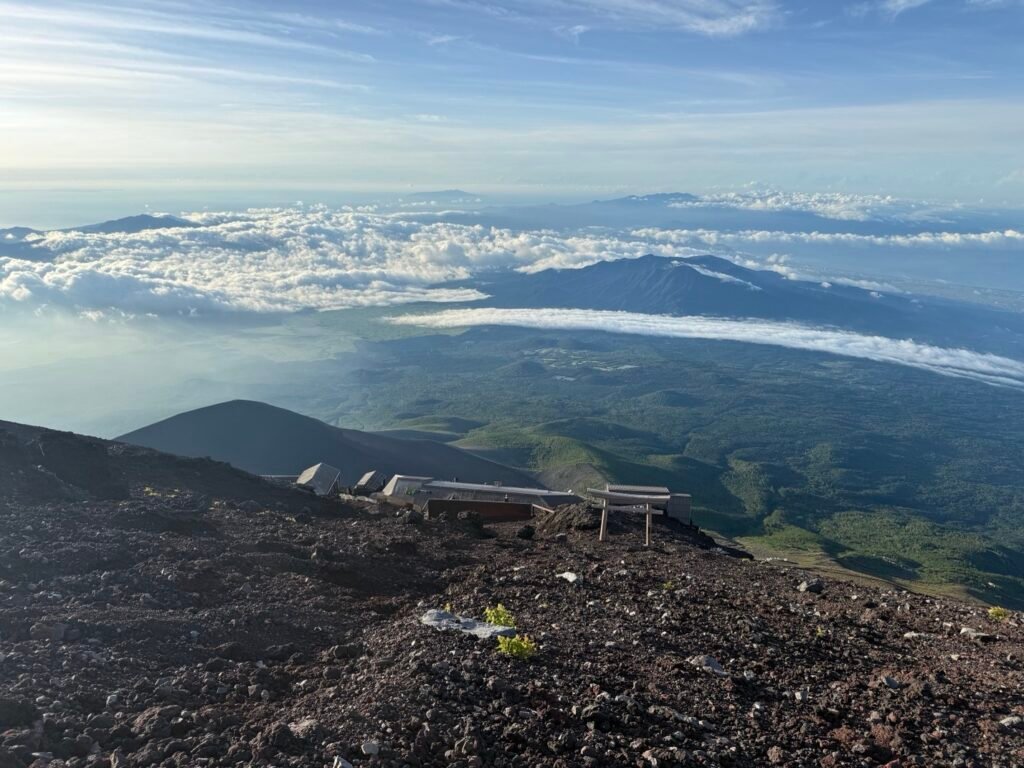
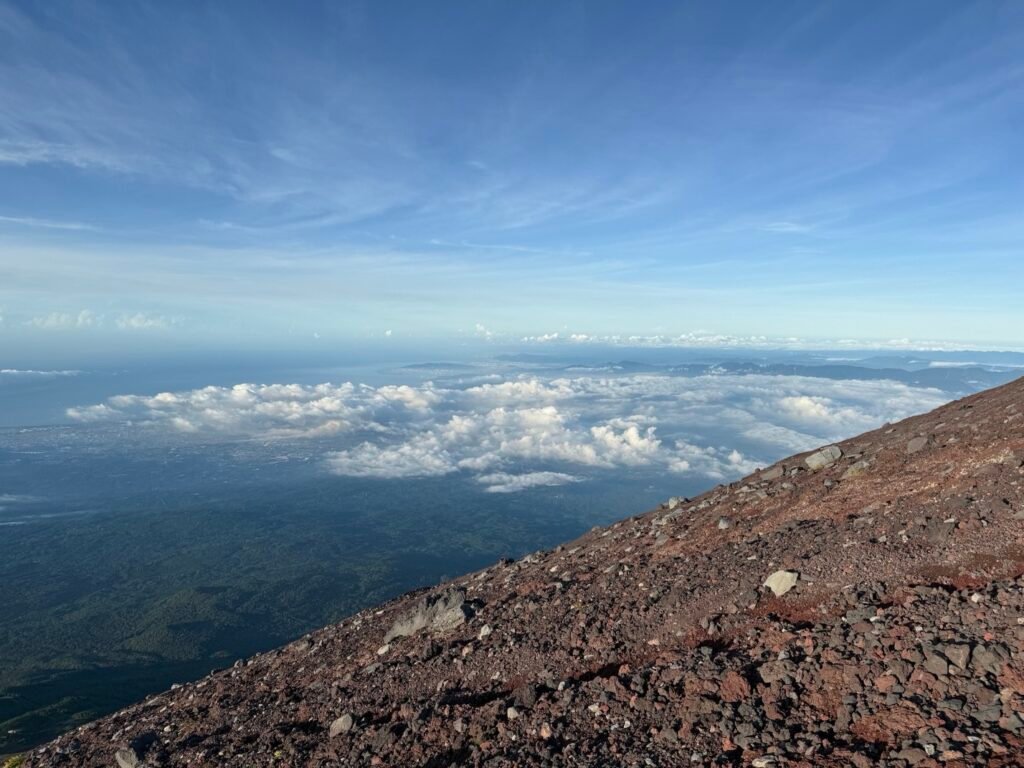
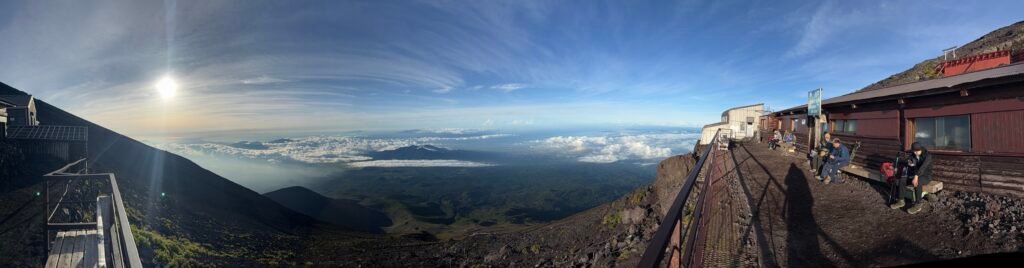
The descent on the Fujinomiya Trail was uneventful, but beautiful every step of the way.
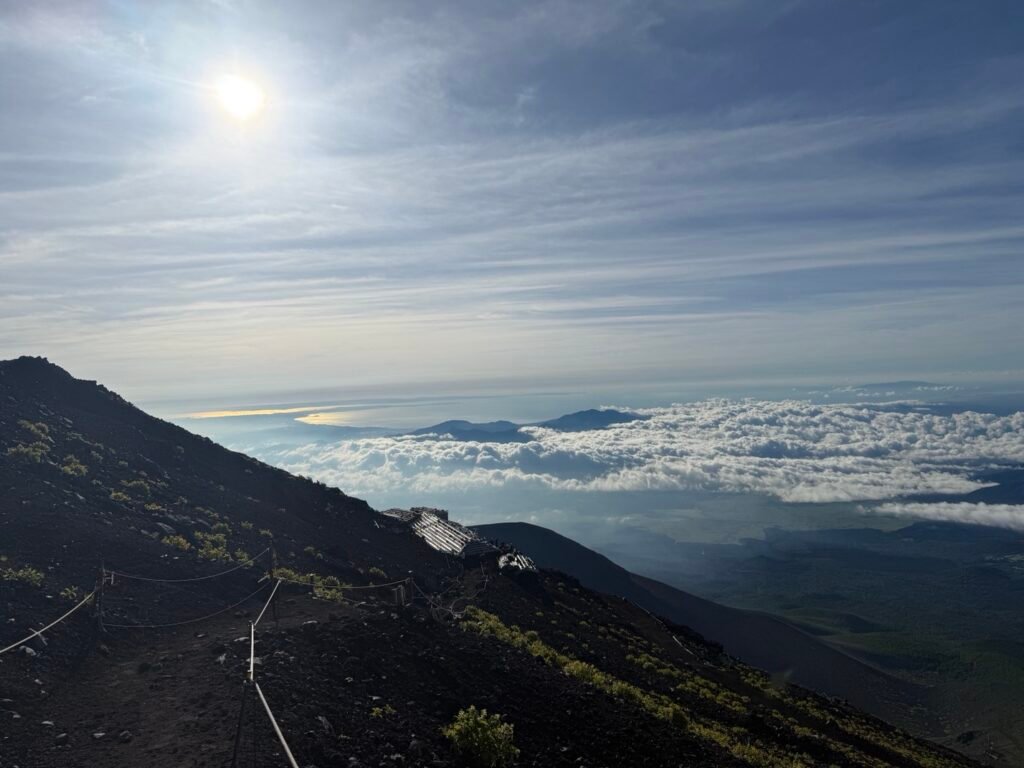
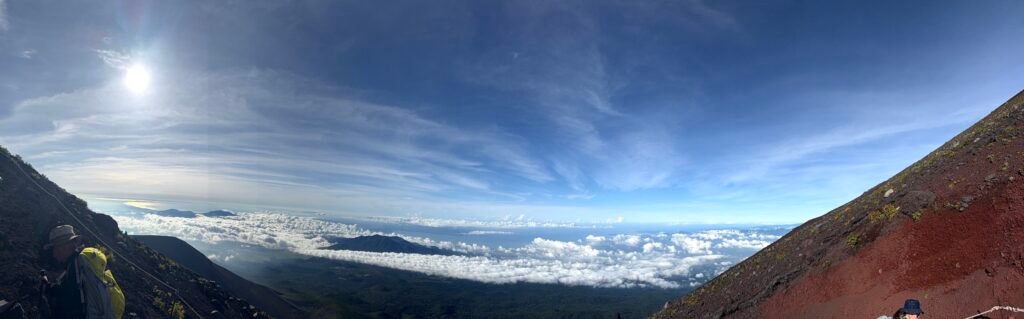
Originally, Mt Fuji was so sacred and revered that only holy men and pilgrims could climb it. That has changed, but occasionally you still see pilgrims climbing up the slopes of Mt Fuji.
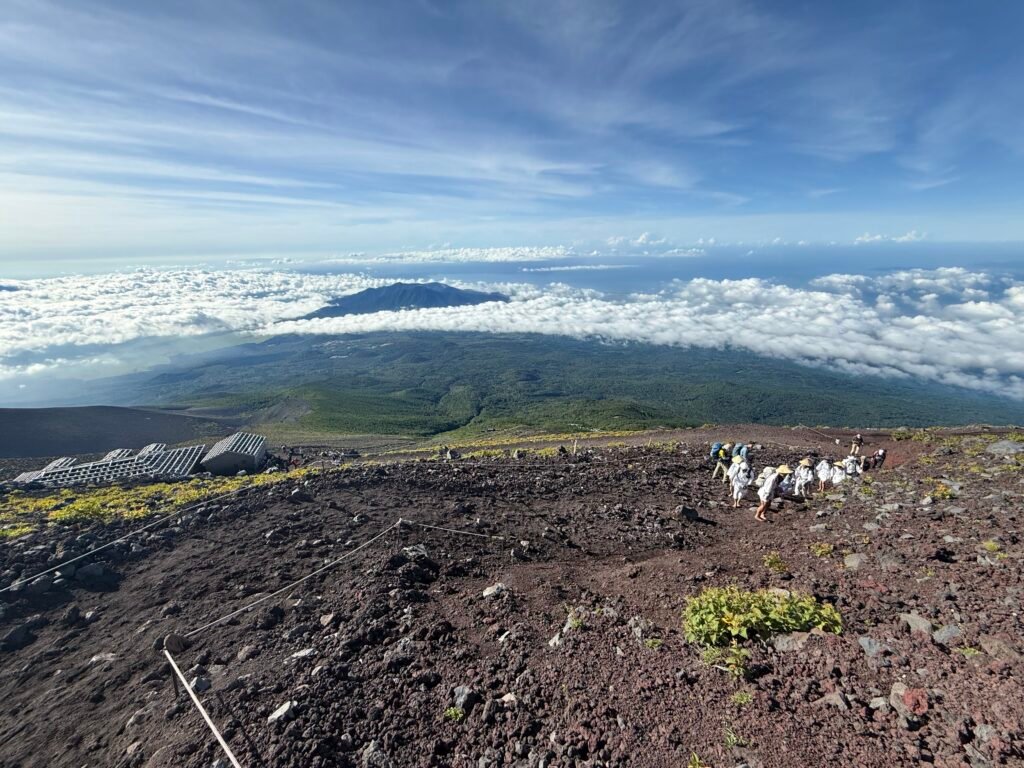
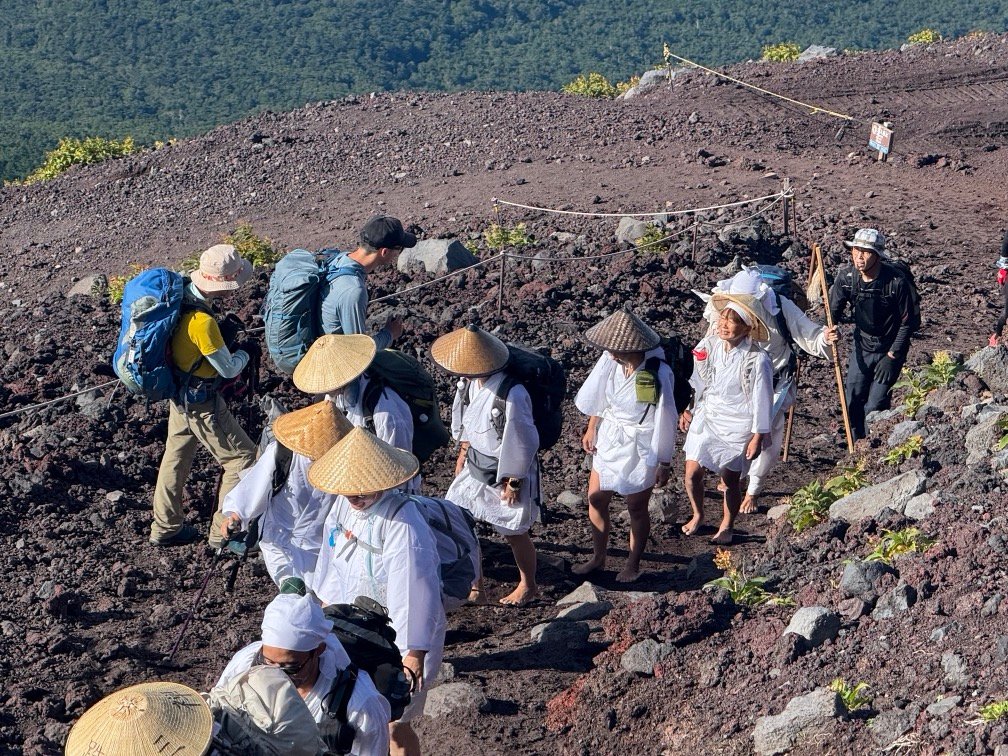
On this side of the mountain, you could see one of the volcanic peaks that grew out of the side of Mt Fuji: Mt Hoei (the dark peak below behind the diagonal mountain edge).
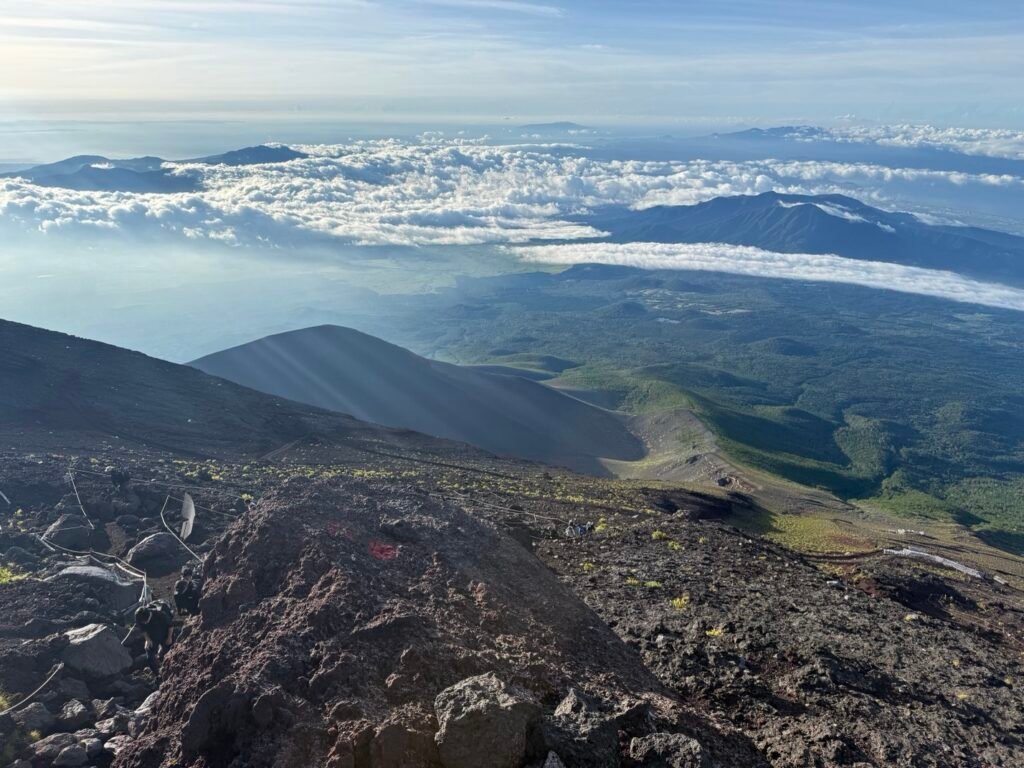
Beside Mt Hoei are the Hoei craters, more signs of volcanic activity that have shaped this mountain and area. And will continue to reshape it into the future. While the chances of a major eruption is pretty low, it is an active volcano.
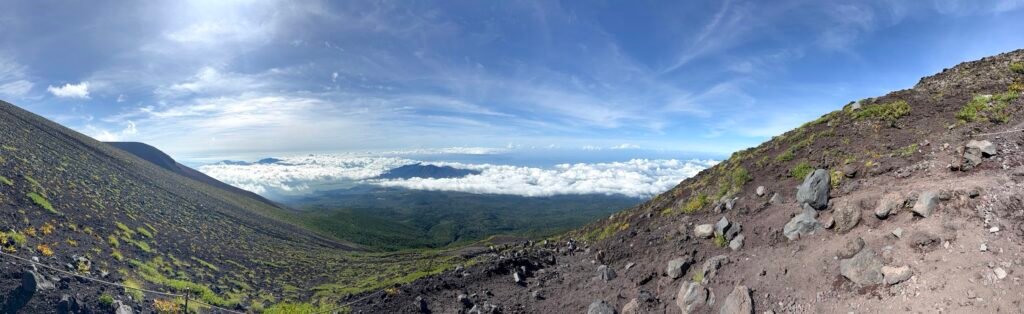
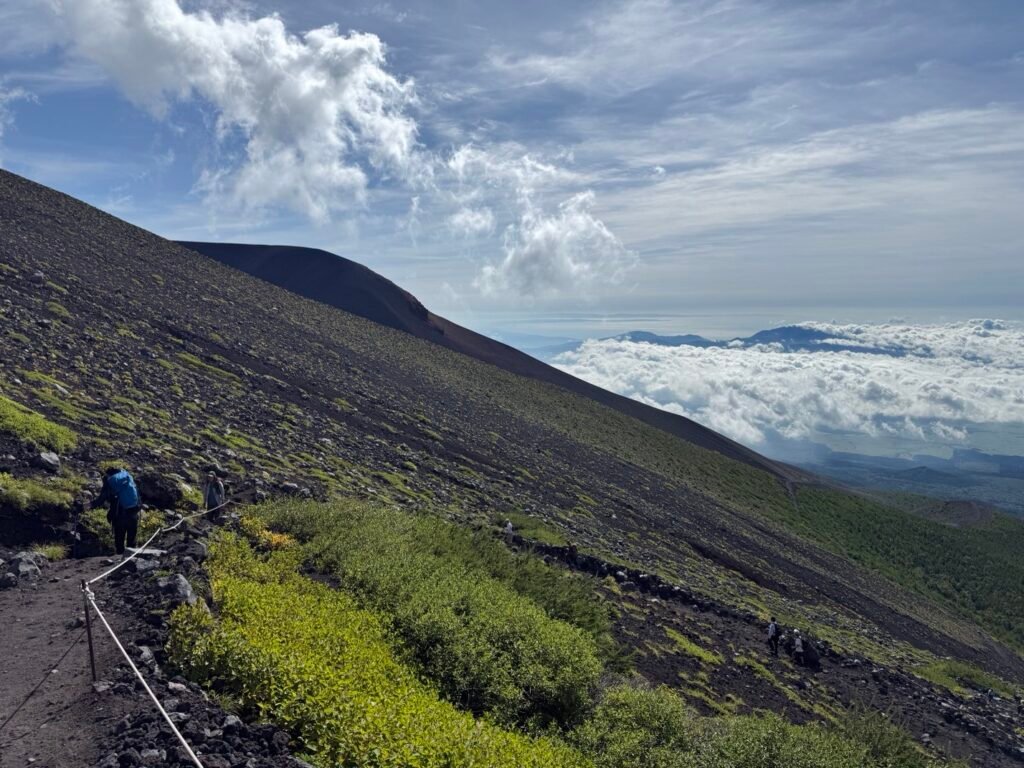
I had thought I might hike the horizontal trail over to get a close up look at the Hoei craters and Mt Hoei, but I had seen them during my Gotemba Trail descent and just didn’t feel like the detour.
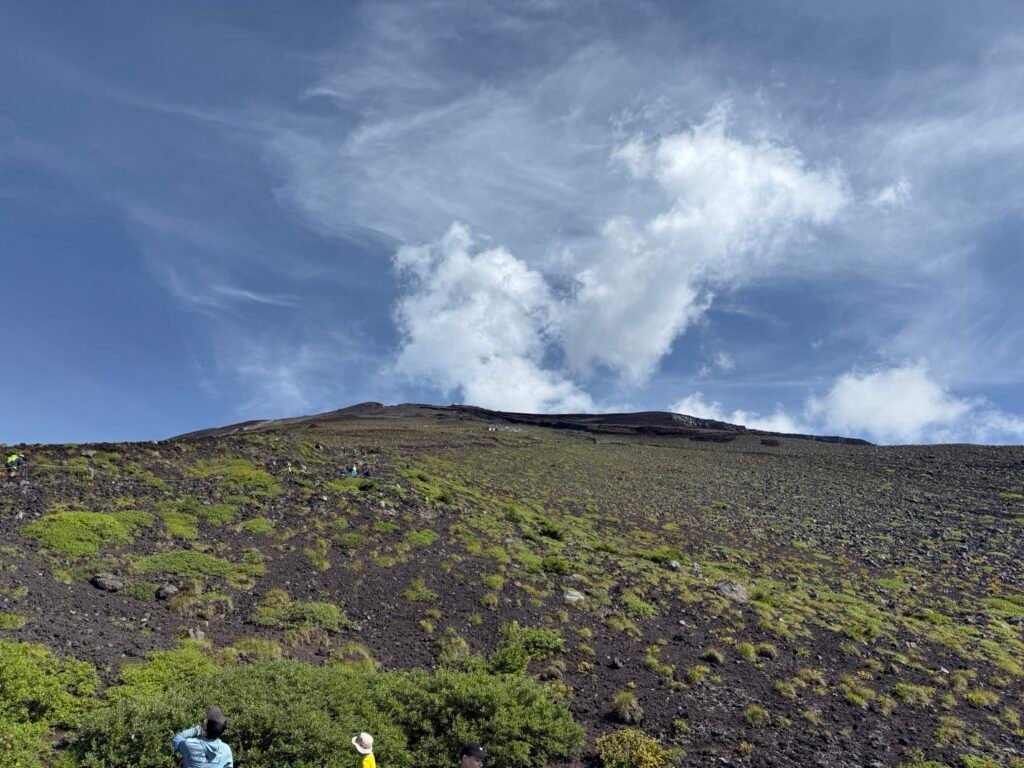
After a last look up towards the top of the mountain, I finally saw the parking lot marking the 5th station where I could catch a bus back to a train station and then to Tokyo.
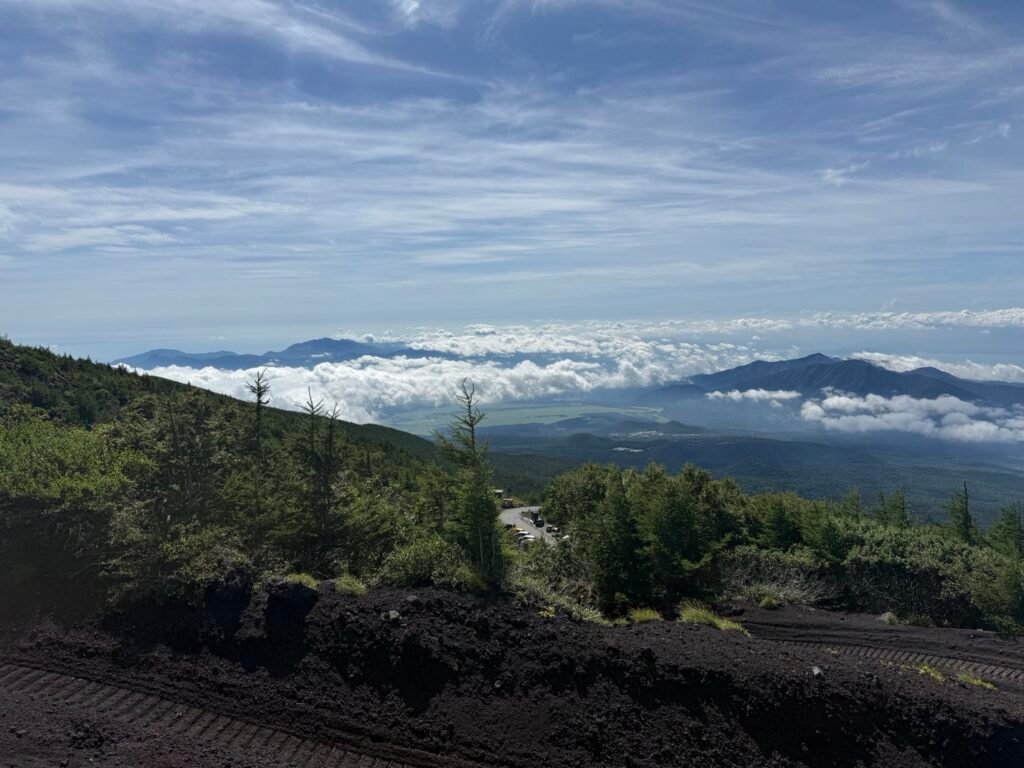
I was happy I had not had any problems climbing Mt Fuji, but was still hoping to re-mount my Southern Japan Alps trek. That had been my primary goal for this trip.
My first stop in Tokyo was to pickup the bag from where I had left it in Shinjuku. After that it was 2 nights at a hotel along the east coast of Tokyo near Hamamatsuchō Station.
The park outside had a great view of the Tokyo Harbor and the Rainbow Bridge.
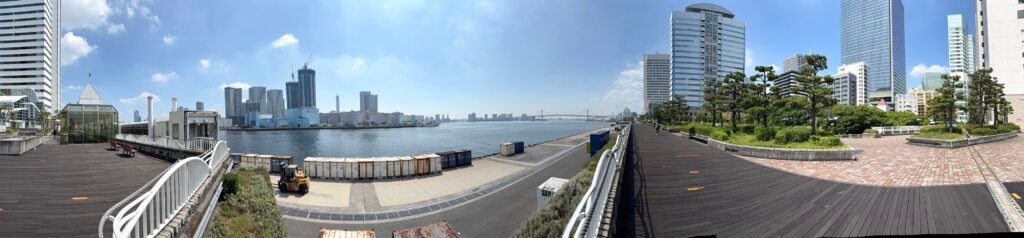
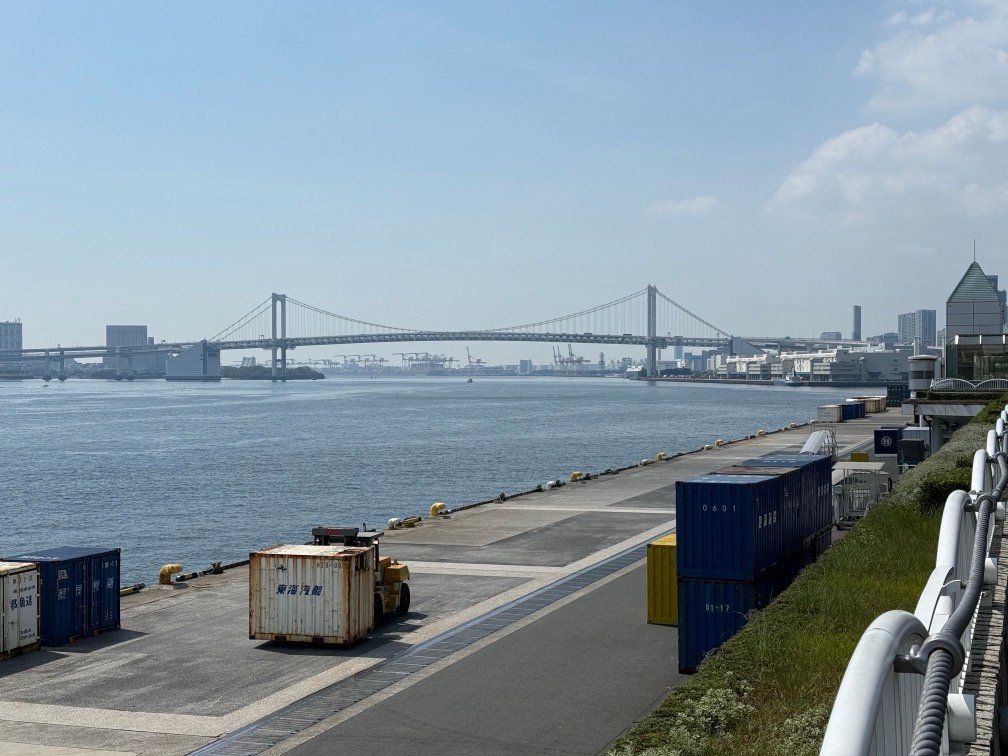
I took this time to relax and recover from Mt Fuji. I also paid a visit to Akihabara to browse the anime and manga stores.
I used to buy A LOT in Akihabara, but this trip I didn’t have anything I urgently wanted to buy. So, I just browsed and bought a few things. The variety of anime and manga I can watch on streaming services and e-book apps kind of made me less likely to buy anything during this trip.
After that it was over to Shinjuku again to get attacked by Godzilla!!!
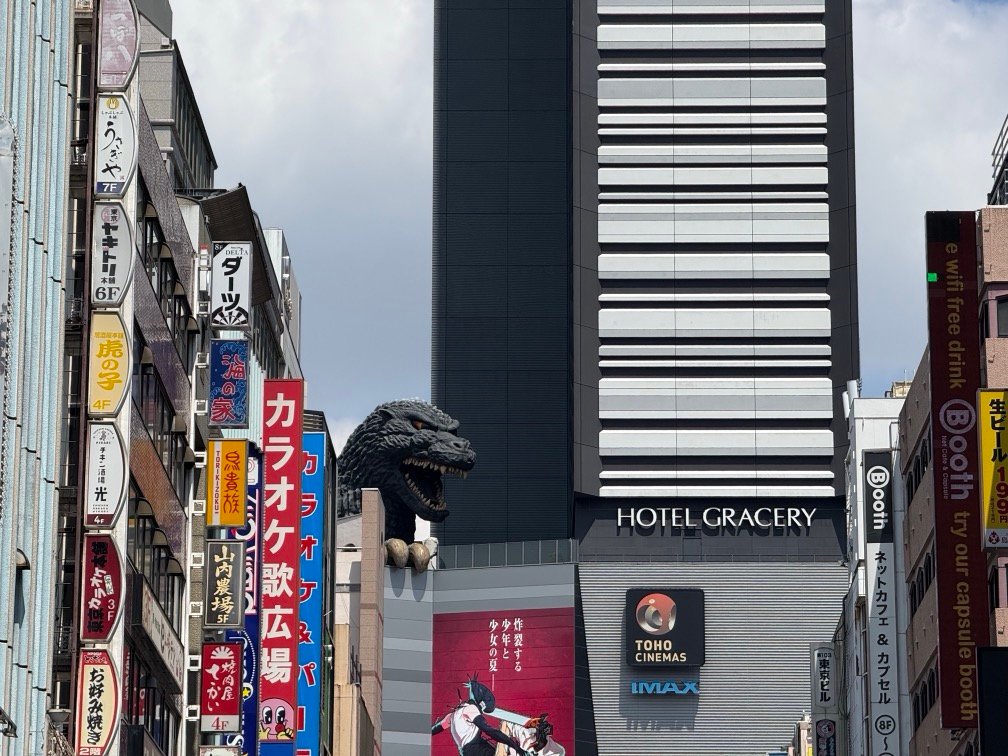
After that, a night at a nice hotel that had some nice hot springs that had caught my eye when I was thinking of a night in Tokyo before heading to Kofu.
And I did a very touristy thing and visited the Meji Shrine in nearby Yoyogi Park. I had seen it before, but it’s one of the biggest shrines in Tokyo and well worth a re-visit.
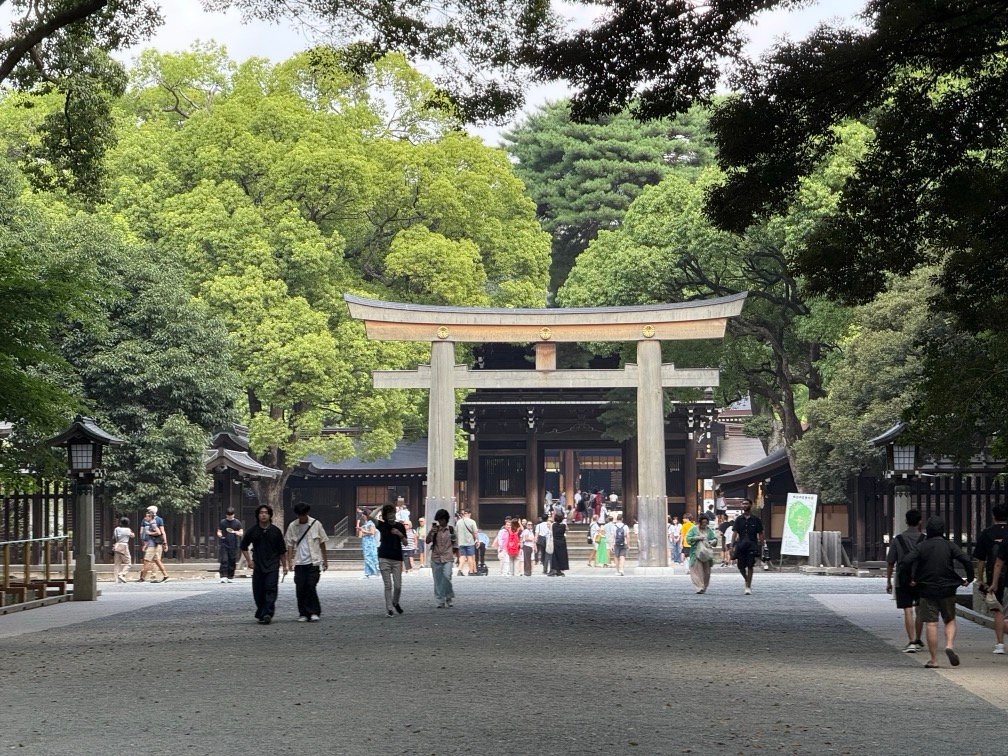
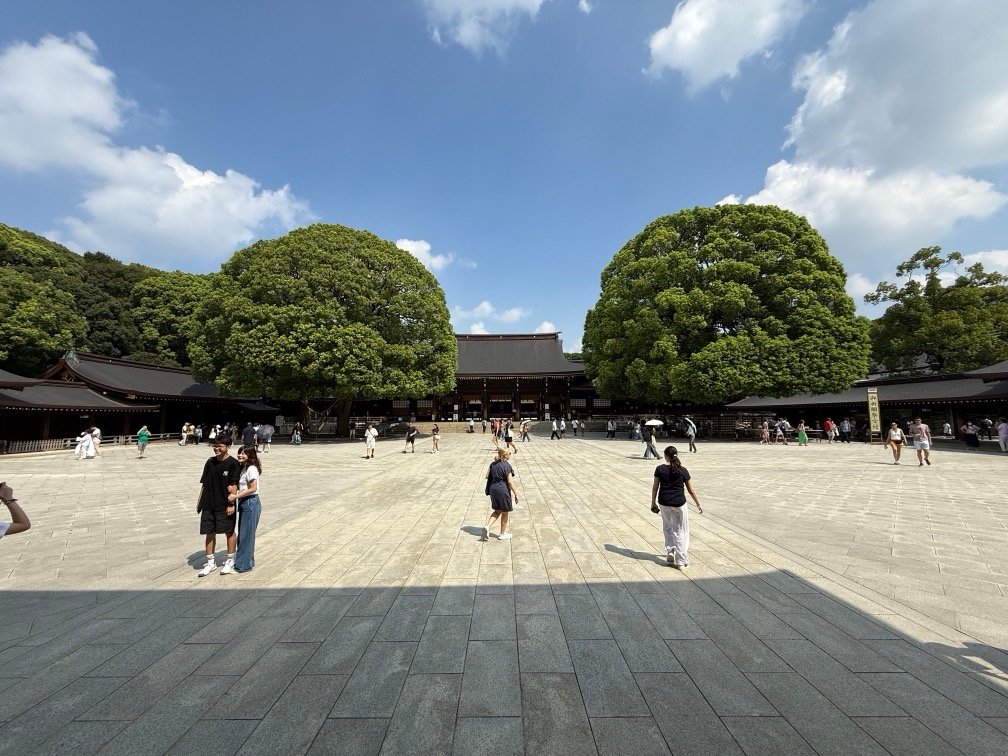
Unfortunately, at that point I was starting to feel sick again and started to check how much it would cost to fly home early.
My attempts to get new reservations at at least some of the South Japan Alps mountain huts that lined up wasn’t going well either. And a big storm was forming in the Pacific and the weather for the Japan Alps was not looking promising (think: days of almost non-stop rain). The thought of renting a tent, sleeping bag and other camping equipment (most of the huts have camping areas are are easier to get on short or even no notice) was washed away by the rain forecast.
So, I changed to yet another hotel near Shinagawa Station (it is always good to be near a train station in Tokyo – it helps you get around easily). I choose a high floor in this hotel to see the city, Tokyo Tower, and the sunset and sunrise.
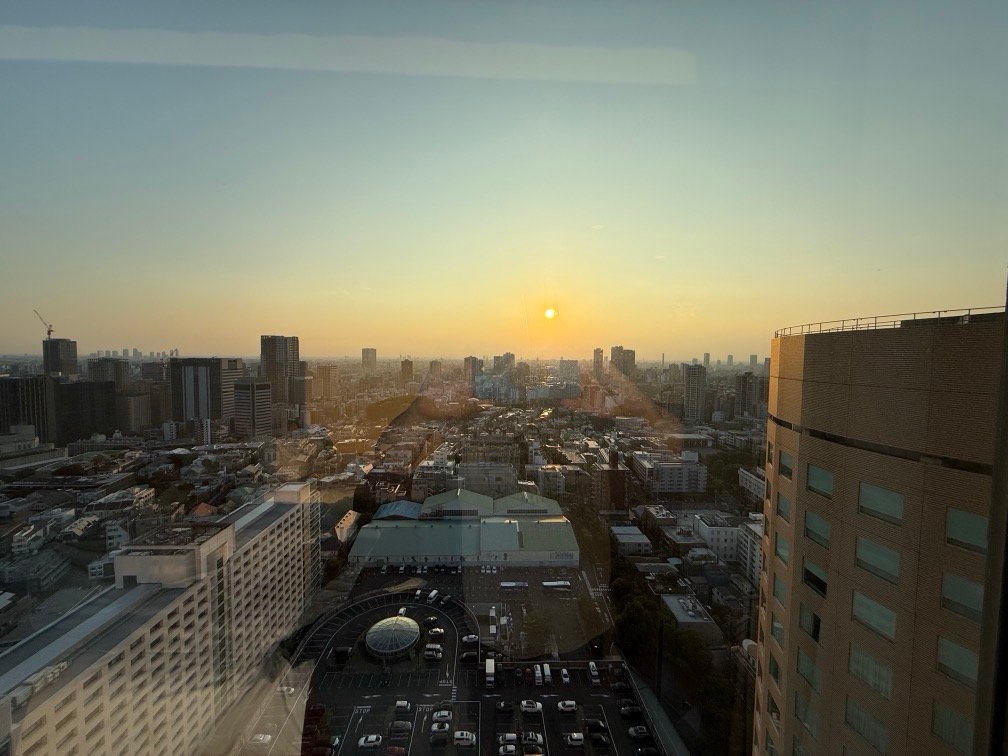
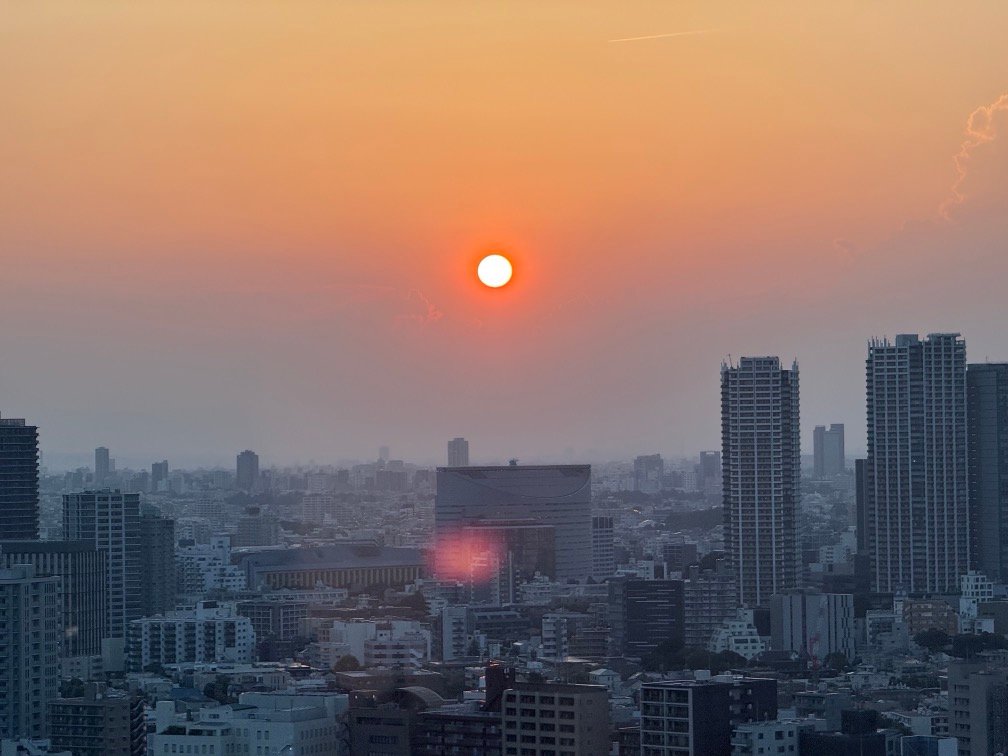
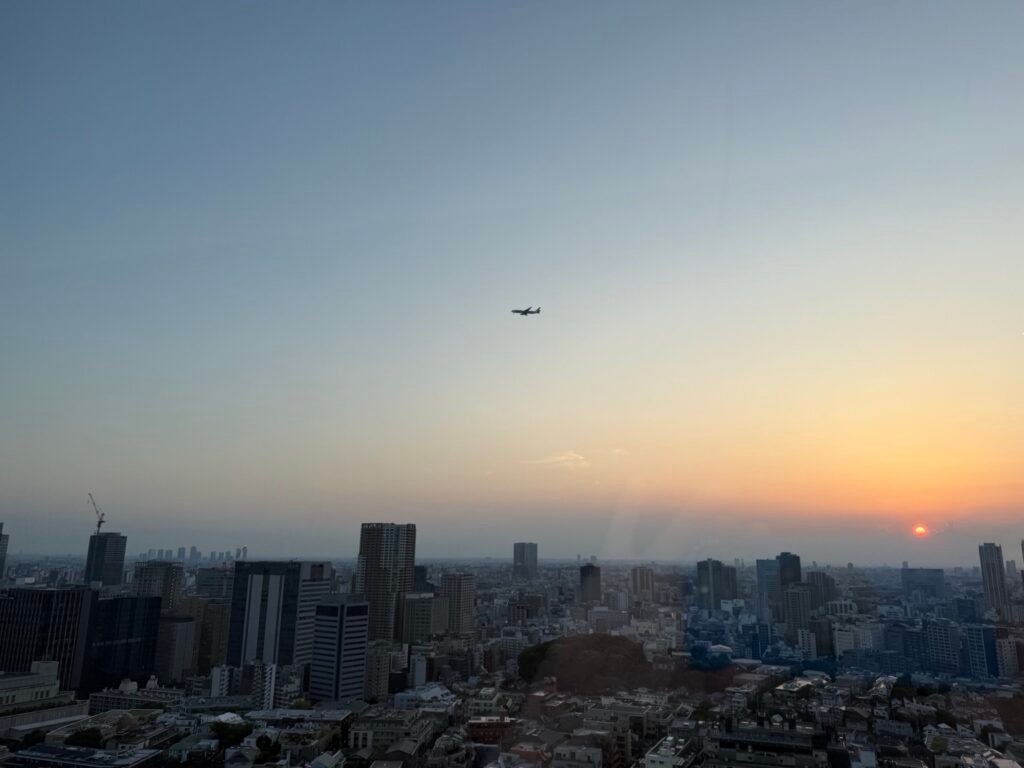
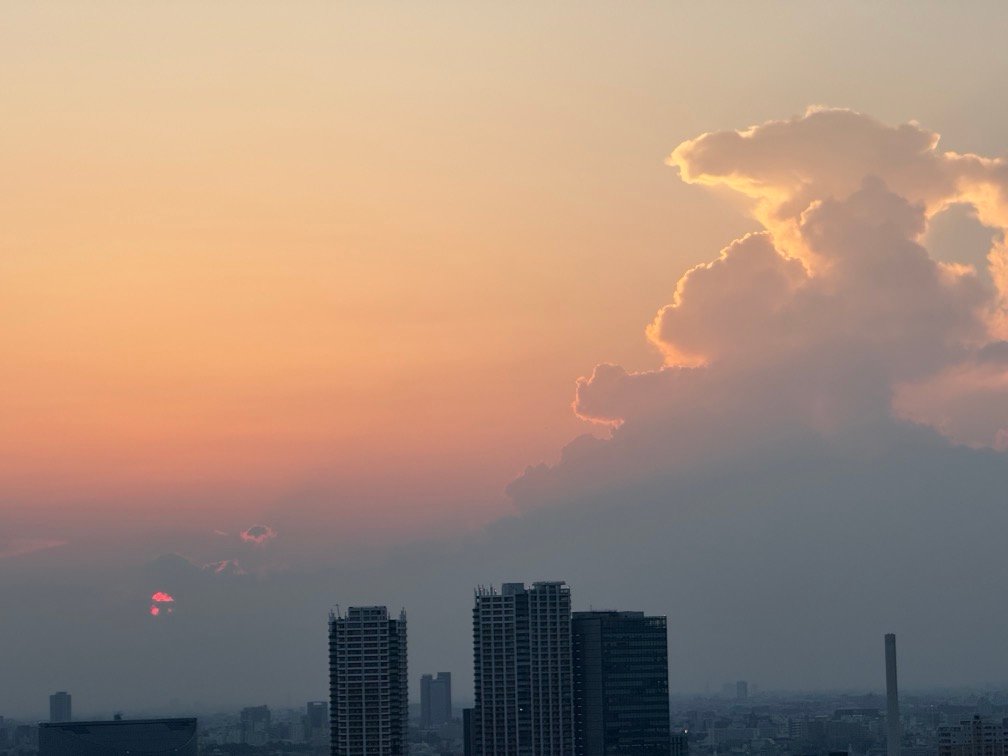
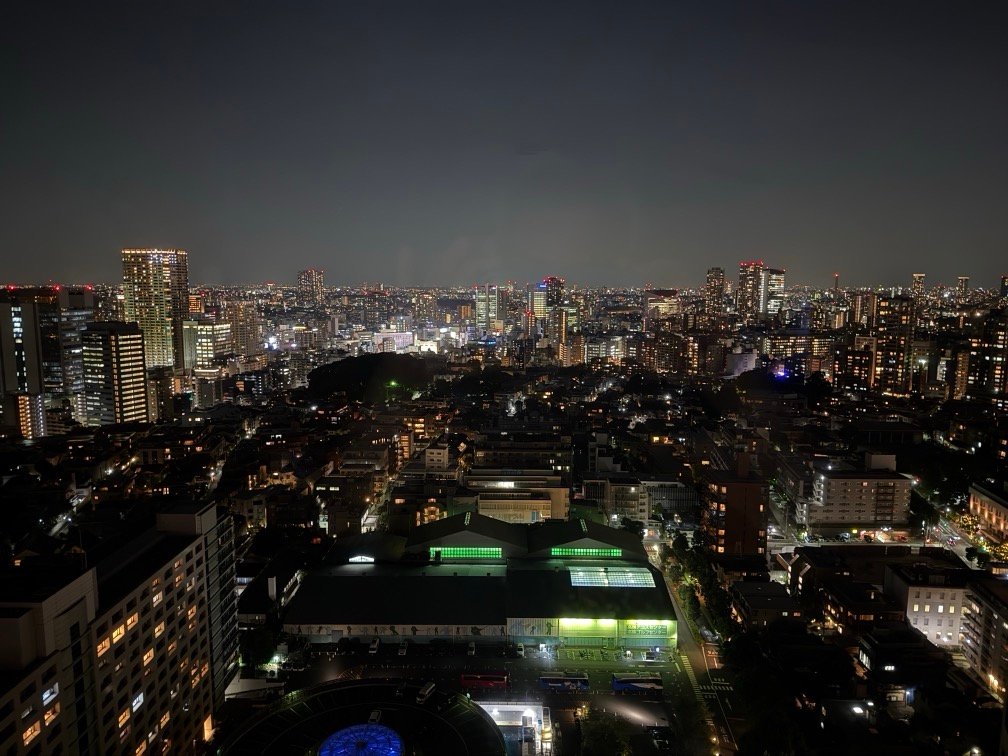
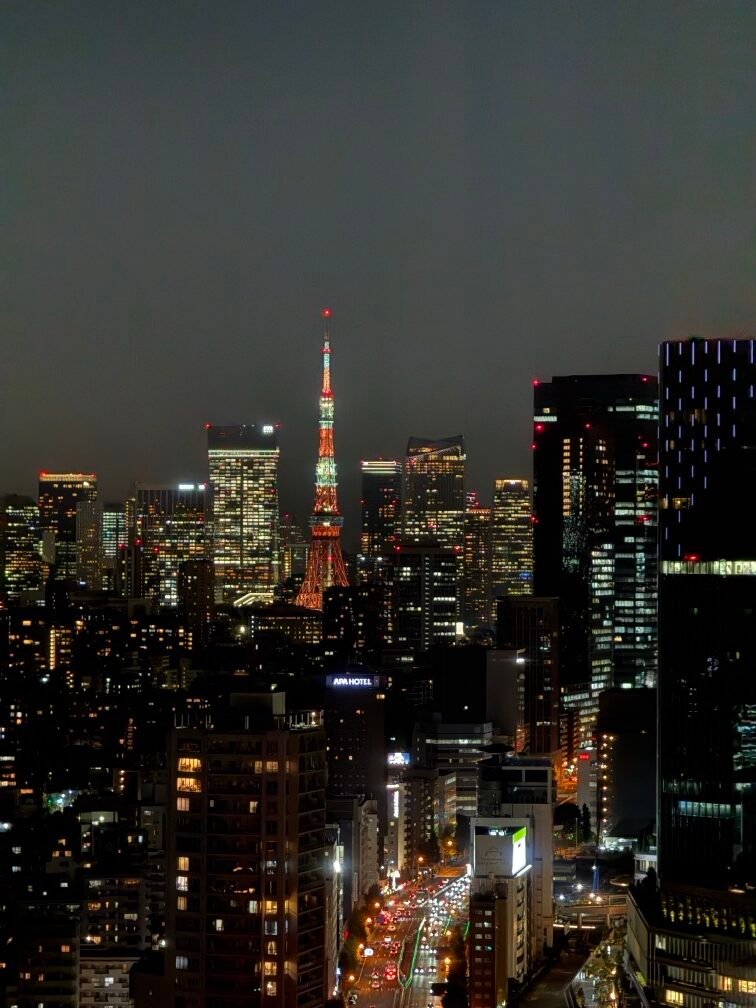
So, the facts were:
- Lack of anything else to do (although I could have figured something out if I really pushed myself).
- The Southern Japan Alps trek becoming increasingly unlikely for the next week.
- It being VERY hot in Tokyo.
- It being very costly to stay in Tokyo.
- My being able to find a “no-cost to rebook” flight to San Francisco.
- And instead of feeling better after resting from climbing Mt Fuji, I was starting to feel worse.
All that combined made the decision to fly home a week early the best decision.
Probably…
In retrospect, I should have planned to climb Mt Fuji first as a warm up for the alps. Since Fuji was a bonus hike/climb, not being able to do it was not critical and would increase the chance that I’d feel better after a week instead of just 3 days in Japan for any long trek in the Japan Alps. My Japan Alps start date had been calculated based on avoiding the big Bon holiday week in Japan (usually the 2nd week or so of August) AND availability of mountain hut reservations.
Sigh.
So, a nice flight back home, a happy pair of cats welcome to see me, and two days later…
I got VERY sick and tested positive for Covid-19.
I don’t think it was what made me feel bad at the beginning of the trip since I felt better before climbing Mt Fuji. I’m suspecting it was the tight sleeping quarters in the Mt Fuji huts that was the most likely source of the contagion. I (and many other people) have become much more casual about COVID-19 and treating it more like the Flu.
Before getting a prescription for Plaxovild, I can say that COVID-19 is much worse than the Flu.
I should have gotten a booster shot before my trip and worn a mask in close quarter situations. But never having had COVID-19 before, I let my guard down and didn’t even think of precautions while planning this trip. Since I was thinking of doing this trip as far back as 2020, maybe I should have been more careful.
Lesson learned.
But it was nice to get back to Japan after a 9 year gap in my visits. I may remount my Southern Japan Alps trek plans some day.
But not in 2026.
Below are Flickr Photo Albums for the three areas I explored (with varying success). Each area has a Highlights album with the best of the best photos, plus a album with all the rest of the photos (and the highlight photos, so you can just see all of the photos in this second album).
Japan 2025 – Kofu & South Alps Highlights

Japan 2025 – Kofu & South Alps Photos

Japan 2025 – Mt Fuji Highlights

Japan 2025 – Mt Fuji Photos

Japan 2025 – Tokyo Highlights

Japan 2025 – Tokyo Photos



Comments by WanderingJim
JMT 2020 Day 3
"I'm afraid I have no idea. Not really a fisherman, so don't..."
JMT 2020 Trek Day by Day
"Yeah, but with 9,000 pictures, it's hard to label each one..."
Kilimanjaro – October 2019
"Everest Base camp is on my list too. Mostly since I know..."
Kilimanjaro
"You started hiking with Kilimanjaro first? Even I worked my..."